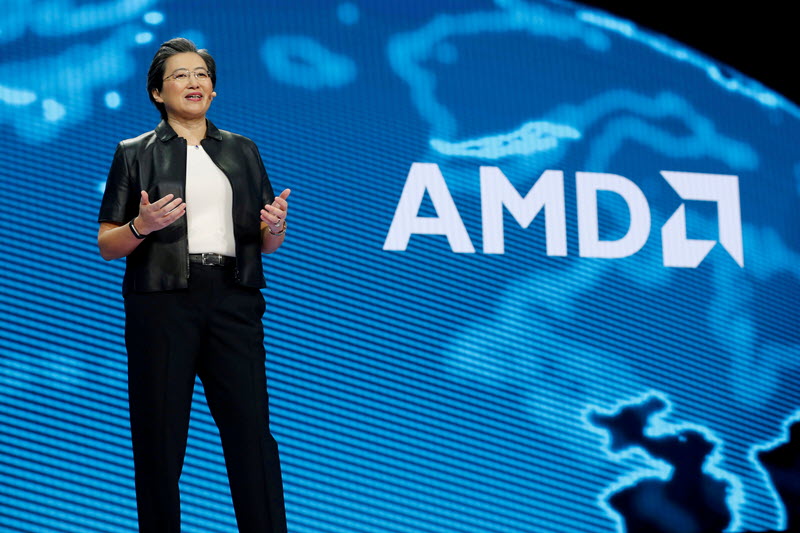
Wall Street turned more cautious on several names, led by HSBC downgrading AMD to Hold with a $340 target as supply constraints cap upside and 2026 AI revenue estimates were cut to $14.6 billion from $18.5 billion. Argus upgraded Chipotle to Buy with a $40 target, while Roth lifted LCI Industries to Buy at $112; however, William Blair downgraded Planet Fitness to Market Perform and Stifel cut Vital Farms to Hold on weaker growth and oversupply concerns. The piece is broadly analyst-driven and bearish-to-mixed, with the most material takeaway being reduced optimism around AI hardware and cyclical consumer-related stocks.
The common thread is not sector-wide demand collapse; it is dispersion between names with self-help levers and names that are now hostage to operating leverage. In semis, AMD’s issue is timing: when capacity is tight, incremental demand does not translate cleanly into upside, which likely shifts share gains toward suppliers with better allocation discipline and less server-rack execution risk. That dynamic is mildly supportive for incumbents with manufacturing control and less favorable for “AI narrative” names where the market is already discounting flawless ramp execution.
In consumer, CMG and PLNT are diverging on pricing power. CMG looks like a classic sentiment washout where the market has already discounted margin pressure, but PLNT has a credibility problem: if management hesitates on a tested price action, the street will likely compress long-duration growth multiples further until it sees clean evidence that unit economics can re-accelerate. That argues for a barbell: own the best self-help with pricing optionality, avoid names where the growth algorithm is losing trust.
LCII is the clearest relative-value setup because the market is still anchoring on end-demand weakness while the earnings engine is increasingly internal. When a supplier can expand margins, generate high cash flow, and raise guidance into a soft channel, it tends to outperform peers for multiple quarters even without a demand inflection. VITL is the opposite: oversupply plus price competition usually leads to a slow, not sharp, recovery because competitors rationalize only after cash margins break, so the near-term risk is another leg down before the market finds equilibrium.
The contrarian takeaway is that the broad “AI/consumer” narrative is too coarse. The better trade is to buy companies where execution can outrun the cycle and short those where the market has to keep re-rating future growth assumptions downward. Over the next 1-3 months, earnings revisions and management credibility matter more than the macro backdrop; over 6-12 months, capacity normalization could help the dislocated names, but only after the street has already cut numbers enough to reset valuation.
AI-powered research, real-time alerts, and portfolio analytics for institutional investors.
Request DemoOverall Sentiment
mildly negative
Sentiment Score
-0.25
Ticker Sentiment
