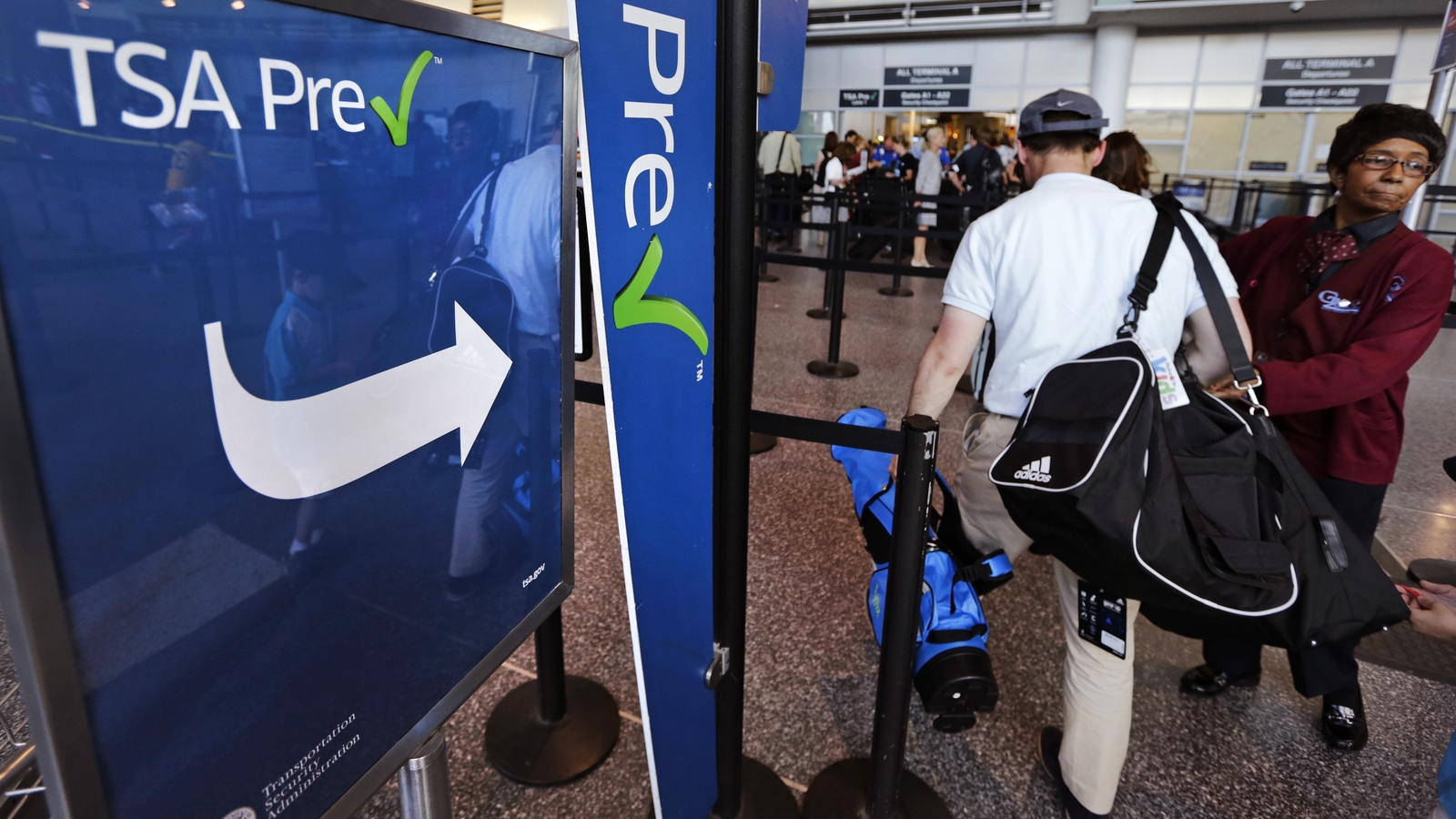
The Department of Homeland Security has suspended TSA PreCheck and Global Entry amid a partial government shutdown that began Feb. 14, with DHS stating that TSA and CBP will prioritize the general traveling population and suspend special-privilege escorts. The move—framed by the administration as a consequence of funding impasse and criticized by House Democrats as deliberate disruption—raises the prospect of increased airport security delays and operational headwinds for carriers and airports, though it is unlikely to produce material market-wide financial impacts in the near term.
Market Structure: Suspension of TSA PreCheck/Global Entry is an immediate operational shock to airports and network carriers: expect passenger throughput to slow (estimative 5–20% drop in screening capacity on peak days) and queue-related delays concentrated at large hubs (ATL, JFK, LAX) over the next 7–21 days. Airlines (AAL, UAL, DAL, LUV, JBLU) bear direct customer-experience and rebooking costs; airport concession revenues face short-term hit but landlord/REITs (small) are less sensitive. Travel-technology platforms (EXPE, BKNG) see mixed impact—transaction flow may shift timing but platform fees are sticky.
Risk Assessment: Tail risks include a prolonged shutdown >30 days causing measurable ticket cancellations (5–10% of booked pax for peak spring weeks) and material reputational damage reducing corporate travel budgets into Q3; sovereign/credit risk on short-term Treasuries could tighten as cash management strains federal contractors. Hidden dependencies include TSA staffing overtime burn-rate and state/local emergency staffing replacements that could either blunt or exacerbate delays within 3–14 days. Catalysts: Congressional funding deal (positive) or escalation of immigration standoff (negative) will drive 1–3 day volatility spikes.
Trade Implications: Near-term, prefer defensive short exposure to airline equities or the JETS ETF for 30–60 days with strict stop-loss; consider buying 30–45 day put spreads on AAL/UAL sized 1–2% portfolio to hedge spring-break exposure. Pair trade: short JETS (operational risk) and long EXPE (BKNG/EXPE) 1–2% for relative safety—OTAs monetize reschedules and carry less ground-operation risk. If shutdown resolves within 7–14 days, reverse within 3 trading days; if persists >30 days, add to shorts.
Contrarian Angles: Consensus assumes linear pain to airlines; markets may over-discount because cancellations often shift dates not volumes—if shutdown ends within 2–3 weeks demand rebounds and airlines recover quickly. Historical partial-shutdown precedent (2018–19) shows travel volumes normalize within one month; that argues for tactical options plays rather than large fundamental shorts. Unintended consequence: elevated secondary-market airfares from capacity cuts could temporarily boost yields per passenger, cushioning revenue loss for capacity-constrained carriers.
AI-powered research, real-time alerts, and portfolio analytics for institutional investors.
Request DemoOverall Sentiment
mildly negative
Sentiment Score
-0.25
