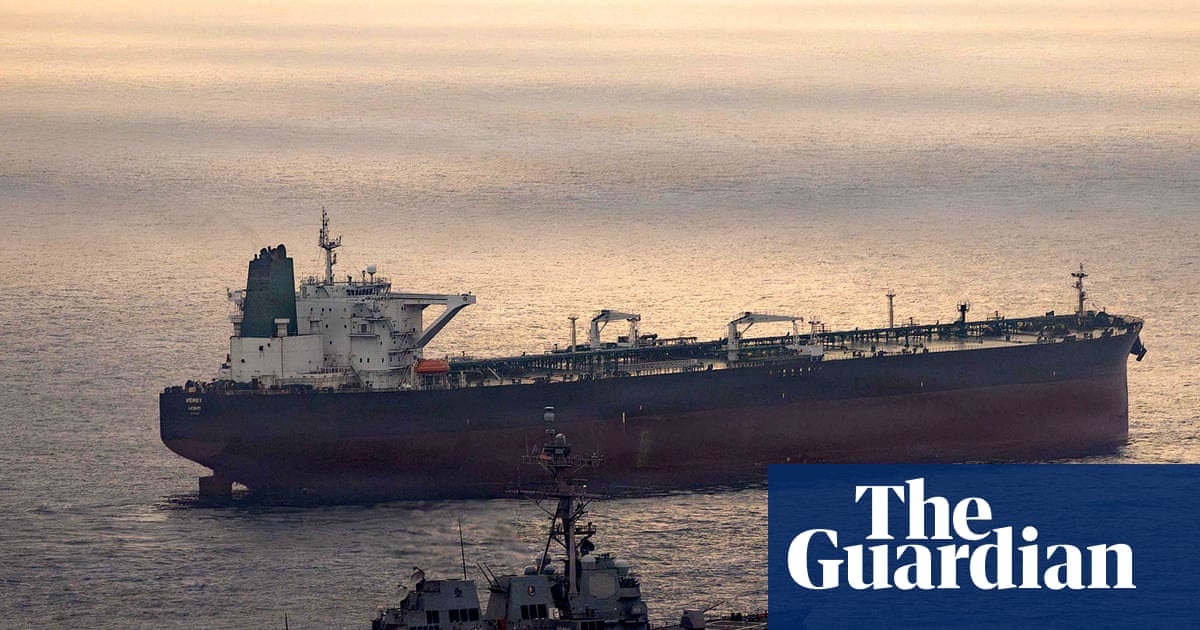
Iran’s Revolutionary Guards threatened attacks on US sites in the Middle East after US strikes disabled two Iranian tankers, while UKMTO reported a separate projectile hit on a vessel off Qatar that caused a small fire. Satellite imagery also showed an apparent oil slick off Iran’s Kharg Island, a key export terminal, adding to supply-risk concerns. The escalation in the Gulf and parallel fighting in Lebanon raises the risk of disruption to shipping lanes and regional energy flows.
The market should treat this less as a one-off headline and more as a live stress test on the regional logistics stack. The first-order move is higher insurance, rerouting, and war-risk premia; the second-order impact is that even without a sustained closure of any choke point, tanker availability tightens as owners refuse to transit, creating a self-reinforcing squeeze in spot freight and prompt crude differentials. That disproportionately benefits non-Middle East supply with clean export routes while hurting any importer reliant on Gulf flows or refined-product arbitrage.
The bigger medium-term risk is not just oil beta but infrastructure fragility: export terminals, ports, airfields, and undersea cables become embedded optionality targets once both sides signal willingness to hit “regional” assets. That raises the odds of episodic outages that the market will initially dismiss as noise, then rapidly reprice when inventories prove insufficient. In energy equities, this tends to favor integrated names with downstream cushions and penalize refiners and transport-sensitive industries where feedstock volatility outruns pricing power.
The contrarian read is that the market may be over-anchoring on headline escalation while underestimating diplomatic asymmetry. If mediation channels remain open, the path of least resistance is a temporary de-escalation that still preserves the structural risk premium, meaning crude can mean-revert while freight, defense, and cybersecurity retain a persistent bid. The key is that the catalyst horizon is days for crude spikes, weeks for shipping dislocation, and months for any durable shift in capital allocation toward defense and resilient infrastructure.
Watch for a false calm if the next 48-72 hours bring no major casualty event; that would likely compress the front-end spike but not erase the embedded risk premium. A sharper tail risk is retaliatory action near Qatar or in the Strait/Hormuz-adjacent route network, which could force a broader shipping halt and make the current move look small in retrospect.
AI-powered research, real-time alerts, and portfolio analytics for institutional investors.
Request DemoOverall Sentiment
strongly negative
Sentiment Score
-0.78
