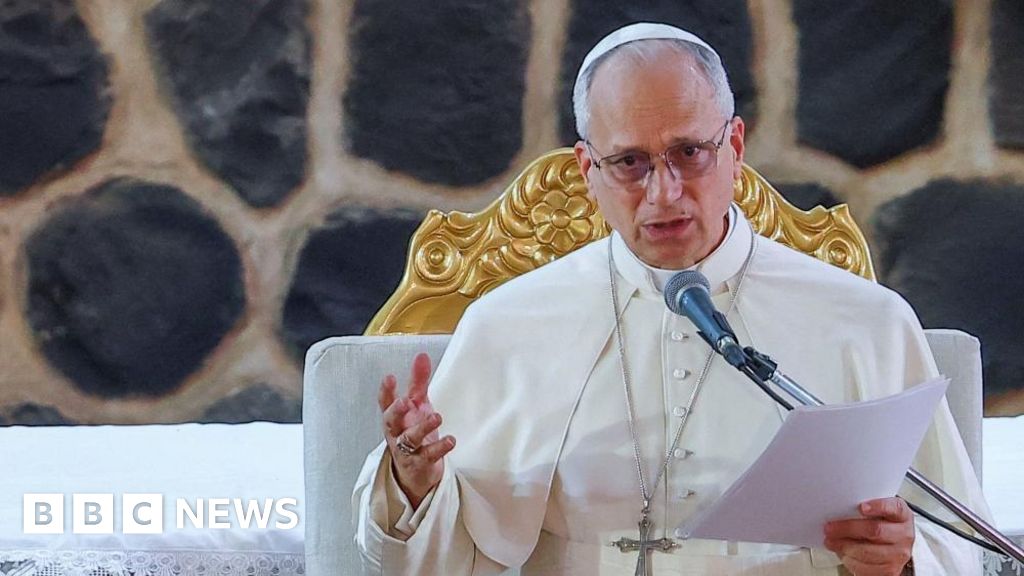
Pope Leo sharply criticized leaders who spend billions on wars, saying the world is being ravaged by a handful of tyrants and warning that resources for healing, education, and restoration are being diverted into weapons. The comments were made during a Cameroon visit to a region hit by nearly a decade of insurgency and came days after a public spat with US President Donald Trump over the Iran war and the Strait of Hormuz. The piece is largely geopolitical and rhetorical, with limited direct market impact.
This is not a direct market event, but it reinforces a slow-building regime shift: moral pressure on war spending can widen the political cost of escalation, especially when paired with large emerging-market humanitarian exposure. The near-term equity impact is likely confined to defense primes and energy logistics in regions vulnerable to supply disruption, while the bigger second-order effect is higher policy uncertainty around sanctions, aid, and transit corridors that can keep volatility bids elevated for months rather than days.
The more interesting trade is in EM sovereign and quasi-sovereign risk tied to conflict-adjacent fiscal stress. When leaders are forced to choose between security spending and reconstruction, local-currency funding needs rise, external financing becomes more expensive, and balance sheets of banks, insurers, and infrastructure concessionaires in the affected corridor can underperform even without a headline shock. That mechanism tends to surface with a lag of one to two quarters as budgets are revised and capex is delayed.
The contrarian view is that the market may overestimate the durability of this rhetoric as a tradable catalyst. Unless it changes policy, it is mostly sentiment, and defense names often digest this quickly because order books are already driven by multi-year procurement cycles. The real signal to watch is whether this language precedes concrete constraints on arms transfers, sanctions enforcement, or aid reallocation; those would matter far more than the headline itself and could reprice exposures within 1-3 months.
AI-powered research, real-time alerts, and portfolio analytics for institutional investors.
Request DemoOverall Sentiment
mildly negative
Sentiment Score
-0.15
