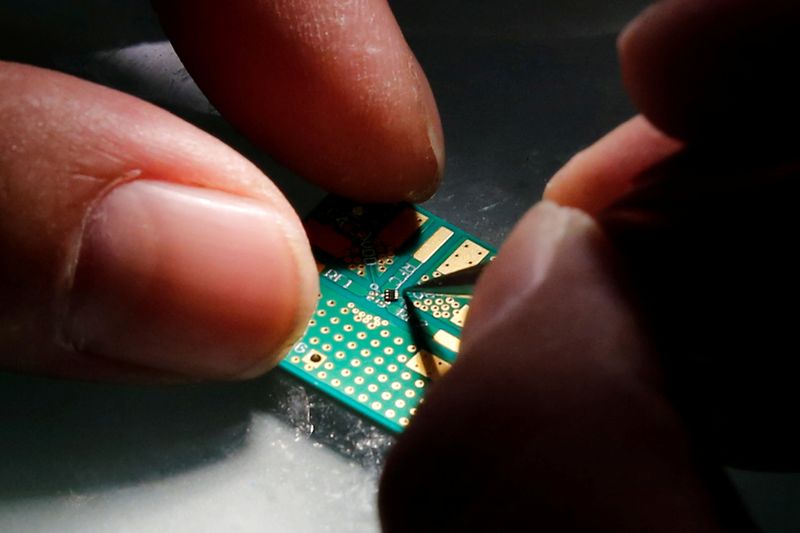
Hua Hong Group has developed 7nm manufacturing technology and Huali Microelectronics is preparing the process in Shanghai; Hong Kong-listed Hua Hong shares jumped 5.3% to HK$92.65 and the Shanghai-listed stock rose 2.1% to 121.65 yuan. Test production is underway with initial capacity expected at a few thousand wafers/month by year-end, with Huawei collaborating and Biren Technology using the line for prototypes. If commercialized, Hua Hong would become the second Chinese foundry capable of 7nm after SMIC, supporting Beijing's push to reduce reliance on foreign suppliers even as the U.S. eases some AI chip export restrictions.
A nascent onshore fab ramp materially shifts bargaining power down the semiconductor stack: system integrators and local OSAT/test houses will capture a disproportionate share of early-dollar flows versus premium EUV-equipment suppliers. Expect spot demand for legacy 300mm/200mm tools, specialty gases and substrates to reprice first — these markets are thin and can move margins for smaller suppliers by 10-20% within quarters.
Key near-term risks are executional rather than strategic: multi-patterning and yield maturation will determine whether local wafers displace imports or only satisfy prototype/edge demand. Operational cadence matters — prototypes can generate order flow within months but economics won’t improve materially until yields and cycle times normalize, a 12–24 month process in past ramps.
From a competitive standpoint, Western ecosystem participants face a bifurcation: IP/EDA and software providers can monetize via licensing with low friction, while advanced capital-equipment vendors remain exposed to geopolitical controls and displaced demand. Second-order winners include regional logistics, specialty chemical suppliers and server OEMs that can certify new silicon quickly; losers are manufacturers whose cost base is fixed around high-dollar equipment deliveries that may see program delays.
Consensus optimism underestimates two tail events that would reverse the trade — abrupt export-policy tightening and a prolonged yield plateau — both capable of erasing early revenue expectations. That makes convex, hedged exposure preferable to outright directional bets until a clear production cadence and yield curve emerge over the next 6–18 months.
AI-powered research, real-time alerts, and portfolio analytics for institutional investors.
Request DemoOverall Sentiment
moderately positive
Sentiment Score
0.45
Ticker Sentiment
