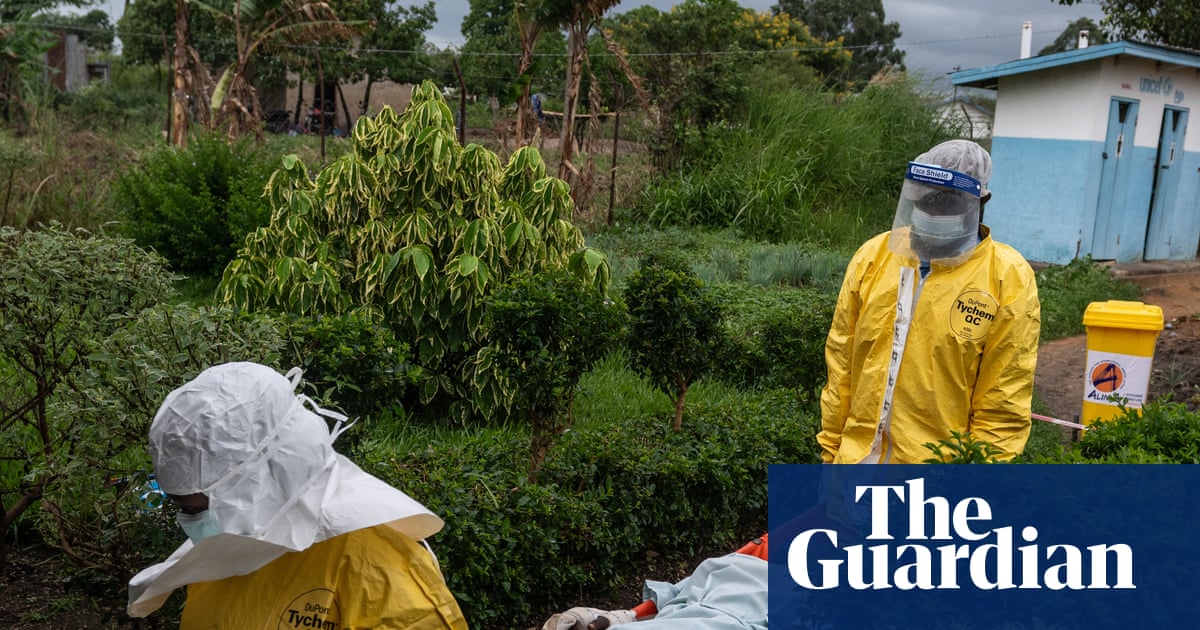
The WHO raised the Democratic Republic of the Congo Ebola outbreak risk to "very high" as suspected cases rose to almost 750 from 246 a week earlier and suspected deaths climbed to 177 from 65. The outbreak, centered in Ituri province and spilling into Uganda, is being complicated by local distrust and an attack on an Ebola treatment setup, while officials say resources remain insufficient. WHO also noted obeldesivir as a potential antiviral candidate, but no approved vaccines or treatments exist for the Bundibugyo strain.
The immediate market implication is not a broad healthcare uplift but a local failure of containment that raises the probability of repeated operational disruptions across eastern DRC. That matters because the first-order impact is on humanitarian logistics, while the second-order effect is on mining corridors, border commerce with Uganda, and any NGO/aid-dependent service networks that rely on physical access and community cooperation. In other words, the market should think less about direct Ebola monetization and more about the spillover into regional risk premia, transport bottlenecks, and a weaker backdrop for frontier Africa exposure.
The key catalyst path is asymmetric: over the next 2-6 weeks, either community mistrust gets addressed and case detection improves, or the response stalls and the outbreak becomes a recurring headlines risk. The downside tail is not global pandemic transmission; it is prolonged local instability that can intermittently shut roads, hospitals, and border posts, degrading economic activity in a region already thin on redundancy. The fact that the strain lacks existing vaccines/treatments raises the operational burden and extends the window where sentiment can stay risk-off even if case growth later moderates.
The contrarian point is that rising case counts may be interpreted as proof the surveillance net is working, which could cap panic in global markets. That makes a short-duration market overreaction more likely than a durable global de-risking event. However, the response capacity gap and aid-friction mean any positive epidemiological signal can be offset by implementation failures, so the tradeable edge is in relative rather than outright exposure.
From a biotech angle, the event may improve the strategic value of broad-spectrum antiviral platforms and outbreak-response enablers, but investors should be careful about assuming immediate commerciality. If trials around post-exposure prophylaxis advance, the real upside accrues to firms with rapid trial infrastructure and government procurement relationships rather than pure-play Ebola names. The most actionable implication is to own tools and logistics providers that monetize preparedness, not the outbreak itself.
AI-powered research, real-time alerts, and portfolio analytics for institutional investors.
Request DemoOverall Sentiment
strongly negative
Sentiment Score
-0.78
