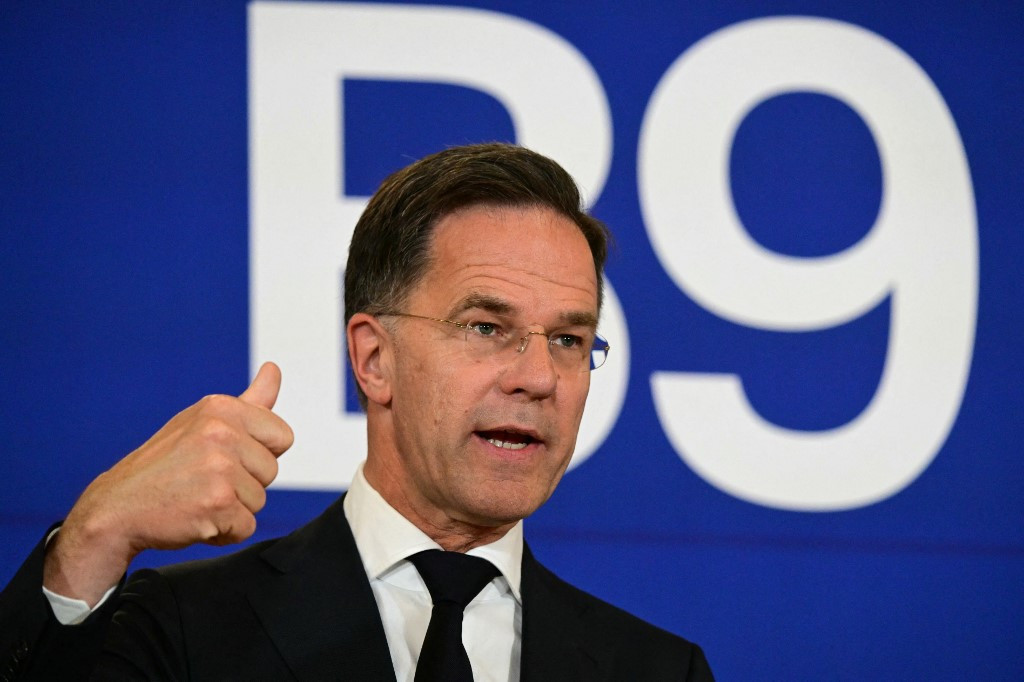
NATO Secretary General Mark Rutte will meet next week with Europe’s largest defense CEOs, including Rheinmetall, Safran, Airbus, Saab, MBDA, and Leonardo, to accelerate arms production and finalize multi-billion-dollar procurement packages ahead of the July NATO summit in Ankara. The push is aimed at expanding missile and air-defense capacity, increasing Europe’s defense industrial base, and reducing reliance on slower government purchasing cycles. The initiative supports the sector and may lift defense spending expectations across Europe, though it is driven by heightened geopolitical urgency.
This is less a pure demand story for defense primes than a forced re-rating of the European industrial base toward pre-commitment capex. The first-order winners are the companies with excess manufacturing headroom, bottlenecked inputs, and the ability to monetize urgency through framework agreements rather than waiting for full budget cycles; that favors diversified primes over niche subcontractors because they can allocate working capital faster and capture systems integration margin. The second-order beneficiary set is broader than the headline names: propulsion, energetics, specialty metals, guidance, and test-equipment suppliers should see the fastest incremental pricing power as missile inventories are the binding constraint.
The key market risk is that the rally could initially over-discount order flow while underestimating execution drag. Europe can announce procurement in weeks, but moving from political intent to signed contracts, financed capex, and qualified output typically takes 6-18 months, meaning the near-term upside is mostly sentiment and backlog optionality, while the real revenue inflection likely lands in 2026-27. Any disappointment around plant permits, labor scarcity, or export-control frictions would hit the more levered midcaps first, especially where current valuations already embed a multi-year capacity expansion.
The contrarian angle is that this may be more favorable for suppliers of production bottlenecks than for final assemblers. If governments are now willing to underwrite inventory, tooling, and multi-year capacity, the highest incremental margin may accrue to companies selling explosives, rocket motors, sensors, and machine tools rather than headline platform builders whose margins are capped by fixed-price contracts. Also, a credible European rearmament cycle reduces some tail dependence on US demand, which can compress the strategic premium on American defense names if investors have crowded into the 'safe geopolitical hedge' trade.
AI-powered research, real-time alerts, and portfolio analytics for institutional investors.
Request DemoOverall Sentiment
mildly positive
Sentiment Score
0.20
