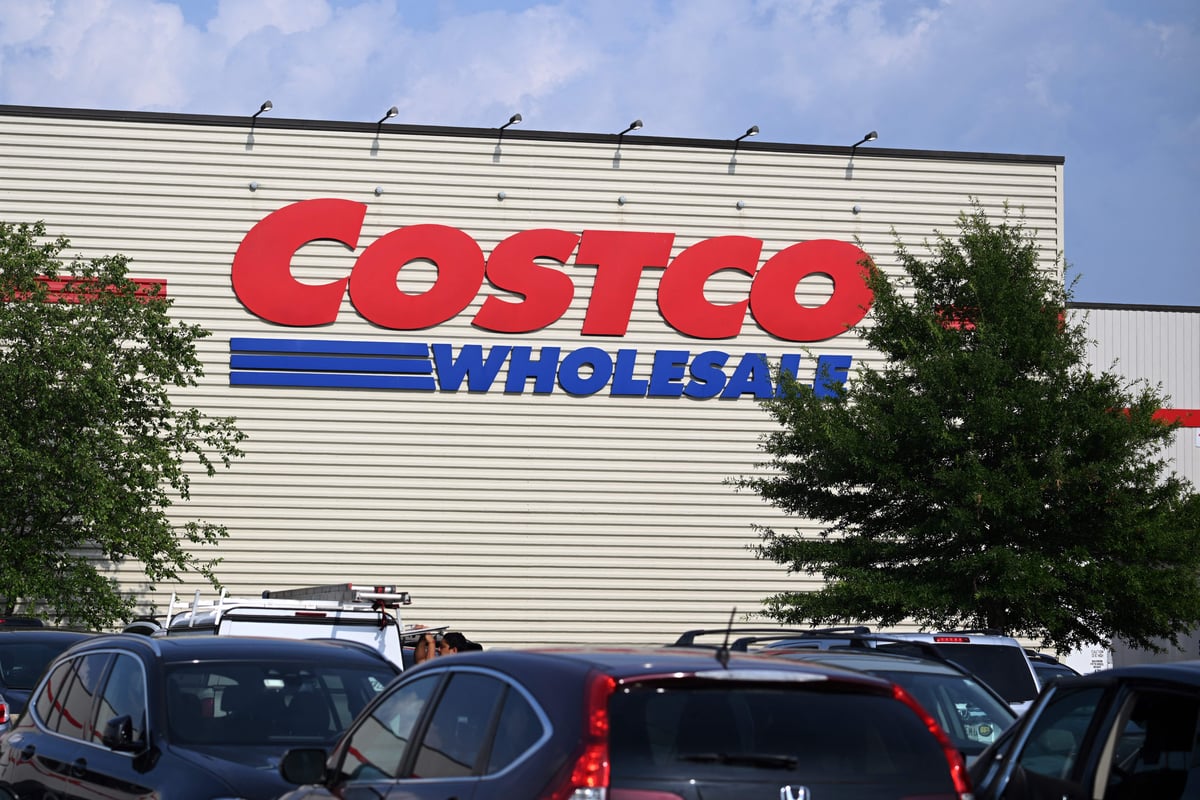
Costco shares have lagged the broader market this year (COST down ~3.3% YTD vs. S&P 500 up 14%), despite the company’s strong fundamentals—high membership retention, a low-margin/high-volume model (merchandise operating income <2% of revenue), and benefits from its Kirkland private label and efficient supply chain. The stock is coming off a 38.8% gain in 2024 and now trades at a forward P/E well above its 10-year median of 36.4 (and higher than some AI growth names), while same-store sales recently missed expectations and the dividend yield is only ~0.6%. Given the stretched valuation, the piece argues Costco is unlikely to offer attractive returns for 2026 and recommends better-valued growth or dividend names such as Coca‑Cola (2.8% yield) and PepsiCo (3.9% yield).
Market structure: The retail winners are value-oriented chains and staples (WMT, KO, PEP) that capture share from discretionary-focused retailers (TGT, HD) as consumers trade down; Costco retains traffic but its stretched multiple implies less upside. Private-label strength (Kirkland) and membership economics sustain steady cash flow, keeping supply-demand for warehouse space and wholesale goods tight even if same-store sales decelerate by ~1–3% over the next 2–4 quarters. Cross-asset: higher defensive flows should modestly tighten investment-grade spreads and lift long-duration staples; elevated retail idiosyncratic volatility will pressure single-stock options skew and may strengthen USD on safe-haven rotation into consumer staples and tech names like NVDA/AVGO.
Risk assessment: Tail risks include membership attrition >5% (high-impact), a tariff escalation versus China that increases COGS by 100–200 bps, or a surprise special dividend cut that damages sentiment; rising rates could compress high-PE retail multiples by 10–25% in 6–12 months. Immediate (days) risk is earnings/SSS headlines; short-term (weeks–months) is margin realization and guidance; long-term (years) is valuation re-rating if revenue growth fails to justify premium. Hidden dependency: Costco’s valuation depends disproportionately on recurring fee elasticity and periodic special dividends — both binary and easy to misprice.
Trade implications: Direct play: avoid unhedged large longs in COST at current forward P/E (>>10-year median 36.4); prefer long WMT and KO/PEP for 6–12 months (defensive carry). Pair trade: long KO (2–3% portfolio) / short COST (1–2%) to capture yield + valuation gap; horizon 6–12 months. Options: buy 3–9 month put spreads on COST (cost-limited hedge) and sell OTM puts on WMT to harvest premium. Sector tilt: move 5–10% from high-PE retail exposure into staples and selective AI leaders (NVDA/AVGO) for asymmetric growth/defense mix.
Contrarian angles: Consensus underestimates Costco’s optionality from recurring special dividends and pricing levers — a surprise special dividend or membership hike passed through could re-rate shares quickly; conversely, current pessimism may be overdone if membership renewal stays >88–90%. Historical parallel: post-2002 reversals show durable retail franchises can re-accelerate after cyclical troughs; risk is a crowded short that could induce transient squeezes. Watch two binary triggers: (1) membership renewal rate <88% or (2) management signals inability to pass tariffs — either should materially change position sizing within 2–6 weeks.
AI-powered research, real-time alerts, and portfolio analytics for institutional investors.
Request DemoOverall Sentiment
moderately negative
Sentiment Score
-0.35
Ticker Sentiment
