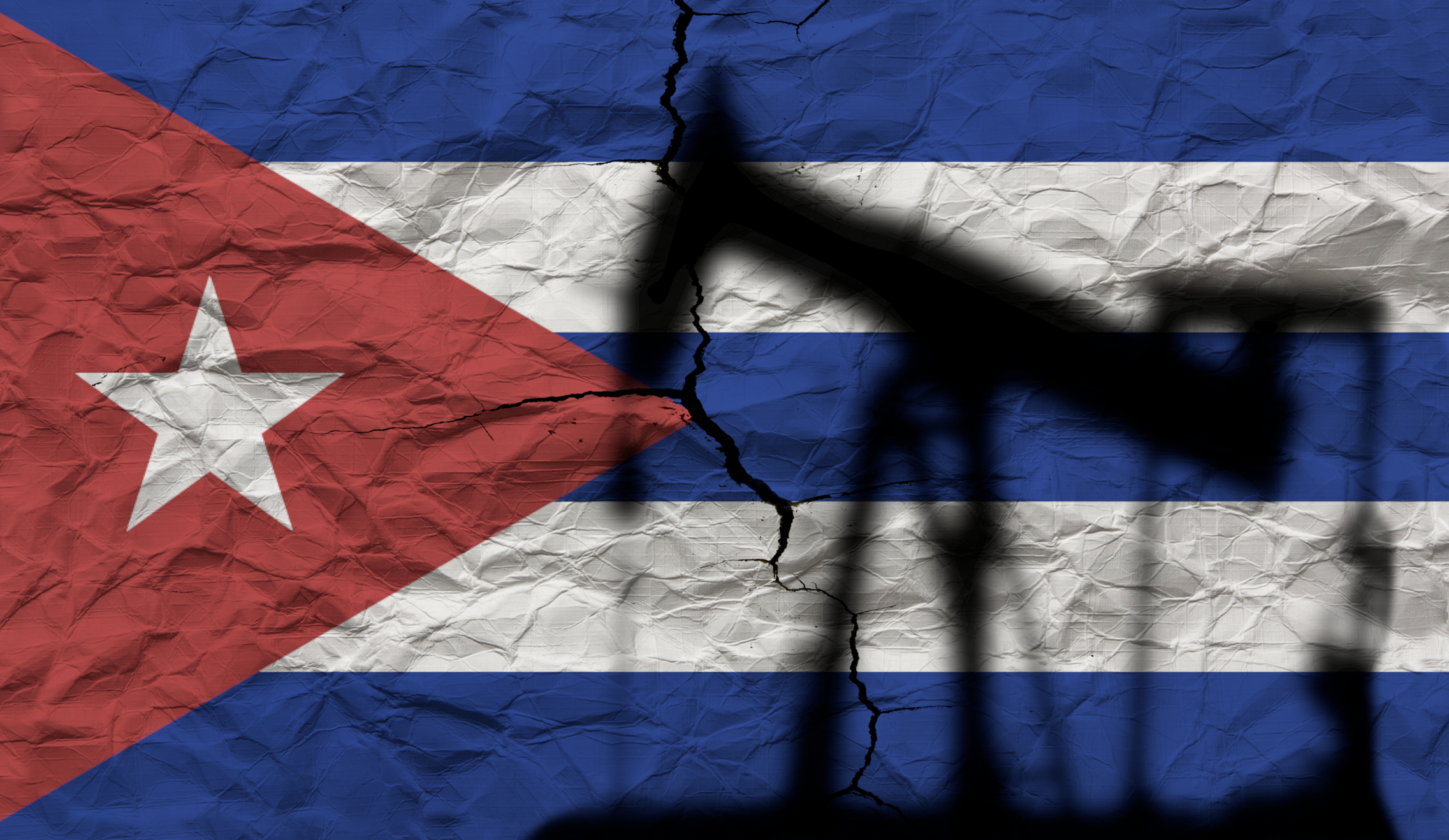
A nationwide "total disconnection" on March 16 left Cuba's roughly 10 million people without power—its third major blackout in four months—forcing hospital suspensions, business closures, and contributing to soaring food prices and peso devaluation. U.S. sanctions and an effective oil blockade (Cuba reportedly needs ~100,000 barrels/day) are cited as key drivers; the Treasury has allowed limited resale for humanitarian/commercial use and the U.S. announced $6m in aid, but the shortfall and heightened U.S.-Cuba tensions pose material near-term risks to regional energy flows and geopolitical stability.
The near-term shock is best viewed as a choke-point event that amplifies existing regional frictions rather than a binary regime-change story. Disruptions to constrained product and crude flows create outsized effects on freight and refining margins because marginal barrels have long lead times and limited spare shipping capacity; a modest rerouting of cargoes can lift tanker rates and prompt refinery run cuts within weeks. Financially, this dynamic compresses carry in commodity forwards (backwardation widens) and lifts implied volatility in energy and emerging‑market credit for 30–90 day horizons.
Second-order losers are not limited to energy importers: insurers, P&I clubs, and banks financing cross‑Caribbean trade face elevated operational and counterparty risk as vessels and cargoes reroute through jurisdictions with stronger compliance regimes. Conversely, liquid exposures that benefit from higher freight yields and wider refining crack spreads (tanker equities, refiners with access to displaced feedstock) will see earnings leverage without requiring crude to spike sustainably. Social and migration pressure increases fiscal strain on nearby EM sovereigns and can widen FX dispersion among regional currencies within 1–6 months.
Key catalysts that would reverse the current premium are diplomatic reopening of formal trade corridors or a rapid commercial workaround (third‑party resales and insurance solutions) that restores predictable flows; both can compress the risk premium in 30–90 days. Tail risks include military incidents, asset seizures, or wider embargoes that could entrench structural re-routing for years and reprice long‑dated shipping and insurance multiples. Monitor tanker spot rates, bunker spreads, and short‑dated CDS in Caribbean‑adjacent sovereigns as high‑signal, low‑latency indicators.
AI-powered research, real-time alerts, and portfolio analytics for institutional investors.
Request DemoOverall Sentiment
strongly negative
Sentiment Score
-0.75
Ticker Sentiment
