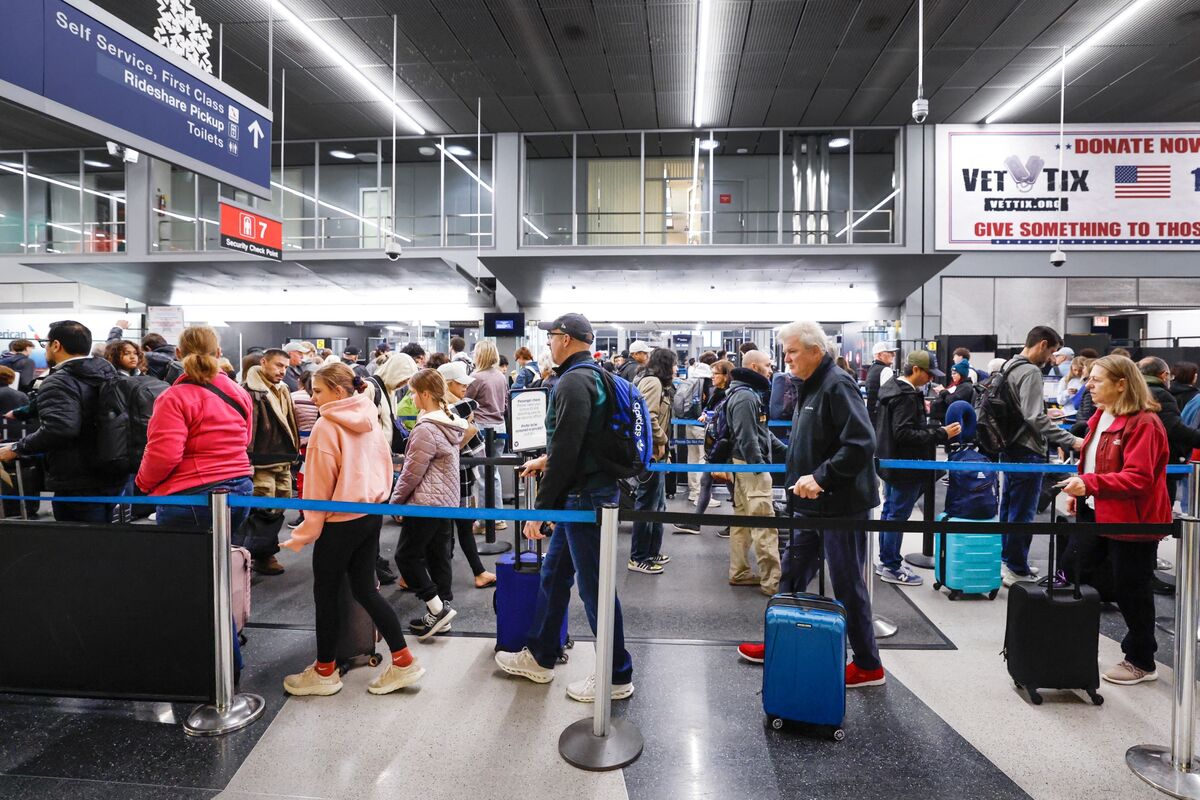
A Gulf-fed storm is forecast to drop up to a foot (30 cm) of snow across parts of Iowa, Minnesota and Illinois over roughly 24 hours starting overnight Friday, threatening major travel disruptions in Chicago and surrounding cities as many Thanksgiving travelers return home. The timing elevates near-term risk of flight cancellations, surface-transport delays and localized retail and logistics disruption, which could temporarily affect airline operations, ground-transport providers and regional economic activity.
Market Structure: Near-term winners are hotels/ground-transport (MAR, CAR) and retailers/grocers (WMT, COST, DG) due to rebookings and last‑mile demand; losers are short‑haul airlines and airport service providers (LUV, AAL, UAL, JETS ETF) because cancellations/reaccommodation reduce yields by an expected 1–3% revenue hit over 3–7 days. Logistics carriers (FDX, UPS) face volume timing risk—perishable freight delays raise costs but create short-term margin tailwinds from expedite fees. Pricing power shifts modestly toward localized services (rideshare, hotels) while national carriers absorb fixed costs of disrupted schedules.
Risk Assessment: Tail risks include multi‑day FAA ground stops or widespread infrastructure damage causing cascade cancellations (10%+ weekly revenue hit for regional carriers) and higher insurance losses for auto/home insurers (TRV, ALL) if storm intensity exceeds forecasts. Immediate impacts concentrated over 48–72 hours; expect normalization in 1–3 weeks unless staffing shortages amplify recovery. Hidden dependencies: holiday staffing levels, spare aircraft availability, and pipeline timing for refrigerated goods can magnify supply shortages beyond initial weather impact. Catalysts: NWS storm severity updates, FAA advisories, and airline operational guidance will rapidly reprice equities and options vols.
Trade Implications: Tactical plays favor short‑dated volatility trades on travel names and relative long in hotels/retail. Buy 2–4 week put spreads on JETS or LUV to capture 20–40% IV upticks; rotate into MAR and WMT/ COST via short‑dated calls or 1–2% equity positions for 1–3 weeks. In commodities, a sub‑regional cold snap (temps 5°F below normals for 7+ days) warrants a small (0.5–1%) long in UNG for 1–2 weeks. Avoid large directional airline equity shorts longer than one month—operational disruptions are typically mean‑reverting.
Contrarian Angles: The market often oversells major carriers after storms despite robust hedging and holiday demand—look for 5–10% rebound opportunities 7–14 days post‑storm. Historical parallels (holiday storms 2014–2019) show 1–3 week revenue shocks but limited 3‑month equity downside for large carriers; insurance losses are more persistent. Unintended consequences: aggressive shorting of airlines risks gamma squeezes in thinly traded weeklies and elevated execution costs; conversely, hotels may already price in rebookings, capping upside.
AI-powered research, real-time alerts, and portfolio analytics for institutional investors.
Request DemoOverall Sentiment
mildly negative
Sentiment Score
-0.25
