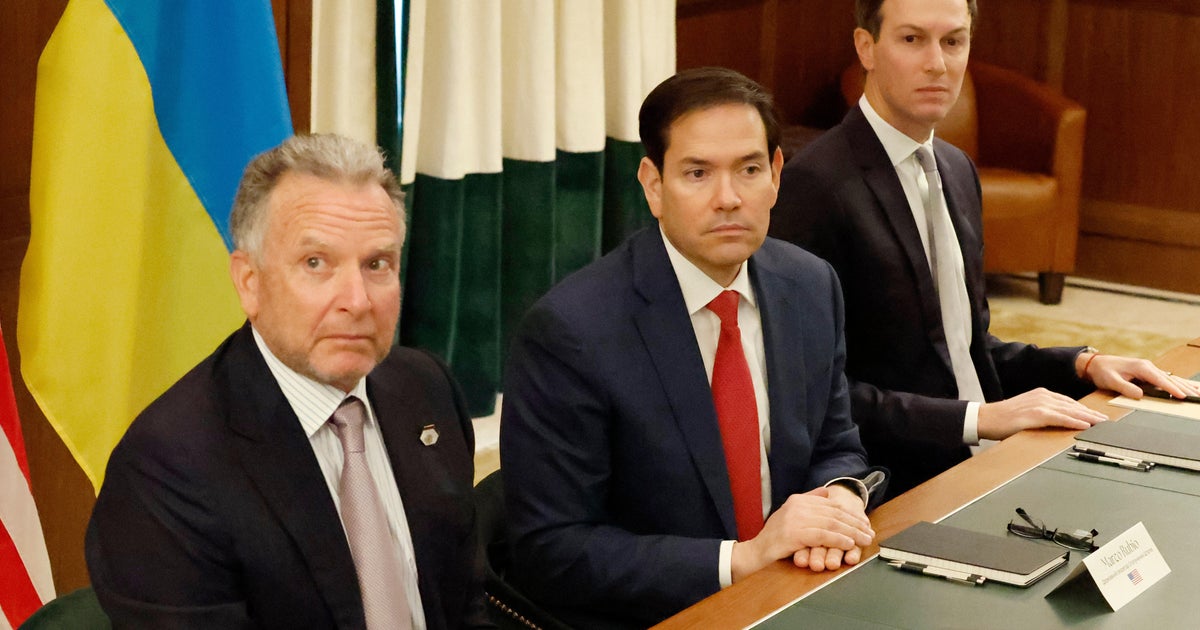
U.S. and Ukrainian officials, including Senator Marco Rubio and envoys Steve Witkoff and Jared Kushner, held roughly four hours of talks aimed at finding an endgame to the Russia-Ukraine war and will continue discussions in Moscow with President Putin. The original U.S.-Russia framework — criticized for limiting Ukraine's military, blocking NATO accession, requiring elections within 100 days and envisioning ceding Donbas — is being revised amid Kyiv political turbulence after the resignation of chief negotiator Andriy Yermak over a corruption probe; the outcome preserves continued geopolitical and domestic uncertainty with implications for regional risk premia and defense/energy sector exposure.
Market structure: A credible de-escalation thread would favour cyclical European equities, commodity consumers and FX pairs tied to risk (EUR, NOK) while compressing the risk premium in oil and European gas. Direct losers would be U.S. military suppliers (Lockheed LMT, RTX, GD) and volatility-sensitive insurers; if sanctions ease crude downside of $8–$20/barrel within 1–3 months is plausible, pressuring XLE and USO. Cross-asset mechanics: lower geopolitical premia likely push 10y yields +20–50bp as equities rerate higher, FX shifts toward EM (RUB may appreciate 10–25% if sanctions materially ease), and implied volatility collapses 20–40% from stressed levels.
Risk assessment: Tail risks include a breakdown in talks or a political reversal in Kyiv that triggers renewed sanctions/escalation (low-probability, high-impact) which could spike oil +$20 and VIX >40 within days. Time horizons: immediate (days) driven by headlines around Witkoff–Putin meetings; short-term (weeks–months) driven by confirmation of gas flows and sanctions language; long-term (quarters–years) by NATO posture and defense budgets. Hidden dependencies: Ukraine’s domestic corruption/leadership changes can unpick any deal fast, and EU winter gas inventories/flows are a nonlinear amplifier. Catalysts to watch: official Russian concessions, U.S. sanction waivers, EU gas flow reports—any of which can flip markets within 48–72 hours.
Trade implications: Tactical plays: short defense delta via 3-month put spreads on LMT/RTX sized 1–2% portfolio, short crude (USO or one CL contract per $5m AUM) via 3-month put spreads, and trim duration (sell TLT or short 10y futures) to reprice for +20–50bp yields. Relative value: long Eurostoxx (FEZ) vs short XAR (defense ETF) to capture de-risking; hedge tail with 0.5–1% allocation to VIX calls or 0.5% GLD. Entry: stagger over next 5 trading days around Putin meeting; exit or reassess if oil moves >$8 or VIX <12.
Contrarian angles: Consensus underestimates deal fragility — markets may price peace too quickly; defense names could snap back if any violation occurs, so avoid naked shorting and prefer limited-loss option structures. Historical parallels (Balkans ceasefires; 1990s Mideast deals) show short-lived reprieves often followed by renewed volatility; mispricing exists in long-duration sovereign bonds and some cyclicals that assume permanent normalization. Unintended consequence: a ‘peace’ that locks Ukraine into neutrality could lower long-term Western defense budgets marginally (2–5% over 2–3 years), so rebalance long-term defense exposure only gradually.
AI-powered research, real-time alerts, and portfolio analytics for institutional investors.
Request DemoOverall Sentiment
neutral
Sentiment Score
-0.10
