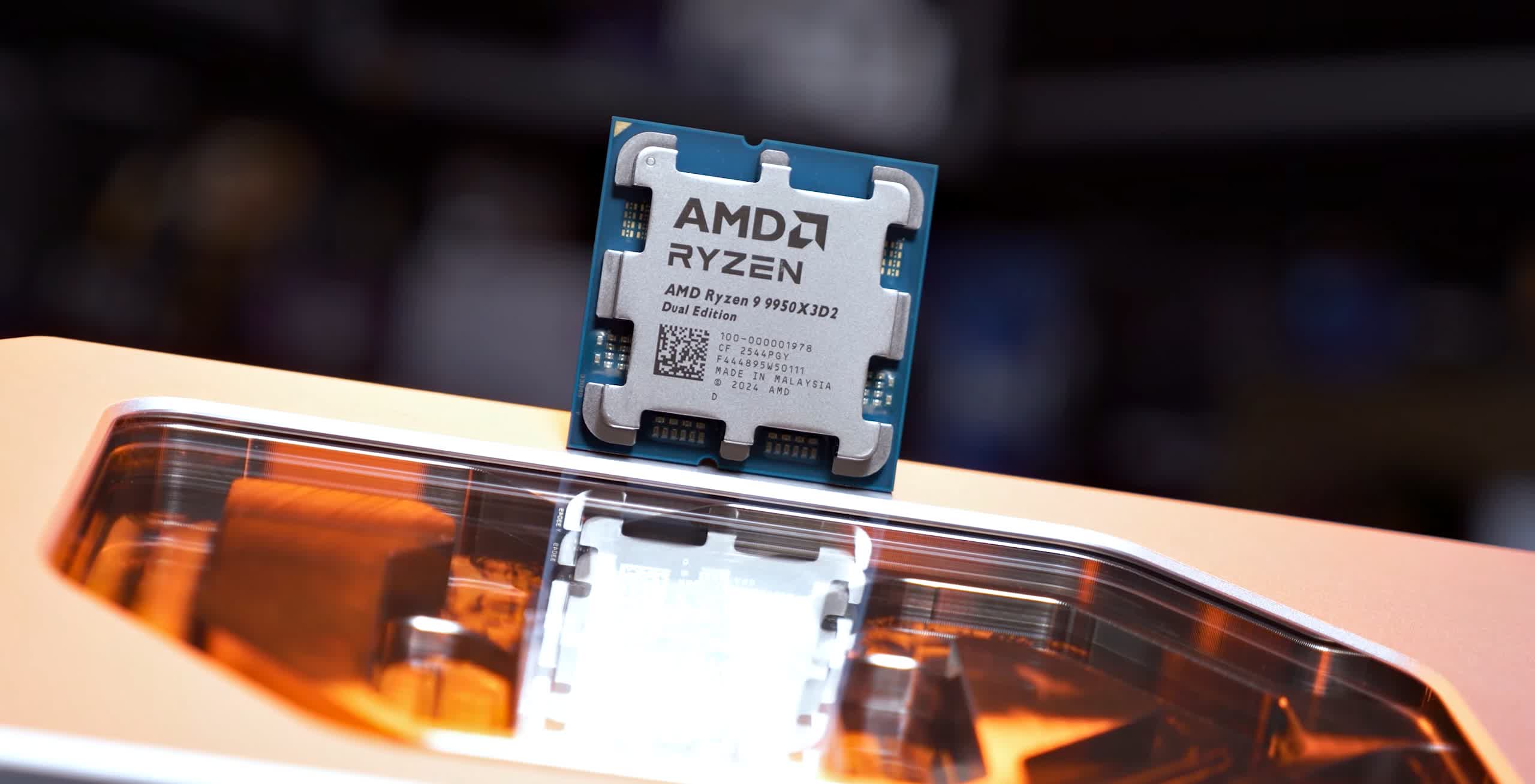
AMD’s new Ryzen 9 9950X3D2 Dual Edition is the first CPU with 3D V-Cache on both CCDs and carries a $900 MSRP, up 29% from the original 9950X3D. The review says productivity gains are modest, around 3% overall and up to 7% in select workloads, while gaming performance is essentially unchanged versus the 9950X3D. Power draw worsened materially, rising about 27% for just a 4% Cinebench gain, making the chip poor value despite its halo-product appeal.
AMD has used a halo SKU to defend the narrative that it still owns the premium gaming conversation, but economically this looks more like a margin-purity play than a demand-expanding product. The key second-order effect is not unit volume; it is channel mix and ASP discipline. A $900 flagship can lift average selling prices and reinforce brand leadership without materially shifting the mainstream upgrade path, which remains anchored to cheaper X3D parts.
For Intel, the interesting takeaway is less about losing a head-to-head benchmark and more about relative value perception in the enthusiast/workstation segment. If AMD keeps pushing a price ceiling above what most buyers will tolerate, Intel’s value proposition in productivity-oriented desktop builds becomes easier to defend, especially when buyers are already price-sensitive and bundle total platform cost into the decision. That can matter more than raw benchmark deltas over the next 1-2 quarters because OEMs and system integrators care about bill-of-materials economics, not trophy chips.
The main risk to the bearish AMD read is that halo products often matter disproportionately for brand halo and ecosystem stickiness, which can support share at the low end over a longer cycle. But near term, this launch looks unlikely to move the needle on shipments because the performance uplift is too small versus the price step-up. The more actionable catalyst is retail channel normalization: if sell-through is weak, expect promotional pressure on existing high-end Ryzen SKUs within weeks to months, which would compress gross margin on the premium desktop stack.
The contrarian view is that the market may underappreciate how much AMD can use a non-volume flagship to preserve pricing power across the rest of the lineup. If this SKU does not cannibalize the 9950X3D and instead broadens the ladder above it, AMD may still win on mix even if the new part is commercially niche. Intel, meanwhile, may not get a durable share pickup unless it can translate relative value into OEM design wins and sustained marketing spend, not just benchmark talking points.
AI-powered research, real-time alerts, and portfolio analytics for institutional investors.
Request TrialOverall Sentiment
mildly negative
Sentiment Score
-0.15
Ticker Sentiment
