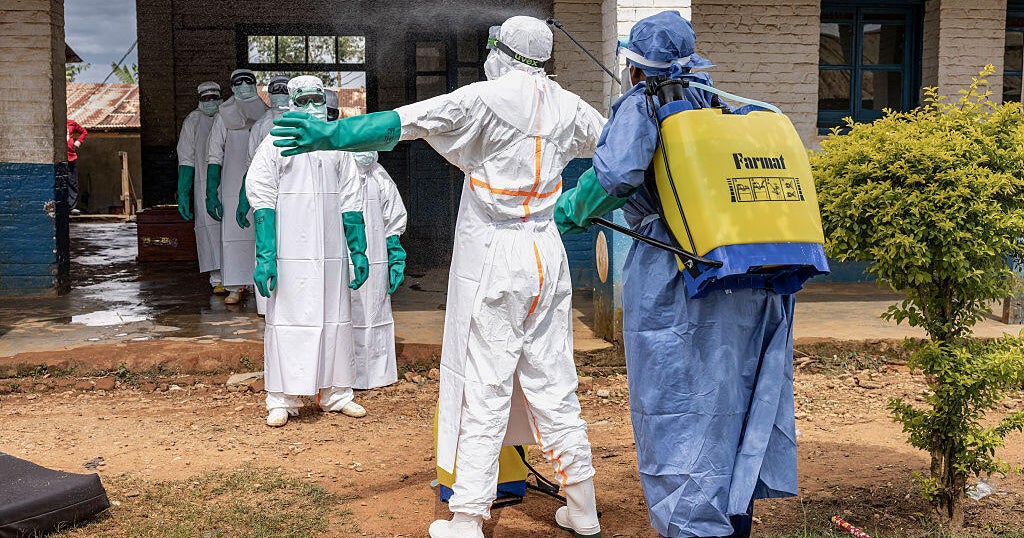
The article highlights two active outbreaks — hantavirus on a cruise ship and Ebola in Africa with more than 1,000 suspected cases — while criticizing Trump administration cuts to CDC, FDA, USAID, and pandemic preparedness funding. Democrats and public health leaders argue the reductions have weakened outbreak response, slowed surveillance in Congo, and left the U.S. less prepared for future pandemics. The White House and CDC pushed back, saying the response is coordinated and effective, but the story raises broader concerns about public-health capacity and policy risk.
The market implication is less about the outbreaks themselves and more about regime risk: the administration is creating a persistent credibility discount on U.S. public health readiness. That matters for defensive healthcare equities because the policy environment is now bifurcating winners: large-cap vaccine, diagnostics, and hospital supply names with global footprints should gain incremental share of outbreak-response spending, while smaller government-adjacent service providers and NGOs exposed to federal grants face delayed funding and contract volatility.
Second-order effects are likely in emerging-market health infrastructure and logistics rather than in domestic hospitals. If USAID-style surveillance and containment capacity is impaired, the probability distribution shifts toward more frequent, longer-dated regional flare-ups that require emergency airlift, cold-chain, and field diagnostics; that is structurally supportive for a narrow set of life-science tools and freight/logistics providers, but negative for frontier-market risk assets and any multinational with material West/Central Africa exposure.
The political catalyst window is days to weeks, but the investment risk runs months: every additional case count, evacuation headline, or WHO rebuke reinforces the narrative that U.S. preparedness is underbuilt. The main reversal would be a visible policy pivot—restoration of funding, rapid staffing, or a high-profile containment success—because absent that, the overhang becomes a standing election issue and a recurring source of headline risk for healthcare governance. A more subtle tail risk is that the administration overcompensates with travel restrictions and procurement nationalism, which could temporarily boost U.S.-centric suppliers but hurt global health security contractors and international NGOs.
Contrarian view: the direct revenue impact on most large-cap healthcare names is probably modest, and the selloff risk is better expressed through political-risk proxies than through broad healthcare beta. The better trade is not 'long pandemics,' but long companies that monetize preparedness regardless of incidence, while fading the assumption that federal retrenchment is irrelevant because private institutions will backfill it.
AI-powered research, real-time alerts, and portfolio analytics for institutional investors.
Request DemoOverall Sentiment
strongly negative
Sentiment Score
-0.55
