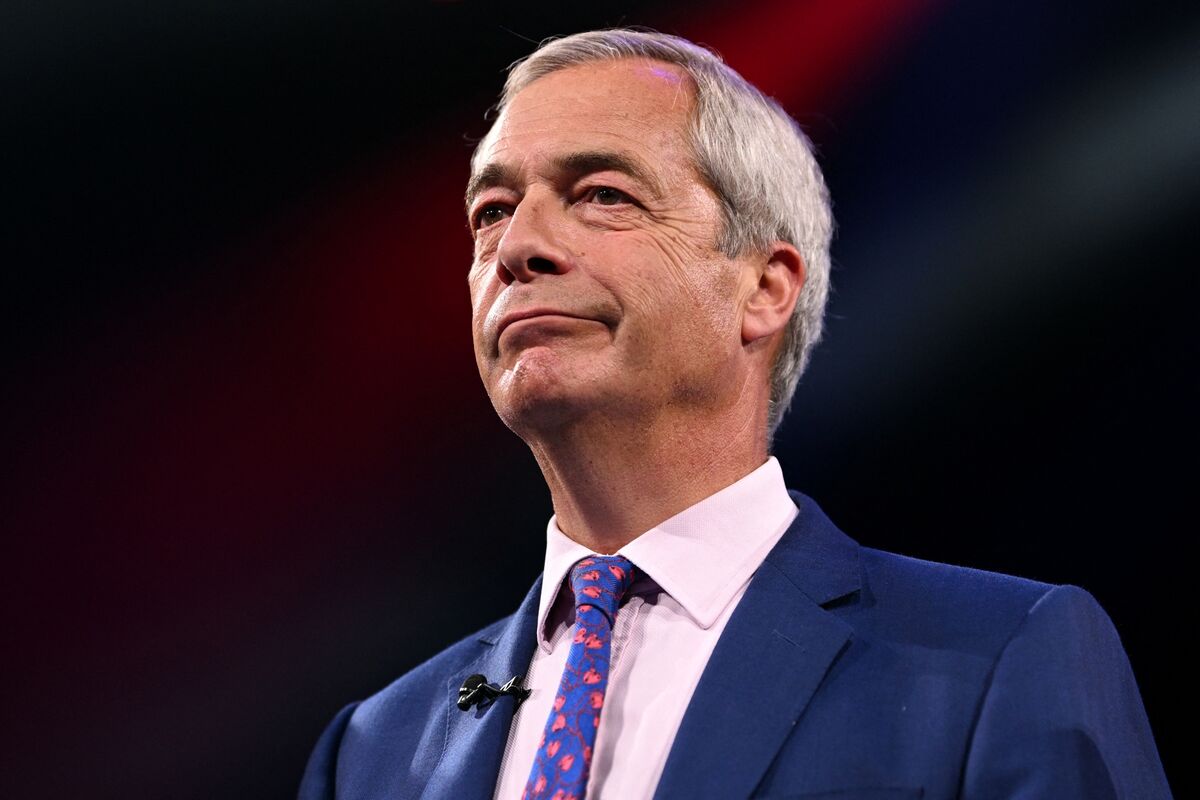
Nigel Farage’s Reform UK party has opened a bank account with Lloyds, providing the party with a formal banking relationship to receive funds and manage campaign finances. The development removes an operational hurdle for a high-profile political organisation and may have implications for the politics of banking and regulatory scrutiny, but it is unlikely to have any material impact on financial markets or Lloyds’ financials.
Market structure: Lloyds (LLOY.L) is the direct, if small, beneficiary — incremental deposit & fee flows and PR visibility — but materiality is low unless political donations exceed ~£250–500m (>=0.05–0.1% of Lloyds’ deposit base). Competitors (BARC.L, HSBA.L, NWG.L) are largely neutral on pure deposit economics, though banks that refuse controversial clients can gain perceived ESG credit and retail inflows. Pricing power is unchanged; this is a reputational/liquidity signal, not a structural franchise shift.
Risk assessment: Tail risks include regulatory fines, consumer boycotts, or heightened AML scrutiny; a moderate scenario (reputational hit causing 0.2–0.5% retail deposit attrition) would cost Lloyds billions of pounds and move shares 3–8% near-term. Immediate impact (days) should be negligible; watch short-term (weeks/months) around donation filings and FCA commentary; long-term (quarters/years) matters only if Reform UK translates into sustained policy volatility (gilt yields +20–50bps risk). Hidden dependency: visibility of donation flows (Electoral Commission) will drive market moves, not the account-opening headline.
Trade implications: Tactically, target a small overweight to LLOY.L (1–2% portfolio) with a 3-month horizon—take profits on a 10–15% rally and cut on a 6% drawdown. Pair trade: long LLOY.L vs short HSBA.L (HSBA.L) to express UK retail bank exposure vs global bank cyclicality; size 0.5–1% net. Options: buy a 3-month LLOY.L call spread (approx +7%/+15% strikes) to cap premium; trigger addition if Electoral Commission shows >£50m new deposits or polls show Reform UK >10% in 60 days. FX: if Reform UK polling rises >5ppt in 30–60 days, consider 0.5–1% short GBPUSD.
Contrarian angles: The market underestimates compliance cost risk — a £100–300m uplift in remediation/AML spend (10–30bp revenue impact) would be meaningful for bank earnings yet underpriced. Historical parallels (payment platforms cutting ties) show outcomes vary: losing clients is as damaging as keeping them; consensus assumes benign outcome — that may be underdone. Key unintended consequence: reputational fallout could provoke stricter FCA guidance within 30–90 days, creating a regulatory squeeze across UK retail banks that would compress multiples by 5–10% collectively.
AI-powered research, real-time alerts, and portfolio analytics for institutional investors.
Request DemoOverall Sentiment
neutral
Sentiment Score
0.00
