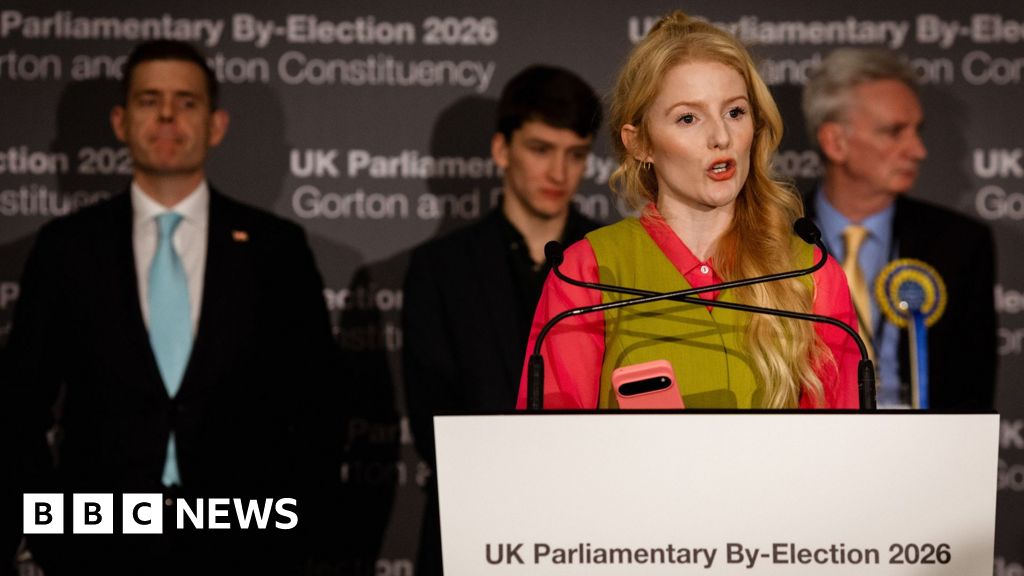
The Green Party, led by Zack Polanski, won the Gorton and Denton Westminster by-election with Hannah Spencer as MP, overturning a substantial Labour majority; the Conservatives polled only about 700 votes, finished roughly 14,000 votes behind the winner and were only ~547 votes ahead of the Official Monster Raving Loony Party. Alongside last May’s Runcorn and Helsby upset by Reform UK, the results point to a rising insurgent-party dynamic on both flanks that increases political-risk uncertainty ahead of the May elections. Immediate market impact is limited, but a sustained realignment could raise policy and electoral risk premiums for UK domestic-sensitive assets over a longer horizon.
Market structure: A Green by-election victory lifts the probability of accelerated UK green policy at the margins, benefiting renewables, grid operators and retrofit/EV infrastructure suppliers while creating downside for oil-heavy E&P and high-carbon construction. If Green influence spreads into May elections, expect a reallocation of public capex of £1–5bn/year into clean energy within 12–24 months, improving forward cashflow visibility for listed green utilities.
Risk assessment: Tail risks include political fragmentation driving GBP volatility (±3–5%) and a gilt sell-off if fiscal stimulus for green projects is combined with looser budgets (pick-up of 20–50 bps in 5–10y yields). Immediate market moves are likely muted (days); watch for elevated political volatility over 4–12 weeks ahead of May elections and structural policy effects over 1–3 years. Hidden dependency: supply chains (China rare-earths, lithium/nickel) could limit benefit to European producers.
Trade implications: Tilt portfolios toward UK/European renewables & grid exposure (e.g., ICLN ETF for US-listed clean energy, SSE.L/NG.L in UK) and building-materials/retrofit beneficiaries (CRH.L), while keeping small, tactical shorts on fossil-integrated names (BP.L, SHEL.L) sized to catalyst risk. Use 3–9 month call spreads to express upside in clean-energy ETFs and 3-month GBPUSD straddles or 5–10% put exposure to hedge currency/gilt tail risk.
Contrarian angle: The market may over-interpret a single by-election — historical insurgent surges often fade without national organisation; don’t over-shorten oil majors or levered UK consumer names yet. If Green messaging forces spending without credible revenue plans, rate-sensitive UK assets (REITs, long-gilt duration) are the underpriced risk; consider hedges before May if implied vol is <expected political volatility.
AI-powered research, real-time alerts, and portfolio analytics for institutional investors.
Request DemoOverall Sentiment
neutral
Sentiment Score
0.00
