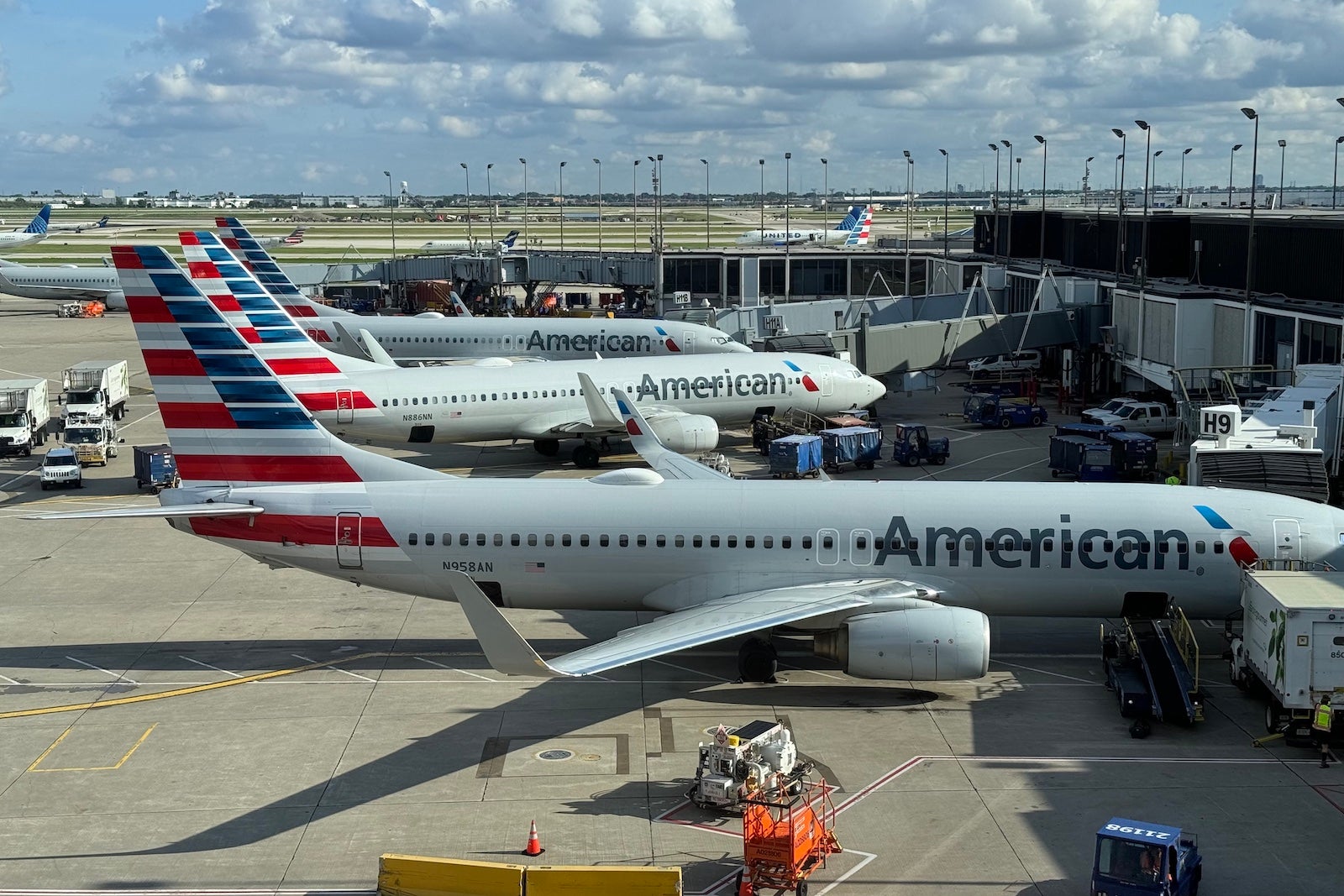
American Airlines is building a new 10,000-square-foot Admirals Club at Chicago O'Hare (Concourse L, Terminal 3) to replace its existing facility, with construction already underway and no announced opening date. The move accompanies a broader ORD expansion—American expects total departures in H1 2026 to be up ~17% year-over-year per Cirium—and is positioned as part of an aggressive competitive push against United, likely improving customer experience but representing a modest, strategic capital investment with limited near-term market impact.
Market structure: American (AAL) is the direct beneficiary — the new 10,000 sq ft Admirals Club and a +17% departures plan at ORD for H1 2026 are explicit signals of capacity and brand investment to take share from United (UAL). Expect localized fare pressure on overlapping routes; conservatively model mid-single-digit downward pressure on yields (3–7%) on contested ORD markets over the next 6–12 months while load factors reprice. Card networks (C, MA) are secondary beneficiaries as premium-card-driven lounge access supports higher spend and retention among top-tier travelers. Risk assessment: Tail risks include (1) an overcapacity price war between AAL and UAL that trims consolidated margins by >200bp if sustained for two quarters, (2) construction/operational delays that push opex higher by 5–10% on the project, and (3) macro demand shock (recession) dropping leisure/business travel 10–20% within 3–6 months. Immediate risks (days-weeks) are limited; key short-term catalysts are Cirium capacity updates and AAL quarterly traffic/yield prints; long-term impacts play out over quarters as PRASM and loyalty monetization respond. Trade implications: Tactical overweight AAL to capture share gains and positive sentiment; consider 2–4% portfolio exposure with disciplined stops. Pair trades: long AAL / short UAL for 3–6 months targets relative outperformance if AAL sustains ORD growth; hedge if AAL yields decline >5% QoQ. Use 6–12 month call spreads on AAL to limit premium outlay and buy 1–2% overweight positions in C and MA to capture card spend upside. Contrarian angles: Consensus underestimates that lounges are strategic signalling tools, not just capex: they help secure high-ILS frequent flyers and corporate contracts that can lift PRASM >2–3% over 12–24 months if network density holds. The reaction could be overdone if investors expect immediate margin uplift; watch for historical parallels (capacity skirmishes in hubs 2018–2019) where initial fare cuts reversed once capacity stabilized. Monitor thresholds: if AAL’s ORD yield per ASM falls >5% QoQ or UAL posts aggressive capacity retaliation (+10% departures), reprice positions within 2–4 weeks.
AI-powered research, real-time alerts, and portfolio analytics for institutional investors.
Request DemoOverall Sentiment
mildly positive
Sentiment Score
0.30
Ticker Sentiment
