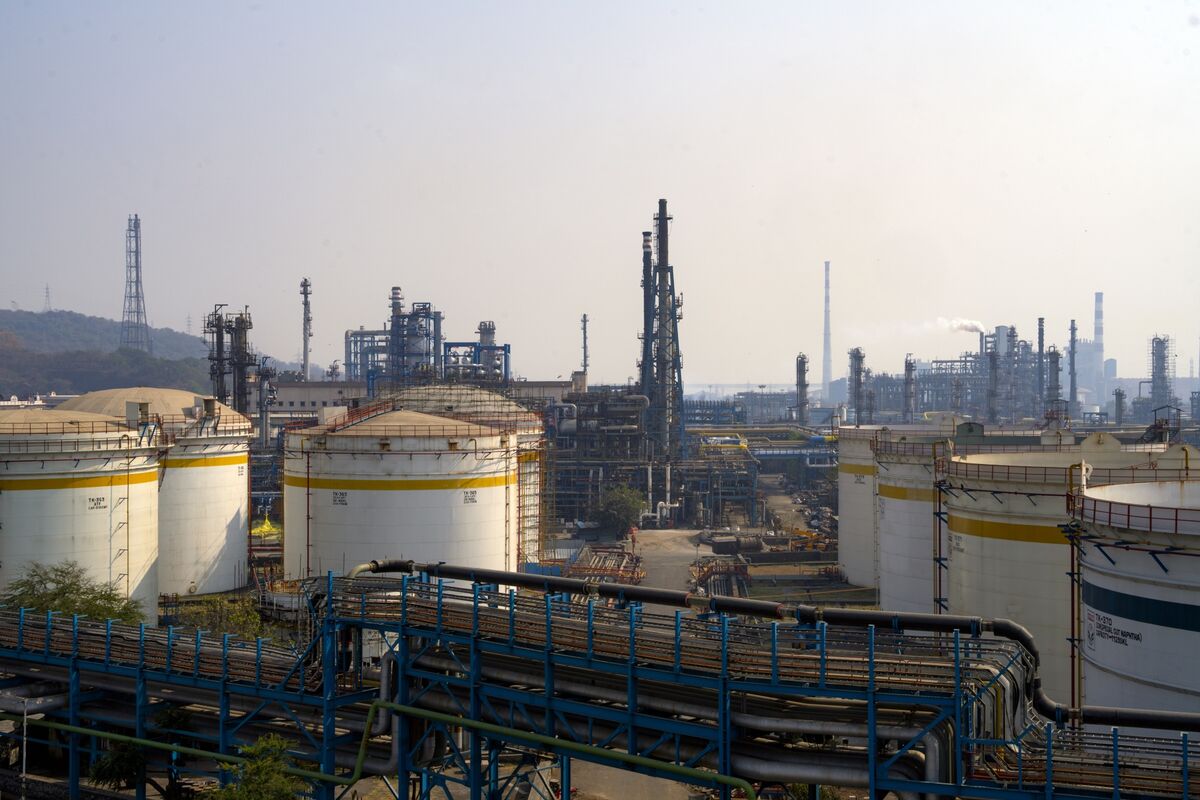
India’s state-run refiners have already secured enough crude for the next two months and are not rushing to resume Middle East purchases even as the Strait of Hormuz reopens. Middle Eastern suppliers, including Abu Dhabi National Oil Co., are pressing refiners to take contractual volumes under long-term agreements, but no commitment has been made yet. The piece points to a cautious, delayed normalization in crude buying rather than an immediate supply shock.
The market is likely underestimating the asymmetry of India’s stance: a temporary logistics normalization does not automatically translate into near-term procurement normalization. With state refiners already covered for roughly a quarter, the incremental demand impulse to Middle East grades is likely delayed, which compresses prompt regional differentials more than outright benchmarks. That creates a softer-than-expected bounce for Gulf producers and a relative advantage for non-Mideast barrels that can compete on flexibility, not just price.
Second-order, this delays the re-anchoring of long-term contractual flows that many Middle Eastern suppliers rely on to stabilize term volumes. If India continues to buy opportunistically rather than contractually, the knock-on effect is weaker utilization for spot-exposed shipping and less urgency for refiners to pay up for reliability. The biggest loser is not only Gulf crude pricing power, but also the signaling value of long-term offtake agreements in Asia, which could make other buyers more willing to renegotiate or defer volumes if the window stays open.
Catalyst-wise, the key horizon is 2-8 weeks: if the Strait stays open and freight normalizes, refiners may still drag their feet because inventory coverage removes urgency. The main reversal risk is a fresh disruption in Hormuz or a sharp widening in Brent-Dubai spreads that forces Indian refiners back to term barrels. A secondary catalyst is policy: if Indian product exports rise, refiners may prioritize run maximization over crude origin, preserving optionality and keeping Middle East demand softer than consensus expects.
The contrarian read is that the headline reopening is being mistaken for an immediate demand recovery, when in practice it may only restore optionality. That means any rally in Gulf grades on the reopening could fade unless confirmed by actual Indian tender activity. The better trade is to fade the most duration-sensitive beneficiaries of a quick demand snapback and favor names exposed to flexible Atlantic Basin flows or lower feedstock costs.
AI-powered research, real-time alerts, and portfolio analytics for institutional investors.
Request DemoOverall Sentiment
neutral
Sentiment Score
-0.05
