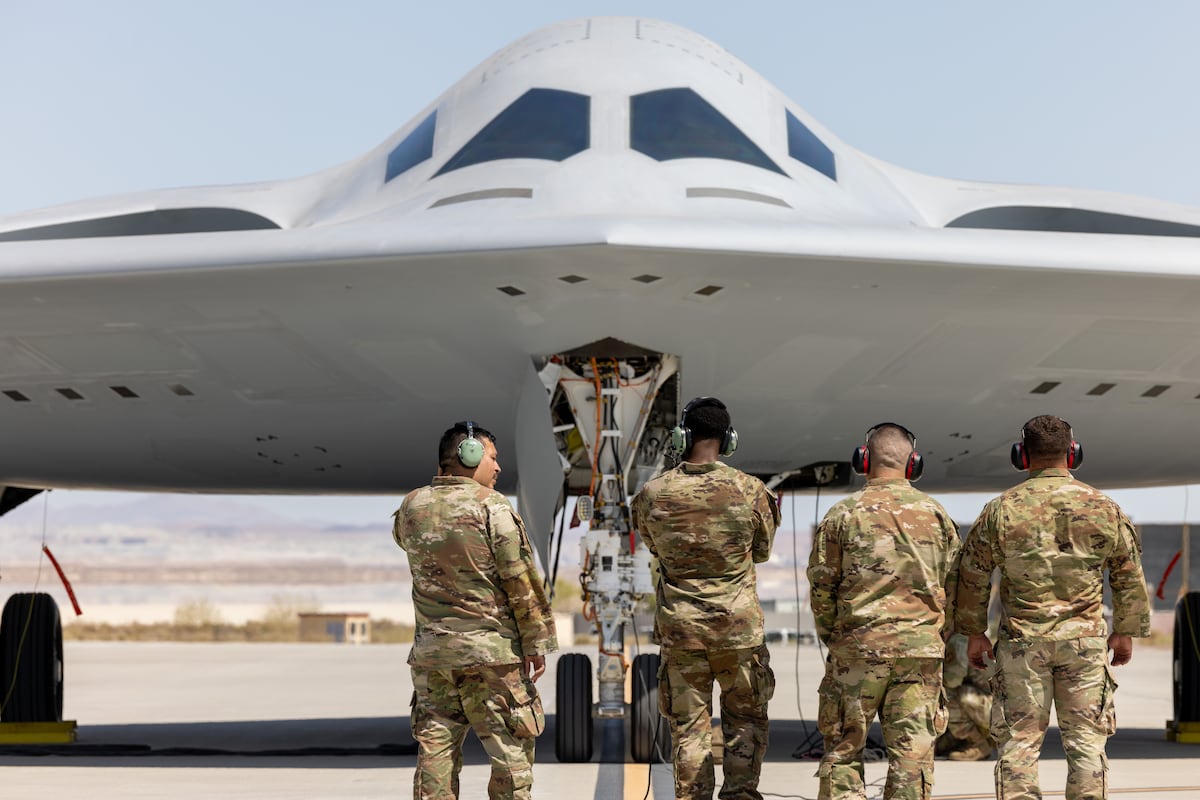
The Mitchell Institute urges the U.S. Air Force to acquire a minimum combat fleet of 500 sixth‑generation fighters and stealth bombers — specifically at least 300 F‑47 fighters and 200 B‑21 Raiders — well above current Air Force plans (at least 185 F‑47s and 100 B‑21s). It calls for interim measures including delaying retirement of B‑1/B‑2 bombers until 100 B‑21s are operational, accelerating B‑21 procurement (Mitchell projects buying an additional ~224 B‑21s to reach a 300‑bomber force alongside 76 B‑52s), and boosting annual buys of 74 F‑35As and 24 F‑15EXs, seeking Congressional and Pentagon funding to speed acquisitions — recommendations with direct implications for defense contractors and defense spending allocations.
Market structure: A large, accelerated buy of 300 F-47s and 200+ B-21s shifts demand materially toward prime contractors (NOC, BA, plus primes like LMT/RTX and Tier-1 suppliers for composites, engines, avionics). Expect multi-year orderbook growth, stronger pricing power on complex airframes, and supply-chain tightness for titanium, specialty alloys and skilled labor that will push component lead times +20–40% versus baseline.
Risk assessment: Tail risks include program cost overruns, technical delays, and a Congress that limits near-term funding — any one could cut expected volumes by 30–60%. Immediate market reaction will be muted (days); watch contract awards and NDAA language over 30–90 days for short-term moves; meaningful revenue realization is 3–7 years as production ramps and supply-chain capacity is expanded.
Trade implications: Direct plays favor NOC (B-21 incumbent) and BA (F-47 prime + sustainment), with NOC having higher pure-play optionality. Implement size-constrained positions (1–3% NAV each), prefer NOC LEAP calls for asymmetric upside and BA covered-call overlays to mitigate commercial-cycle exposure. Rotate capital away from commercial aerospace OEM suppliers and into defense materials and testing/maintenance services.
Contrarian angles: Consensus assumes Congress funds rapid buys; historical parallels (B-2, F-35) show schedule slippages and cost escalation that compress margins. Market may under-price the inability to scale to 500 sixth-gen airframes — if appropriations fall short, defense primes will face backlog volatility and overruns, producing downside risk in 12–36 months.
AI-powered research, real-time alerts, and portfolio analytics for institutional investors.
Request DemoOverall Sentiment
neutral
Sentiment Score
0.10
Ticker Sentiment
