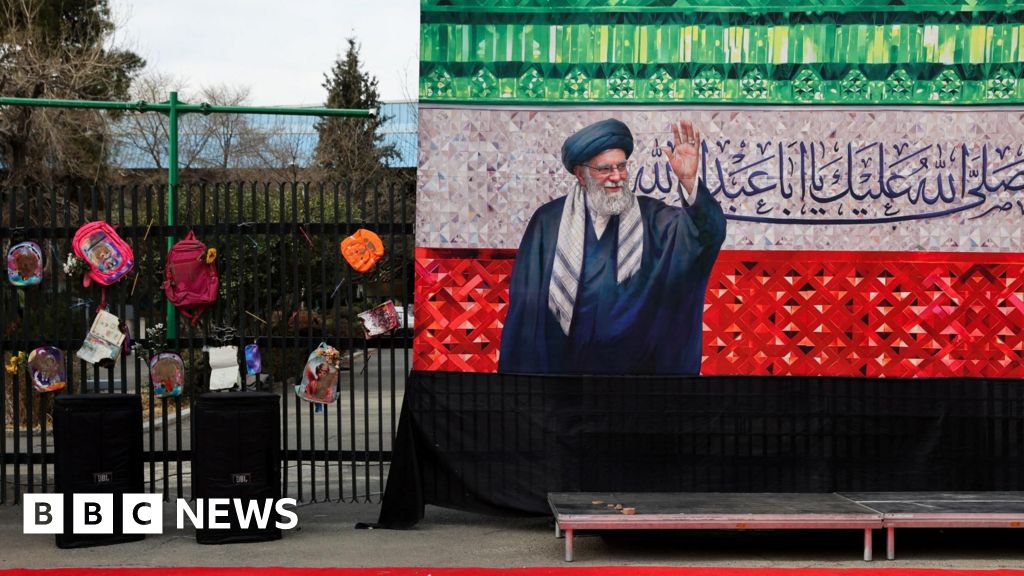
Iran postponed the planned three-day funeral for Supreme Leader Ayatollah Ali Khamenei after he was killed in the opening wave of intense US–Israeli strikes that have since provoked Iranian missile and drone counterattacks across Israel and Gulf states. State media and NGOs report over ~1,000 fatalities, Kuwait reported civilian casualties including an 11-year-old girl, and US officials said a submarine sank the Iranian frigate IRIS Dena (80 bodies recovered, 32 rescued); Israel reports thousands of munitions dropped and strikes on missile, air-defence and production sites. The violence has hit Gulf facilities and triggered an attempted drone attack on Ras Tanura refinery, raising immediate energy and regional risk premia while Iran’s Assembly of Experts moves toward naming a successor amid acute political and security uncertainty.
Market structure: Immediate winners are oil & integrated energy producers (XOM, CVX) and defence primes (LMT, NOC, RTX) benefiting from higher hydrocarbon prices and accelerated defence spending; losers are airlines (AAL, UAL), regional Gulf logistics/ports, and EM sovereign credit where spreads will widen. Supply/demand: risk to seaborne crude (Strait of Hormuz/Ras Tanura disruptions) points to a 5–25% oil price shock within days–weeks absent coordinated SPR releases; insurance and freight rates spike, raising input costs across global supply chains. Cross-asset: expect near-term Treasury safe‑haven bid (yields down), USD and gold appreciation, EM FX depreciation, and equity risk-off with elevated IV across equity indices.
Risk assessment: Tail risks include escalation to a broader regional war or Suez choke event (low prob, high impact) that could push Brent +30–50% and trigger stagflation; cyberattacks on refineries are second‑order but material. Time horizons: days—volatility and oil price jumps; weeks–months—defence earnings upgrades and energy capex reallocation; quarters—potential persistent higher energy inflation and EM debt stress. Hidden dependencies: OPEC spare capacity, US/China gas/oil demand, and re‑insurance capacity will determine magnitude and persistence.
Trade implications: Direct plays favor 1–3% longs in majors (XOM/CVX) and 0.5–1% exposure in LMT/NOC; pair trades long XOM vs short AAL express energy-driven winners vs transportation losers. Options: buy 1–3 month XLE 5–10% OTM call spreads for defined-risk oil upside and a small allocation to short-dated VIX calls as a tactical hedge; use protective SPY puts 3–5% OTM for 30–45 days. Entry/exit: scale in over 48–72 hours, add on Brent +$5 move, trim if Brent down >15% from peak or VIX >40.
Contrarian angles: The market may overprice a persistent oil shock—historically Gulf conflicts produced sharp spikes then partial mean reversion within 1–3 months as spare capacity and demand responses kicked in. Defence rerating can be front‑loaded and fade once headline risk declines; avoid full‑size long-term overweights without valuation discipline. Mispricing: short-term implied vols may overshoot fundamentals—consider selling premium on delta‑neutral structures after initial jump. Monitor for policy catalysts (SPR release, OPEC meetings) within 7–14 days which can rapidly reverse the trade.
AI-powered research, real-time alerts, and portfolio analytics for institutional investors.
Request TrialOverall Sentiment
strongly negative
Sentiment Score
-0.75
