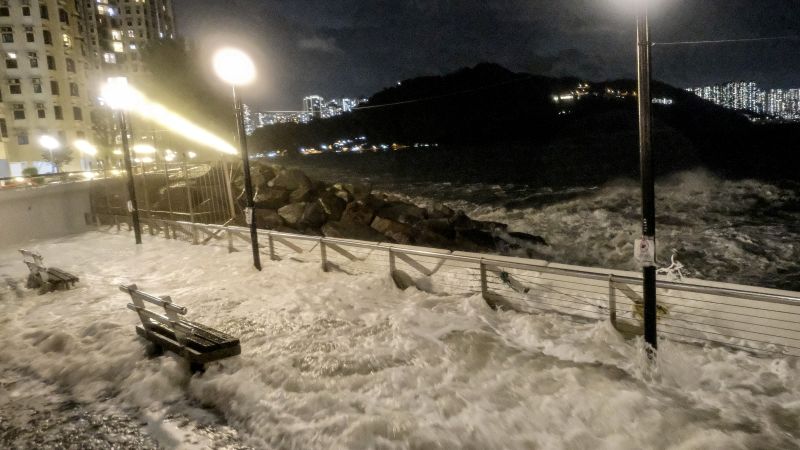
Typhoon Ragasa, previously the strongest storm of the year, has caused 14 fatalities and 124 missing in Taiwan before making landfall in southern China, prompting the highest hurricane warnings in Hong Kong and Macau. The storm has brought hurricane-force winds and potential 4-meter storm surges, leading to widespread business closures, public transit halts, and over a million evacuations in Guangdong province. This event poses significant short-term operational and logistical disruptions to key financial and manufacturing hubs, underscoring increasing climate-related risks despite the region's sophisticated storm mitigation infrastructure.
Typhoon Ragasa is causing significant, wide-ranging economic disruption across major South China commercial hubs, including Hong Kong and Shenzhen. The issuance of the highest hurricane warnings has triggered a near-complete shutdown of business activity, schools, and public transit, directly impacting short-term economic output in a region critical to global finance and manufacturing. The scale of the preventative measures, including the evacuation of over one million people in Guangdong province and the relocation of 10,000 vessels, underscores the severity of the threat and the potential for supply chain bottlenecks. While the region is noted for its sophisticated and well-funded storm defense infrastructure, such as Hong Kong's $3.8 billion drainage network, the storm's intensity and potential 4-meter surges will severely test these systems. Most critically for risk assessment, this event marks the ninth typhoon for Hong Kong this year, compared to an annual average of six, indicating an accelerating frequency of extreme weather events that heightens the long-term physical and financial risk profile for assets and operations in this vital economic corridor.
AI-powered research, real-time alerts, and portfolio analytics for institutional investors.
Request DemoOverall Sentiment
moderately negative
Sentiment Score
-0.50
