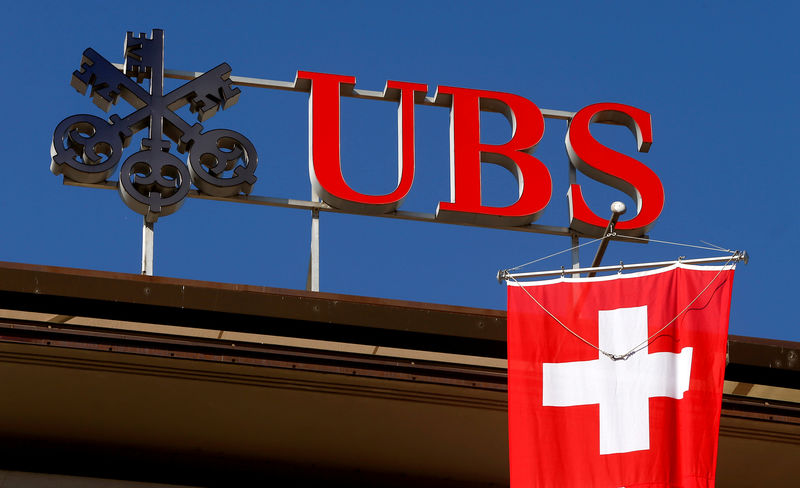
UBS reported Q1 net profit of $3.0 billion, up 80% year-on-year and well above Bloomberg estimates of $2.42 billion. The bank said wealth management, asset management, and investment banking all performed well, while trading benefited from higher volatility. UBS also said it remains on track to substantially complete Credit Suisse integration by year-end and plans $3 billion in share buybacks by the end of Q2, with more buybacks expected later in the year.
The cleanest read-through is not just “good bank quarter,” but a stronger signal that capital-light fee businesses are absorbing the volatility shock while legacy balance-sheet risk is being actively de-emphasized. That matters because it improves the quality of UBS’s earnings multiple: wealth management and advisory revenue are more durable than rate-dependent NII, and the market should start paying up for a post-integration platform with lower earnings dispersion and higher payout capacity. The buyback cadence also creates a technical bid under the stock into quarter-end, which can compress implied risk premium faster than fundamentals alone would justify.
Second-order, the Credit Suisse integration is now less about cost cutting and more about revenue retention: the longer UBS maintains client confidence during the migration, the more likely it captures sticky ultra-high-net-worth flows that would otherwise migrate to US private banks or regional peers. That creates a competitive squeeze on BNP, DB, and domestic Swiss private banks, which may need to spend more on relationship coverage and platform upgrades just to defend share. The biggest beneficiary outside UBS may be custodians and prime brokers tied to increased trading and collateral activity if volatility remains elevated.
The main risk is that this is a near-term earnings beat, not a clean multi-quarter inflection. If volatility normalizes and rates drift lower, trading revenue fades before integration synergies fully show up, leaving the stock exposed to a “good quarter, meh trajectory” de-rating. Another tail risk is execution slippage on the Credit Suisse conversion or regulatory pressure to conserve capital if Swiss authorities tighten payout assumptions.
Consensus may be underestimating how much the buyback plus integration milestone can reduce downside volatility over the next 2-3 quarters. The market tends to value large European banks on peak-earnings skepticism; if UBS can prove that capital returns are sustainable while franchise quality improves, the rerating could happen faster than sell-side models imply. That makes the asymmetry better on pullbacks than on chasing strength after an earnings pop.
AI-powered research, real-time alerts, and portfolio analytics for institutional investors.
Request DemoOverall Sentiment
moderately positive
Sentiment Score
0.68
Ticker Sentiment
