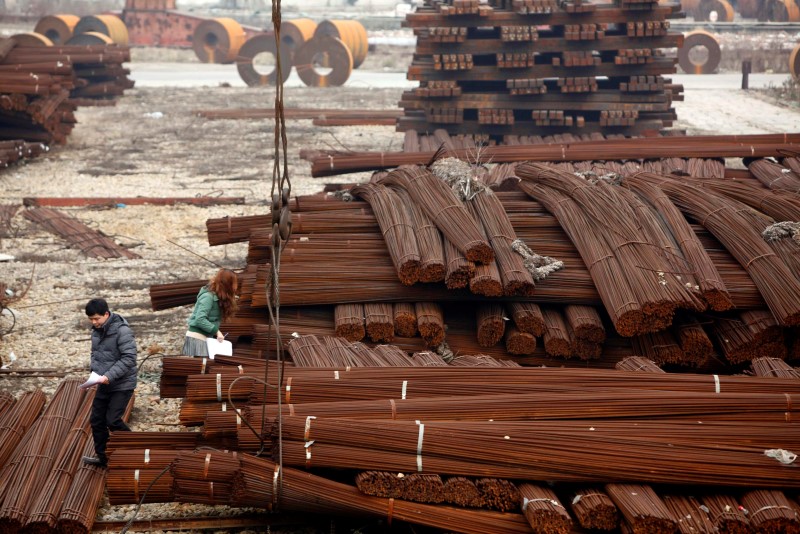
50%: The UK plans to raise duties on imports outside quotas to 50%—effectively doubling tariffs on steel—and will slash import quotas in a move expected to be announced Thursday. The steel sector employed 37,000 people and accounted for 0.1% of UK GDP in 2024; high energy costs and cheaper global imports (notably from China) have prompted plant closures (Tata closed two blast furnaces) and forced the government to seize British Steel to prevent Scunthorpe’s shutdown.
The tariff move creates a domestic price floor that will push marginal global HRC/HR coil flows away from the UK and force a re-routing of Chinese-sourced steel into SE Asia and Africa; expect spot premiums in the UK to reprice materially within 1–3 months as utilization of local mills and blast-furnace restarts absorb displaced volumes. That repricing is not linear — higher domestic prices will compress margins at UK downstream assemblers (auto suppliers, builders) and prompt substitution to higher-value semi-finished imports or alternative materials, amplifying upstream profit capture while shaving downstream EBIT by mid-single digits over 6–12 months.
Energy demand is a subtle but powerful amplifier: furnace restarts and longer-run domestic production lift industrial gas/coal demand, creating a second-order inflation impulse concentrated in manufacturing regions — this can widen UK industrial gas spreads by an amount that meaningfully raises unit steel production costs and/or forces producers to index more revenue to spot cycles. Policy risk is asymmetric: the intervention lowers the probability of a fast market-driven consolidation but raises tail risks (state aid, nationalization triggers) that can limit upside multiple expansion for incumbents while deterring private buyers.
Catalysts to watch are immediate (tariff implementation and quota details due in days), short-term (monthly production and import flow data over 1–3 months) and medium-term (WTO challenges, corporate capex announcements and energy-price moves over 3–12 months). Reversal scenarios that would unwind the trade are legal rulings, a rapid drop in global steel prices (>10% from current levels) or an energy-price collapse that removes the input-cost rationale for domestic protection; those are lower-probability but high-impact within a 6–12 month window.
AI-powered research, real-time alerts, and portfolio analytics for institutional investors.
Request DemoOverall Sentiment
mildly negative
Sentiment Score
-0.25
Ticker Sentiment
