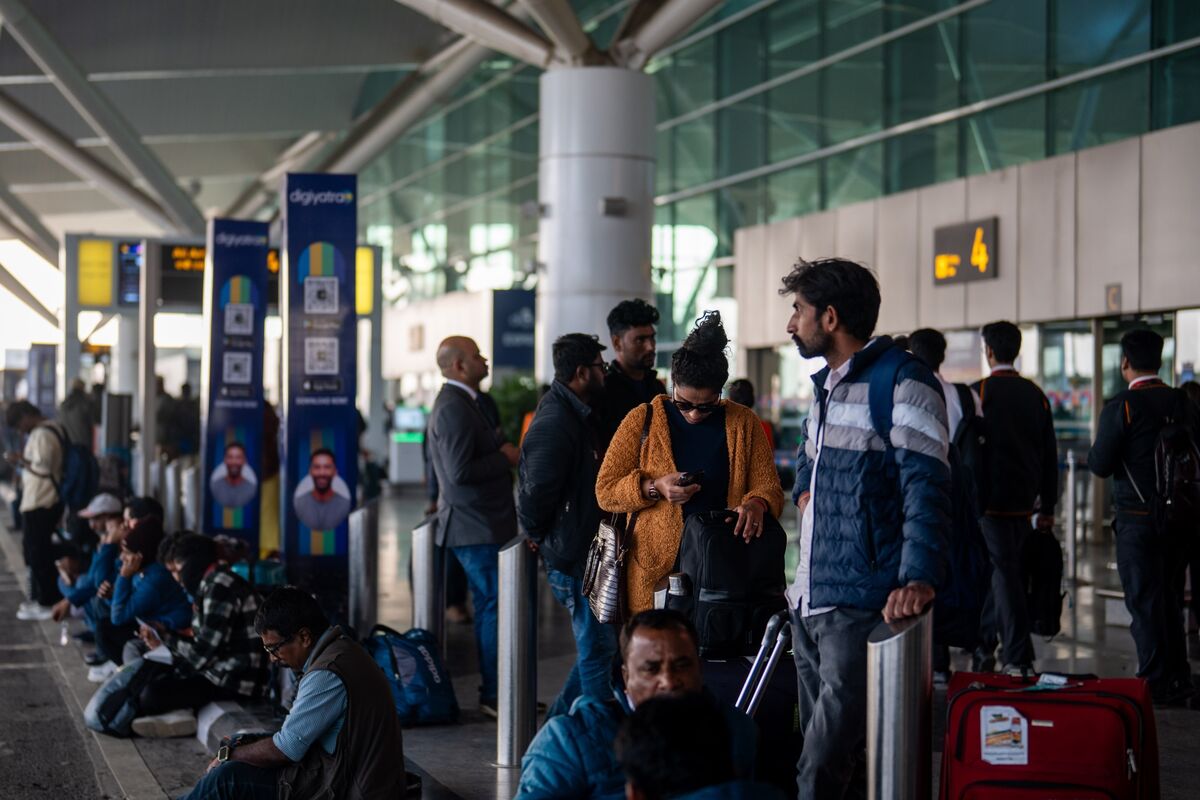
India’s largest carrier, IndiGo, has carried out sweeping flight cancellations that have left thousands of passengers stranded at terminals, disrupting travel plans including weddings and business trips and creating scenes of anger and unrest at major airports such as New Delhi’s Terminal 2. The operational failure raises near-term financial risks from compensation, lost bookings and reputational damage, and could trigger regulatory scrutiny or capital markets volatility for the airline; investors should monitor company guidance, booking trends and any regulatory responses for implications to revenues and margins.
Market structure: A mass cancellation at IndiGo (InterGlobe Aviation, NSE: INDIGO), the domestic market leader (~55% share), directly benefits smaller carriers, IRCTC (train bookings), ground-handlers and OTA refunds processors while hurting IndiGo, airport retail, and short-term hotel demand at hubs. Pricing power shifts are likely temporary: if cancellations persist >2 weeks, price-sensitive passengers will reallocate, allowing regional carriers to pick up 3–7 percentage points of market share over 1–3 months and force yield compression for IndiGo by an estimated 5–12% in the quarter.
Risk assessment: Tail risks include regulatory fines (₹5–20bn range conceivable), enforced capacity restrictions, or a pilot/crew staffing crisis that could ground >10% of flights — each could knock 10–30% off one-quarter EBITDA. Timeline: immediate (days) = booking/volatility shock; short-term (weeks–3 months) = market-share shifts and revenue rebooking costs; long-term (3–12 months) = reputational damage vs. structural consolidation. Watch hidden links: ground-handling vendors, maintenance contractors, fuel hedges and OTA refund liabilities that can amplify losses.
Trade implications: Short-term trades favor puts/shorts on INDIGO: use 1–3 month puts 10% OTM or a 2–3% notional short with a 10% stop and 15–25% downside target if disruptions last >2 weeks. Pair trade: long IRCTC (NSE: IRCTC) 2% vs short INDIGO 2% to capture modal shift; alternative long: airport operators with diversified revenues — ADANIENT or GMRINFRA sized 1–2% for 3–12 months. Rotate away from highly leveraged carriers (SPICEJET) unless contagion creates deep value — size small and use options.
Contrarian angles: Consensus will likely over-penalize IndiGo short-term; if cancellations prove operational (rostering) not systemic, INDIGO could recover quickly — consider re-entry on a 20–30% price dislocation from pre-event levels, provided management posts remediation within 30 days and OAG/On-time metrics revert. Historical precedents (single-carrier disruptions) show 60–80% recovery of lost bookings within 2–6 weeks; mispriced IV in options may allow buying recovery call spreads post-peak volatility.
AI-powered research, real-time alerts, and portfolio analytics for institutional investors.
Request DemoOverall Sentiment
strongly negative
Sentiment Score
-0.60
