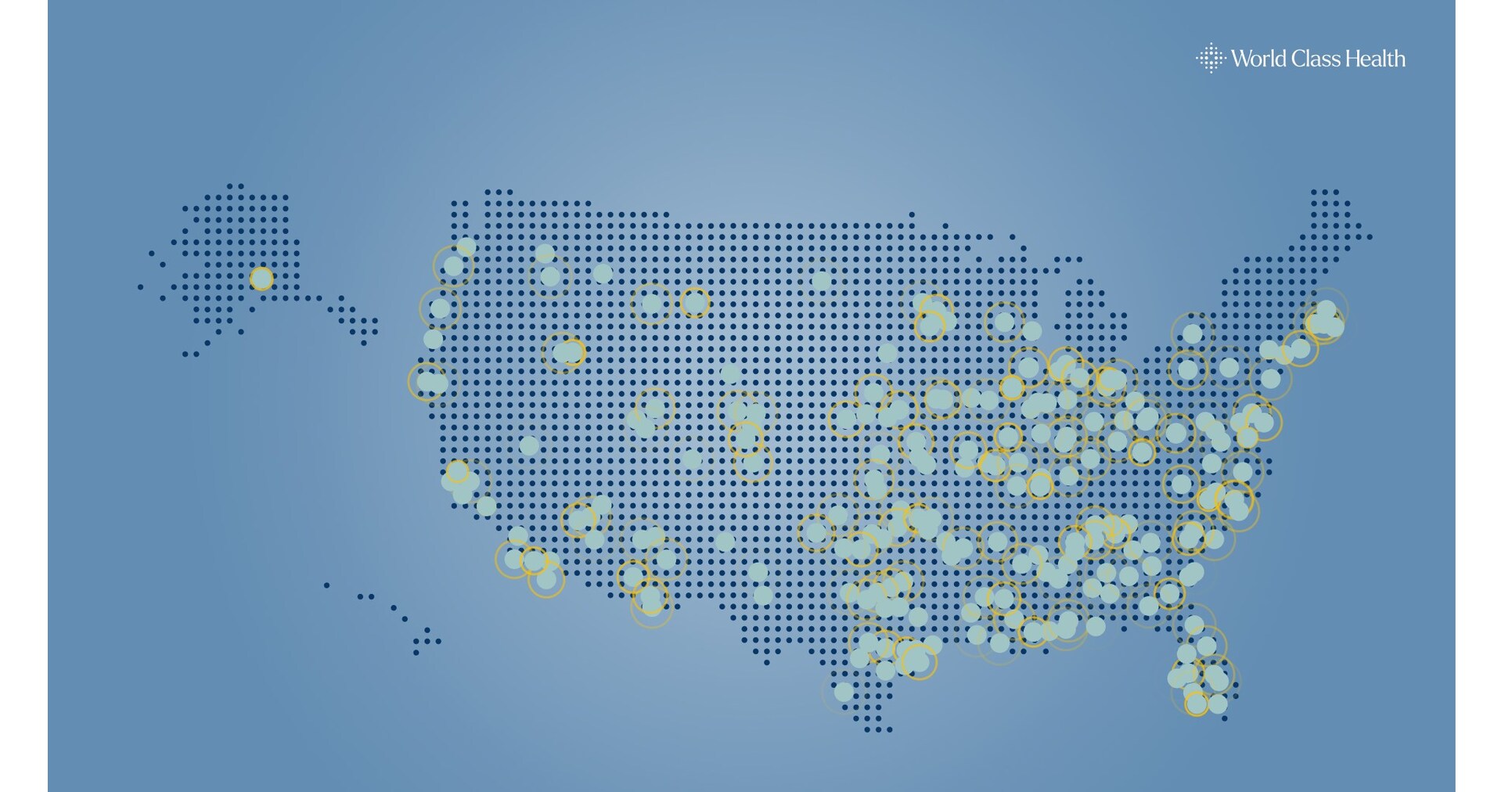
World Class Health announced a network expansion to 2,300 surgical locations across 48 states, with 90% of the U.S. population living within 30 miles of a facility. It also added 2,000+ advanced imaging centers (e.g., MRI/CT) to extend price transparency and standardized access to diagnostic care. The company expects continued growth of both surgical and imaging footprints over the coming year, positioning its AI-native cost-containment platform for self-insured employers to steer patients earlier with verifiable cost and quality.
If this network is operationally real, the first monetization is not "more specialty care" but lower unit cost leakage from hospital outpatient departments into independent sites of service. That is a direct mix headwind for hospital systems with high commercial exposure and a relative tailwind for ambulatory surgery and independent imaging platforms with dense geographies and clean scheduling capacity. The second-order effect is more important: once employers can pre-authorize a cheaper site within a short drive, utilization should shift earlier in the care journey, which can expand volume at lower-cost providers even if per-case pricing compresses.
The public-market beneficiaries are more likely to be the operators that already own capacity and can absorb incremental volume without meaningful capex: RDNT on imaging and THC on ambulatory surgery exposure. The losers are hospitals that rely on commercial outpatient margin and high-priced diagnostic capture; HCA is better positioned than peers on scale, but its most vulnerable slice is still outpatient and ancillary leakage. Over 6-18 months, this can also pressure pricing power at standalone imaging groups that lack a differentiated referral engine, since the employer-facing narrative is now verifiable savings rather than generic steerage.
The main risk is that this is still a press-release story until there is employer adoption data, claims volume, and verified savings conversion. In the next 1-3 months, the market will care more about whether self-insured clients actually route cases than about footprint counts; if utilization stays low, the stock impact should fade. A useful falsifier is evidence that savings are flat or that case mix remains concentrated in the same top MSAs, which would imply the "national scale" claim is more marketing than incrementally investable capacity.
AI-powered research, real-time alerts, and portfolio analytics for institutional investors.
Request DemoOverall Sentiment
mildly positive
Sentiment Score
0.25
