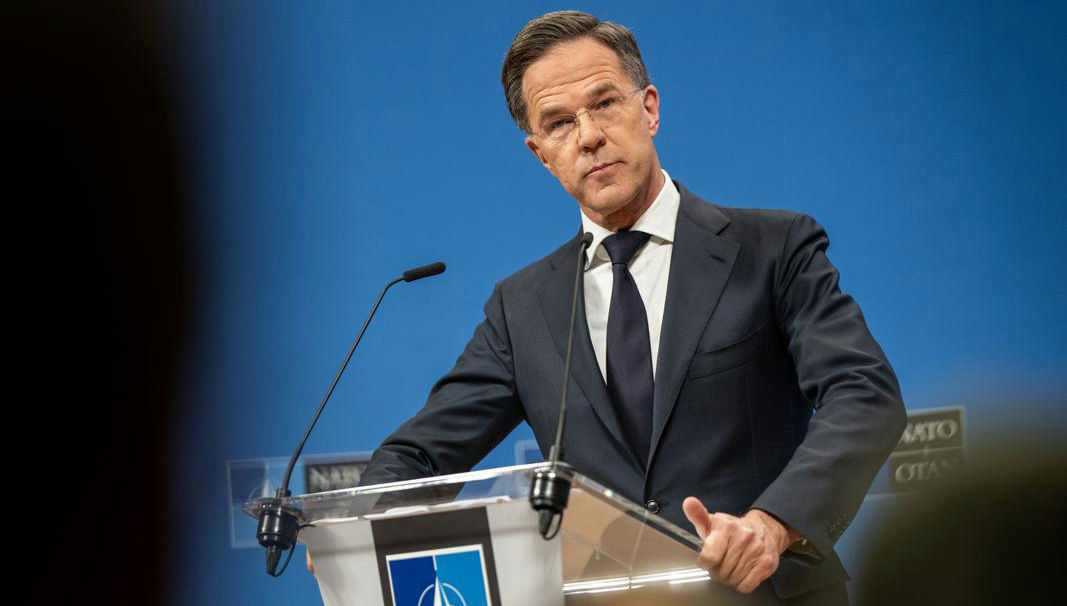
NATO Foreign Ministers will meet on 21-22 May in Helsingborg to finalize preparations for the Ankara Summit, with the main focus on delivery of prior defense commitments. Allies are being pushed to increase defense spending to 5% of GDP by 2035, expand defense industrial production, and sustain support for Ukraine. The message is broadly constructive for defense spending and transatlantic defense industries, but the article is primarily policy-oriented and not an immediate market catalyst.
This is a medium-duration capital-cycle signal, not a near-term earnings catalyst. The important second-order effect is that Europe’s defense spending shift is moving from rhetoric to procurement architecture: once command responsibilities and burden-sharing are reallocated, budget execution becomes harder to reverse politically, which should extend the runway for multi-year order visibility across European primes and the U.S. industrial base. The key implication is that investors should look past headline spending targets and focus on companies with exposure to munitions, air defense, C4ISR, and depot-level sustainment, where incremental demand is most likely to translate into backlog rather than just policy noise.
The bigger winner may be the supply chain behind the primes. A sustained production ramp requires propellant, energetics, microelectronics, radars, forged components, and specialized machining capacity that remain bottlenecked; pricing power should migrate to the constrained tiers of the defense stack before it shows up in the large platforms. That argues for relative outperformance in the “picks-and-shovels” names and in European industrials with NATO-qualified manufacturing footprints, while pure platform exposure risks margin leakage if governments push for faster delivery with fixed-price contracts.
The contrarian risk is that the market is already discounting a rearmament supercycle, but execution risk remains high: European fiscal coordination, permitting, labor shortages, and industrial base fragmentation can all delay cash conversion by 12-24 months. If the Ankara Summit delivers only vague language without procurement standardization or long-dated funding commitments, the trade could fade quickly. Ukraine support remains a key catalyst, but any de-escalation or ceasefire talk would likely compress urgency premiums in the defense complex before actual budget plans roll off.
From a portfolio standpoint, the setup is better expressed as a relative-value basket than a broad index long. U.S. primes benefit from the strongest balance sheets and most scalable production, while select European defense names offer more operating leverage if rearmament spending is forced through domestically; the best risk/reward is likely in names with visible backlog conversion and limited dependence on discretionary civilian demand.
AI-powered research, real-time alerts, and portfolio analytics for institutional investors.
Request DemoOverall Sentiment
neutral
Sentiment Score
0.12
