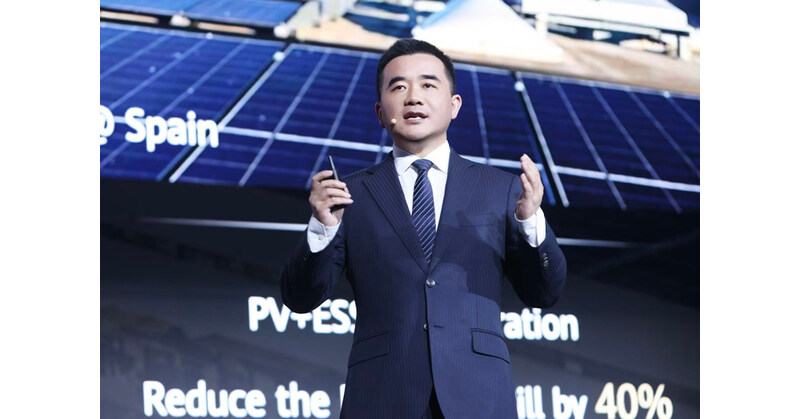
Huawei stellte auf der „The smarter E 2026“ eine Smart-PV- und BESS-Strategie zur Netzbildung vor, um die Netzstabilität bei einem erwarteten Wind-/Solar-Anteil von 64% in Europa bis 2030 zu sichern. Die integrierten Hybrid-PV-BESS-Lösungen mit netzbildenden Funktionen (u. a. Schwarzstart, Trägheitsunterstützung, Kurzschlussstromstützung) wurden über alle Betriebsbedingungen validiert. Fallbeispiele: AHS (Deutschland) meldet nach 2 Jahren Betrieb +10% Umsatz; in Spanien sollen die Stromkosten eines Carrefour-Supermarkts um fast 40% gefallen sein bei einer Amortisationszeit von 5 Jahren. Insgesamt ist die Nachricht strategisch positiv, dürfte aber kurzfristig eher begrenzten Kursimpuls haben.
This is less a “Huawei story” than a sign that European power markets are moving from pure generation buildout to flexibility procurement. The incremental beneficiaries are the grid-adjacent names that monetize standards, interconnection, and control software rather than just battery cells: ABB, Schneider Electric, Siemens Energy, Eaton, and grid software providers. If net-forming requirements become embedded in tenders, the value pool shifts away from lowest-cost storage hardware toward integrated systems with certification, controls, and service revenue.
Second-order, the pressure lands on pure-play PV and commoditized inverter vendors that compete mainly on capex price. As the market pays for black-start, inertia, and short-circuit support, standalone solar economics become less attractive relative to hybrid PV+BESS and flexible load solutions; that is supportive for CATL-style technology leaders but potentially margin-negative for Western inverter names without differentiated software. The real macro implication is that grid capex and interconnection queues become a larger bottleneck than module prices, so the trading opportunity may be in balance-sheet strength and project execution rather than headline “renewables” beta.
Time horizon matters: near term, this is mostly narrative and tender language; 1-3 months is about whether EU TSOs and regulators actually hard-code grid-forming specs into codes and procurement. Over 6-18 months, if those specs stick, merchant storage can re-rate because revenues broaden from arbitrage into ancillary services, reducing cash-flow volatility. The contrarian risk is that this is mostly a vendor-led marketing push and that Europe’s procurement, security, and certification rules slow Chinese participation enough that the claimed technology edge does not convert into meaningful share gain.
AI-powered research, real-time alerts, and portfolio analytics for institutional investors.
Request TrialOverall Sentiment
mildly positive
Sentiment Score
0.25
