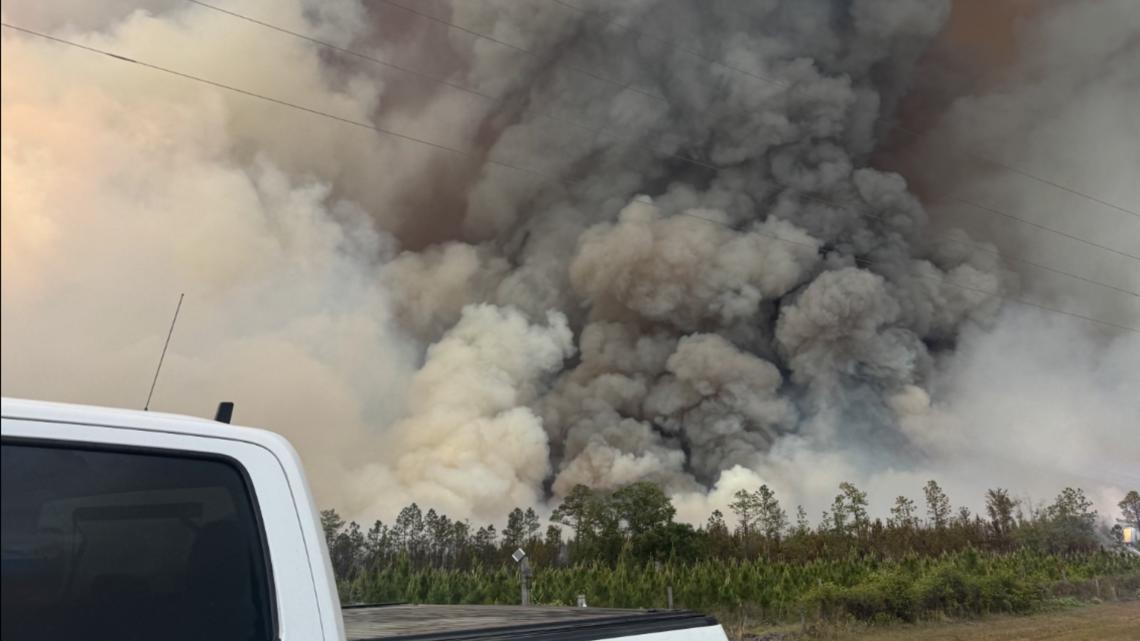
Two Georgia wildfires remain active, with the Pineland Road fire at 32,331 acres and 10% contained and the Highway 82 fire at 22,615 acres and 6% contained. The Pineland Road fire has destroyed 35 minor structures and threatened 187 homes, while the Highway 82 fire has already lost at least 90 homes and prompted curfews in impacted areas. Weekend rain may temporarily slow fire activity, but fire danger remains elevated and additional progress is uncertain.
The immediate market read-through is not from “fire” broadly, but from localized logistics stress: intermittent road closures, worker displacement, and smoke-related operating constraints tend to hit regional trucking, timber, utilities, and insurers before they show up in headline macro data. The first-order equity effect is usually modest, but the second-order effect is a temporary widening of delivery spreads and higher working-capital drag for operators that rely on southeast Georgia as a through-route or wood basket. If the weather window stays dry after this brief relief, the cost curve can step up quickly because suppression effectiveness decays nonlinearly once fires cross into fragmented private land.
The more interesting angle is the insurance and reinsurance layer. Losses look still manageable at the state level, but the combination of acreage growth plus a populated-area burn profile raises the odds of nuisance claims, additional living expenses, and event attrition that can ripple into small-cap regional carriers and ILS books even without a catastrophe-sized headline. Markets often underprice the compounding effect of multiple medium-sized events in the same season; that matters because wildfire severity is increasingly a portfolio problem rather than a single-asset loss problem.
For infrastructure and defense-adjacent names, the trade is not on near-term rebuild demand but on procurement urgency and budget reprioritization. States typically respond to repeated incidents with more firebreak, detection, and emergency communications spending, which benefits vendors of sensors, drones, mapping software, and communications gear over a 6-18 month horizon. The contrarian view is that the relief from recent rain may create a false sense of closure; if humidity drops again later in the week, suppressed embers and containment slippage can extend the event long enough to reset local economic disruption and keep the premium on resilience assets elevated.
AI-powered research, real-time alerts, and portfolio analytics for institutional investors.
Request DemoOverall Sentiment
strongly negative
Sentiment Score
-0.55
