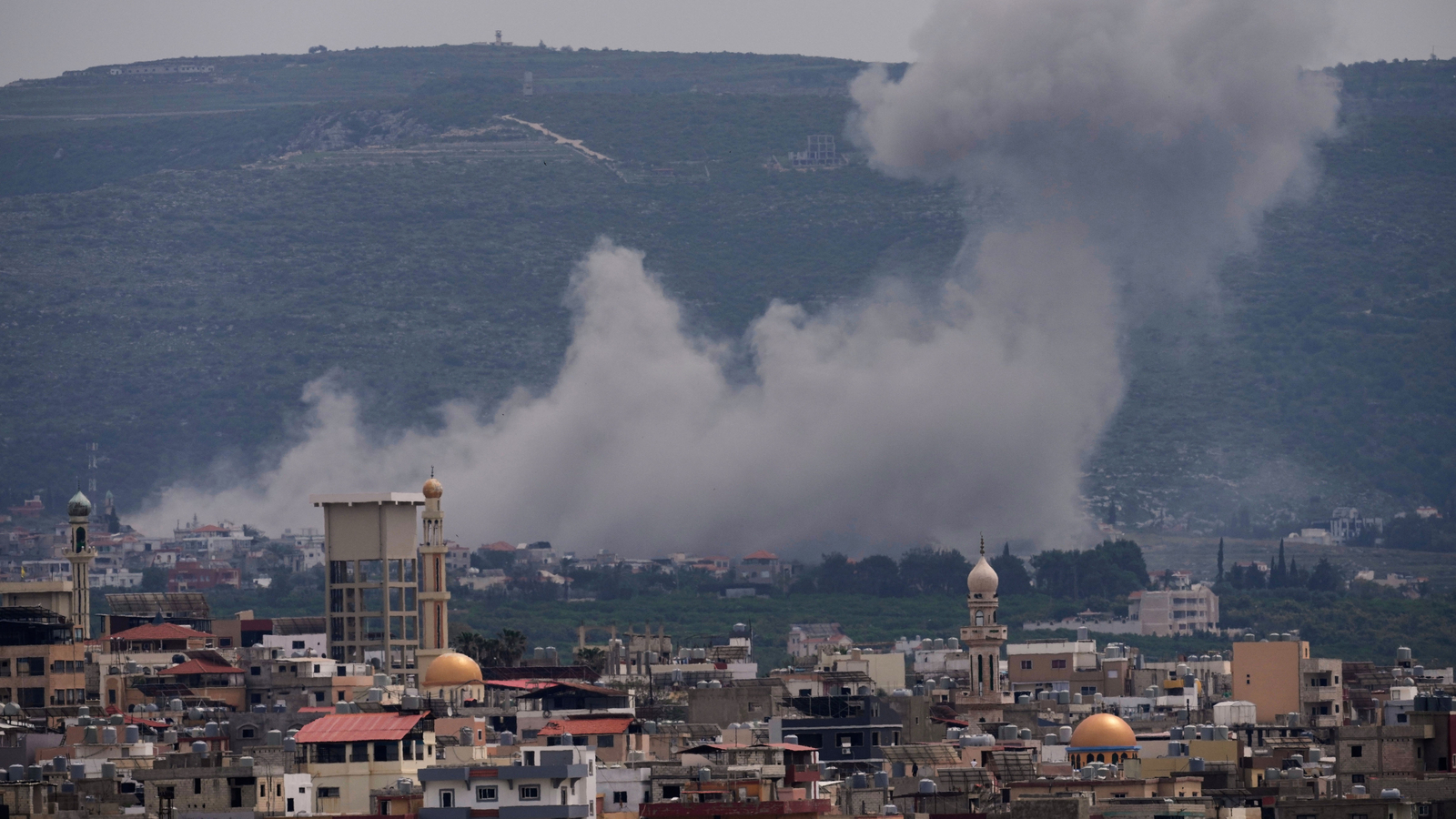
Trump announced major combat operations against Iran and threatened a blockade of the Strait of Hormuz starting at 10 a.m. ET Monday unless Iran reopened the waterway. U.S.-Iran talks in Pakistan failed to produce a peace deal, with Iran’s nuclear program still the key sticking point. Continued Israeli strikes in Lebanon and the unresolved ceasefire scope add to regional escalation risk, with clear implications for global energy and shipping routes.
The market is likely underestimating how quickly a Hormuz shock becomes a global earnings shock rather than just an energy trade. The first-order move is obvious in crude and LNG, but the second-order damage lands in freight, petrochemicals, airlines, EM external balances, and any industrial with just-in-time inventories; the lagged hit to margins can persist for 1-2 quarters even if the blockade threat is short-lived. The clearest beneficiaries are upstream energy, defense, and select shipping/insurance names with hard-asset scarcity and pricing power.
The real risk is not a full interruption but the volatility regime shift: even a partial closure or repeated deadline escalation can force importers to pre-buy cargoes, lift tanker rates, and widen refinery crack spreads before barrels physically disappear. That creates a squeeze in Europe and Asia, where marginal buyers have less strategic inventory than the U.S., and it also raises the probability of policy responses like SPR releases, emergency airline hedges, and diplomatic backchannels. If those appear, the move can reverse fast, but the timing is usually days for crude and weeks for downstream equities.
The contrarian view is that the headline may be setting up a classic buy-the-vol after the opening gap in oil, because a credible ceasefire or “very close deal” language can collapse risk premia faster than physical balances tighten. But the deeper issue is credibility: repeated threats without follow-through can keep implied volatility elevated even if spot retraces, which is toxic for airlines, transports, and chemicals. In that regime, owning optionality on the downside in broad risk assets is more attractive than chasing outright longs in crude after a spike.
AI-powered research, real-time alerts, and portfolio analytics for institutional investors.
Request DemoOverall Sentiment
strongly negative
Sentiment Score
-0.72
