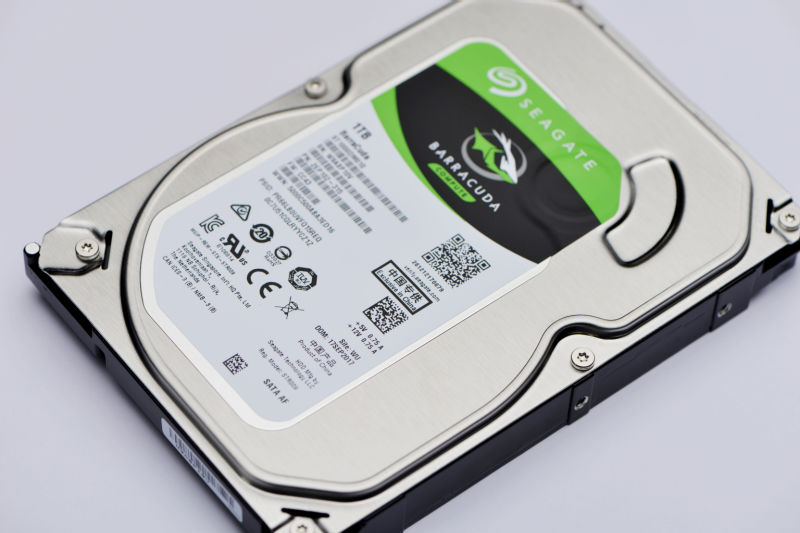
Seagate guided Q4 revenue to $3.45B, plus or minus $100M, above the $3.16B consensus, and forecast adjusted EPS of $5.00 versus $3.97 expected. The strong outlook lifted storage names in premarket trading, with Western Digital up 9.7%, SanDisk up 6%, and Micron up nearly 3%. The report signals resilient enterprise spending on AI infrastructure and rising demand for hard drives amid tight memory supply.
This is less a one-day sympathy move and more a signal that the AI buildout is entering a second-order bottleneck shift: when compute demand outruns memory supply, capex leaks into legacy storage, and that mix is unusually favorable for the lowest-cost capacity providers. The market is implicitly repricing the duration of enterprise AI spend, not just one vendor’s quarter, which is why the reaction is broader than STX and extends to adjacent storage names. The setup argues that storage is becoming a “picks-and-shovels” beneficiary of AI regardless of which model stack ultimately wins.
The key competitive dynamic is that constrained HBM and higher memory prices may force hyperscalers and enterprises to re-architect data pipelines toward cheaper, denser hard-drive layers for retention and cold storage. That creates a near-term volume tailwind for HDD players, but it also pressures NAND-linked and higher-beta memory suppliers if customers delay discretionary buys. The second-order beneficiary could be enterprise infrastructure distributors and channel partners, while the less obvious loser is any OEM exposed to AI server demand normalization if budgets get reallocated from compute to storage.
The risk is that this trade is mostly a guidance- and sentiment-driven multiple expansion unless confirmed by order trends over the next 1-2 quarters. If memory supply loosens faster than expected, the shortage narrative fades and the relative advantage of HDDs narrows. Conversely, if AI capex remains strong into the next earnings season, this can persist for months because storage demand is tied to data accumulation, not just model training cycles.
Consensus may be underestimating how sticky data-retention demand is once enterprises adopt AI workflows: training is bursty, but storing outputs, logs, embeddings, and compliance archives is recurring. That makes the revenue stream more durable than a simple “AI hype” trade, and it supports a higher baseline multiple for STX than the market has historically assigned to cyclical hardware. The move in WDC and SNDK looks partially lagged and therefore tradable, but STX is the cleanest expression because the guide is the fundamental catalyst rather than just sympathy beta.
AI-powered research, real-time alerts, and portfolio analytics for institutional investors.
Request DemoOverall Sentiment
strongly positive
Sentiment Score
0.70
Ticker Sentiment
