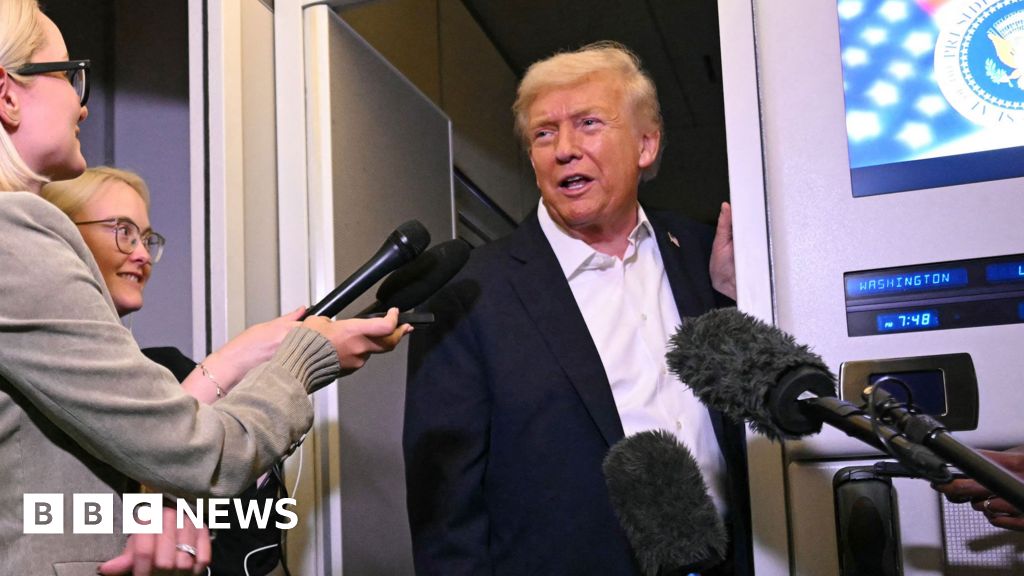
US President Trump's diplomatic efforts secured a significant Gaza deal, leading to a cessation of major combat operations, hostage/prisoner exchanges, and a partial Israeli troop withdrawal. While Trump declared "peace in the Middle East" at a signing ceremony, the agreement is widely viewed as a fragile truce, with substantial uncertainties regarding its long-term stability, Gaza's future governance, and the viability of a proposed international stabilization force. This diplomatic shift also underscores Trump's pivot towards Gulf allies, influenced by European pressure and Saudi engagement, signaling potential regional geopolitical realignments relevant to market stability and investment.
The recent diplomatic efforts led by US President Trump resulted in a significant Gaza deal, which included a cessation of major combat operations, the release of remaining hostages by Hamas in exchange for Palestinian prisoners, and a partial withdrawal of Israeli troops. This agreement, clinched in Doha and under intensive pressure from Trump, represents a critical moment after two years of conflict, leading to immediate relief and a perceived "historic day." However, the article emphasizes that this is a fragile truce, not a definitive resolution.
Despite Trump's declarations of "everlasting peace" and a "historic dawn of a new Middle East," significant uncertainties persist regarding the deal's long-term viability. Key questions surrounding the future governance of Gaza and the implementation of a proposed International Stabilization Force (ISF), outlined in Trump's 20-point plan but not yet agreed upon, remain largely unaddressed. Trump's confidence in the ceasefire holding contrasts with the reporter's assessment of it being a "waypoint, not a destination."
The diplomatic mission also highlighted a notable shift in Trump's regional strategy, moving closer to Gulf allies and expressing irritation with Israeli leadership, partly influenced by European efforts to isolate Israel. This pivot, driven by the wealth and "power" of Gulf nations, signals potential geopolitical realignments in the Middle East. Furthermore, Trump's speech in the Knesset included attacks on US political opponents and an appeal for Israeli President Herzog to pardon PM Netanyahu, intertwining the diplomatic efforts with domestic political considerations.
AI-powered research, real-time alerts, and portfolio analytics for institutional investors.
Request DemoOverall Sentiment
mixed
Sentiment Score
-0.10
