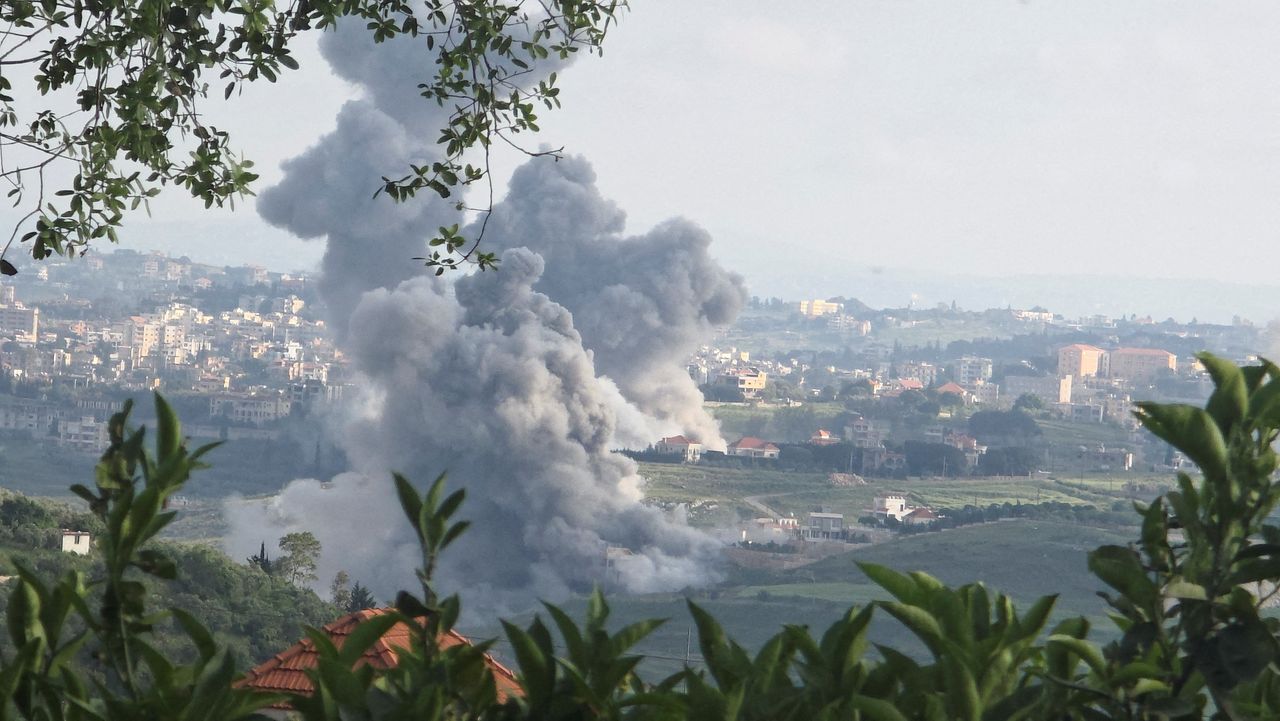
The Israeli army demolished a monastery and a school in Yaroun, Lebanon, adding to an ongoing offensive that has killed more than 2,600 people and displaced over 1 million since March 2. The article says Israel continues daily violations of the ceasefire through airstrikes and home demolitions, underscoring elevated geopolitical risk in southern Lebanon. The destruction of a major regional educational institution represents a significant humanitarian and infrastructure loss.
This is less about the immediate military event and more about the erosion of civilian-capital stock in a border region that already has weak labor mobility and thin institutional depth. Destroying a school and religious complex removes a non-replicable local anchor, which tends to accelerate out-migration, depress property values, and widen the reconstruction gap versus more central Lebanese districts; that matters because recovery capital typically follows perceived governance stability, not need. The second-order effect is a longer-duration hollowing out of the local tax base and consumer ecosystem, which hurts SMEs, local contractors, and any lender with exposure to southern Lebanon collateral.
From a market lens, the main transmission is via Lebanon country risk rather than any direct single-name exposure: higher odds of prolonged displacement, elevated insurance/transport security costs, and a persistent drag on investor confidence in any post-conflict reconstruction narrative. The ceasefire violations also keep the tail-risk of a wider escalation alive over the next 1-3 months, which can reprice regional risk premia quickly even if headline violence is intermittent. The key catalyst to watch is whether reconstruction financing becomes impossible without a durable security framework; if so, the damage shifts from cyclical to structural over 12-24 months.
The consensus may be underestimating how damaging repeated strikes are to future settlement incentives. Even if a formal truce holds, the inability to protect basic civic infrastructure discourages returns, which means displacement becomes sticky and the economic reset is slower than the market may assume. That argues for treating any dip in geopolitical risk premia as tactical unless there is a verified, multi-week decline in violations and a credible reconstruction mechanism.
For trade expression, this is best played through regional risk proxies and not Lebanon-specific names. The asymmetry favors buying optionality into any Middle East headline acceleration, because the downside is capped by time decay while the upside is a fast repricing in energy, defense, and EM FX volatility.
AI-powered research, real-time alerts, and portfolio analytics for institutional investors.
Request DemoOverall Sentiment
strongly negative
Sentiment Score
-0.70
