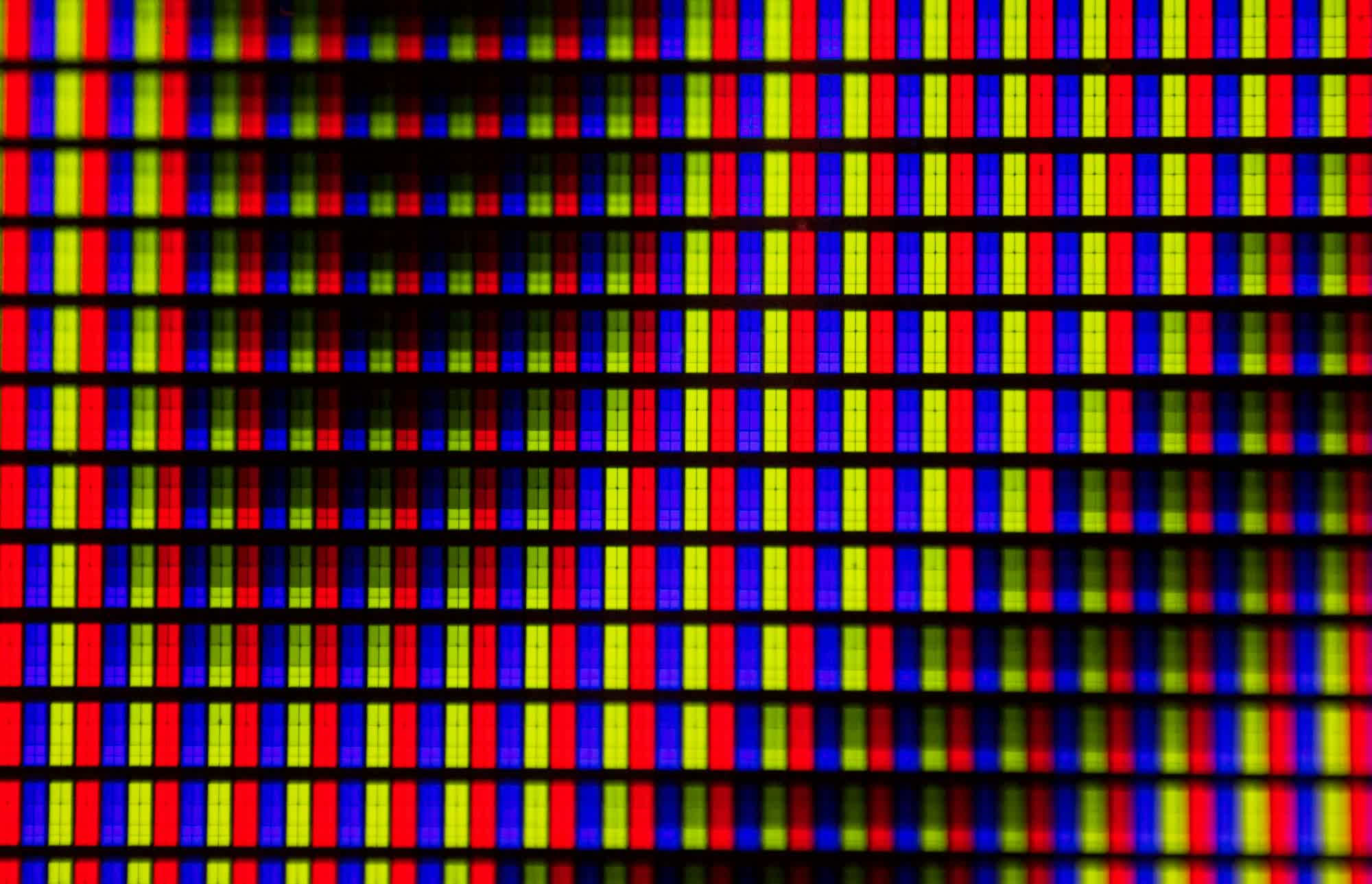
Physicists at Julius-Maximilians-Universität Würzburg have developed the world's smallest pixel, measuring just 300x300 nanometers, which offers brightness comparable to conventional OLEDs and could enable ultra-high-resolution displays for next-generation wearable devices like smart glasses and VR headsets. This innovation could allow for a 1920x1080 display to fit into a single square millimeter, though significant challenges remain in expanding the color gamut beyond its current orange and improving its one percent efficiency before commercialization can be considered.
Physicists at Julius-Maximilians-Universität Würzburg have developed the world's smallest pixel, measuring just 300x300 nanometers, which offers brightness comparable to conventional OLEDs. This breakthrough, enabled by a specially crafted insulation layer, could facilitate ultra-high-resolution displays, potentially fitting a 1920x1080 resolution into a single square millimeter. This miniaturization holds significant promise for next-generation wearable devices like smart glasses and virtual reality headsets.
Despite its potential, the technology faces substantial hurdles before commercial viability. The current prototype is limited to an orange color gamut, requiring expansion to the full RGB spectral range, and its efficiency stands at a mere one percent. Furthermore, a higher pixel density introduces risks of increased pixel failure rates and higher production costs for this cutting-edge technology.
While there is no defined timeline for commercialization, successful development could revolutionize display technology for augmented and virtual reality, offering unprecedented depth and immersion. The OLED-based nature eliminates the need for a backlight, simplifying design. However, the low market impact score and absence of specific corporate involvement suggest this remains a long-term, early-stage research development rather than an immediate market mover.
AI-powered research, real-time alerts, and portfolio analytics for institutional investors.
Request DemoOverall Sentiment
mildly positive
Sentiment Score
0.40
