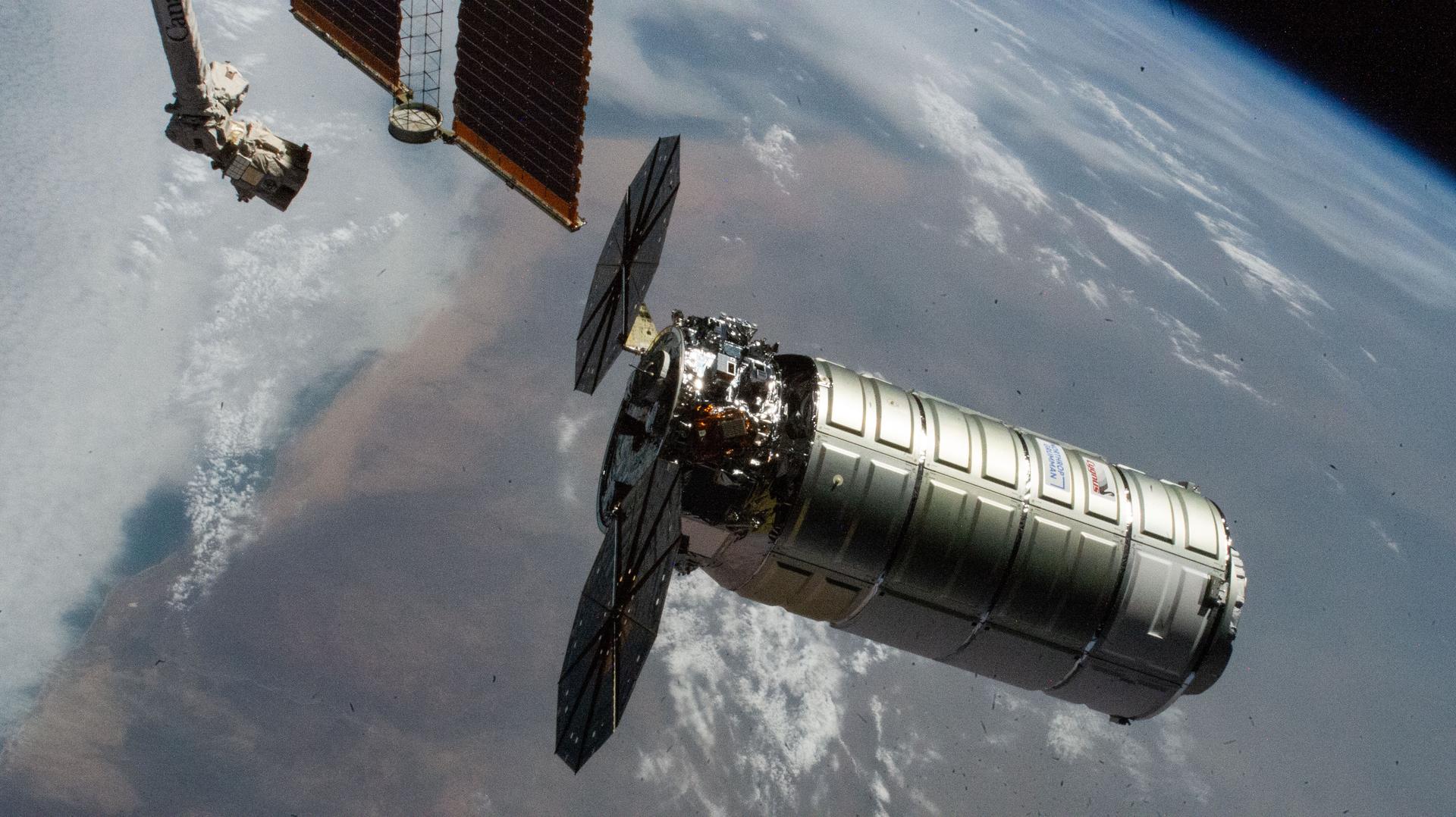
Northrop Grumman’s Cygnus XL cargo spacecraft is targeted for a Saturday 7:41 a.m. EDT launch aboard a SpaceX Falcon 9 to deliver more than 11,000 pounds of supplies to the International Space Station. Arrival is expected Monday, with Canadarm2 capture and a six-month station stay planned after berthing to the Unity module. The mission supports science payloads including quantum physics, stem cell, gut health, and AI-related operations research, but the article is primarily operational and has limited direct market impact.
NOC’s relevance here is less about a single launch event and more about the persistence of a high-margin services stream tied to orbital logistics. The second-order positive is that every successful cargo cadence de-risks NASA’s ISS operating tempo, which supports multi-year budgeting for station support, robotics, and cargo integration work that tends to be sticky and low-cyclicality relative to traditional defense programs. That makes this more of a “quiet annuity” signal than a headline catalyst, and the market usually underappreciates that stability until a schedule slip creates the opposite effect.
The near-term risk is operational, not commercial: a capture or berthing anomaly would mainly hit sentiment, but could also spill into broader confidence around commercial resupply reliability and raise scrutiny on NASA’s dependence on a concentrated vendor set. Over a days-to-weeks horizon, any delay is likely to be noise; over months, repeated execution could help reinforce Northrop’s positioning in future logistics and autonomy-related contracts, especially as AI-assisted operations become more central to space operations. That said, this is not a large earnings mover unless it changes expectations for contract renewals or adjacent program awards.
Contrarian angle: the market may be too focused on launch-day optics and not enough on the fact that successful ISS support is a proof point for broader space infrastructure monetization. The real embedded option is not the cargo mission itself, but whether Northrop can leverage repeatable orbital servicing know-how into higher-value autonomy, robotics, and in-space logistics offerings. If investors dismiss this as “just another resupply flight,” they may miss the compounding value of operational reliability in a market where failure is punished much more than success is rewarded.
AI-powered research, real-time alerts, and portfolio analytics for institutional investors.
Request DemoOverall Sentiment
neutral
Sentiment Score
0.10
Ticker Sentiment
