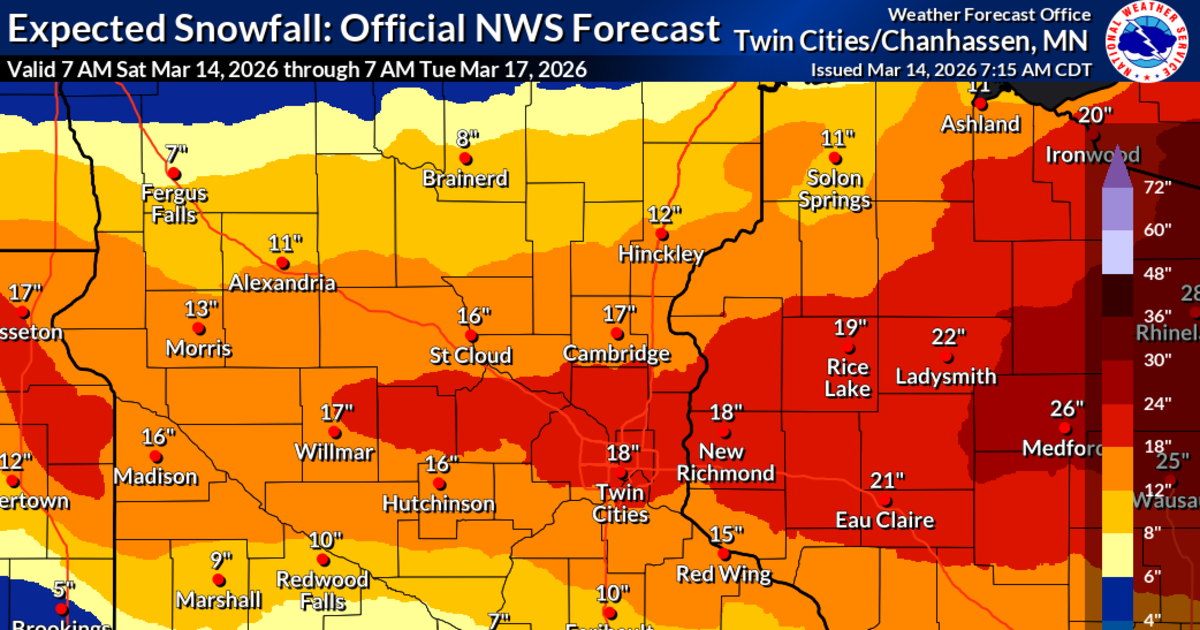
NWS forecasts 12–18 inches of snow for the Twin Cities metro (consensus most likely 18 inches) and 21–30 inches in parts of Wisconsin, with peak snowfall rates of 2–3 in/hr and gusts of 40–50 mph creating blizzard/whiteout conditions. Blizzard warnings cover southwestern Minnesota Sat 4pm–Sun 10am and expand to most southern Minnesota Sun 10am–Mon 4am; heaviest snow in the Twin Cities expected from ~7pm Sat to noon Sun with light snow into Mon. Expect dozens of flight cancellations at MSP for Sat–Sun (airlines offering waivers), business closures, event postponements, and potential school closures/delays—localized disruption to travel, retail, and logistics but limited broader market implications.
Operational disruption will be concentrated and front-loaded: airlines, airport ground-handling and regional carriers face acute but short-lived costs (crew overtime, repositioning, de-icing, and gate reassignments) that compress near‑term margins for the next 3–10 days while generating follow-on rebooking admin expense. Freight carriers and last‑mile networks will see a spike in delayed deliveries that compresses weekly throughput and forces overtime/detours; expect a measurable backlog into mid‑week that will temporarily lift diesel consumption and contractor hours.
Retail and consumer demand will skew heavier toward immediate consumables and durable snow‑response purchases: grocery and neighborhood hardware spikes concentrate spending in the 48 hours before and 72 hours after the event, then see a compensating lull as inventories are depleted and deliveries catch up. Public sector and infrastructure costs (municipal snow budgets, emergency services overtime, salt and plow contractor burn) are effectively a short, sharp fiscal hit to regional governments and small contractors; if repeated over a season these small hits become a nontrivial pressure on maintenance budgets.
Second‑order financials: P&C auto claims rise modestly but are likely concentrated and below catastrophe thresholds for national insurers, while local business interruption for small retailers/restaurants will be the primary idiosyncratic loss pool. The consensus reaction will be short‑term negative headlines on airlines and logistics, but much of the cashflow impact is timing‑driven and mean‑reverts in 1–3 weeks; credit and longer‑duration revenue trajectories are unlikely to shift materially unless this storm triggers cascading supply‑chain labor shortages or unusually widespread infrastructure damage.
AI-powered research, real-time alerts, and portfolio analytics for institutional investors.
Request DemoOverall Sentiment
mildly negative
Sentiment Score
-0.30
