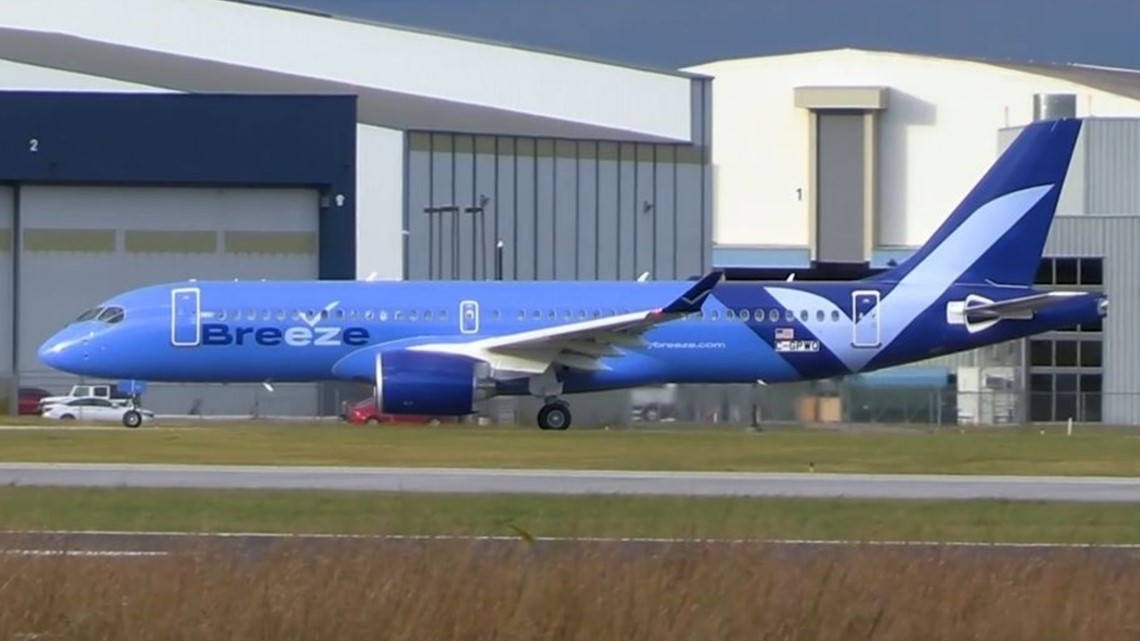
Breeze Airways is adding first-ever nonstop service from Tampa to Cancun and St. Thomas, with fares starting at $129 and $149 one way, respectively, and tickets on sale immediately. Both routes begin in mid-December with Wednesday/Saturday service, expanding the airline’s international network as it marks its fifth year in business. The announcement is positive for Breeze’s growth narrative and Tampa International Airport’s route map, but is unlikely to have a broad market impact.
This is a small absolute revenue event for Breeze, but it matters at the margin because the new routes extend its network into two high-yield leisure markets where price elasticity is favorable and load factors can stay strong outside peak holiday weeks. The second-order beneficiary is Tampa International’s catchment: incremental nonstop capacity should support higher ancillary spend and reinforce TPA as a lower-friction origin for Caribbean-bound discretionary travel, which can pull share from nearby airports that rely on connections and higher total trip cost.
The key competitive implication is not direct displacement of legacy carriers, but yield pressure on leisure-heavy domestic routes that compete for the same traveler wallet. If Breeze can keep filling these flights with low fares, it validates the ULCC/“value carrier” model at a time when consumers are still down-trading, which could force larger carriers to defend share with bundled promotions into winter booking windows. That said, the downside is asymmetric for Breeze itself: a few weak load factors or higher disruption costs on thin Wednesday/Saturday schedules can erase the margin contribution quickly, especially if fuel or maintenance costs move up.
The contrarian read is that route additions are more a signaling device than a meaningful earnings inflection. Investors often overestimate the immediate P&L lift from new leisure routes; the real test is whether management can sustain network expansion without diluting aircraft utilization or raising irregular-ops costs. The most important catalyst is not launch day, but the first 60-90 days of booking data and any commentary on breakeven load factors into the spring shoulder season.
AI-powered research, real-time alerts, and portfolio analytics for institutional investors.
Request DemoOverall Sentiment
mildly positive
Sentiment Score
0.35
