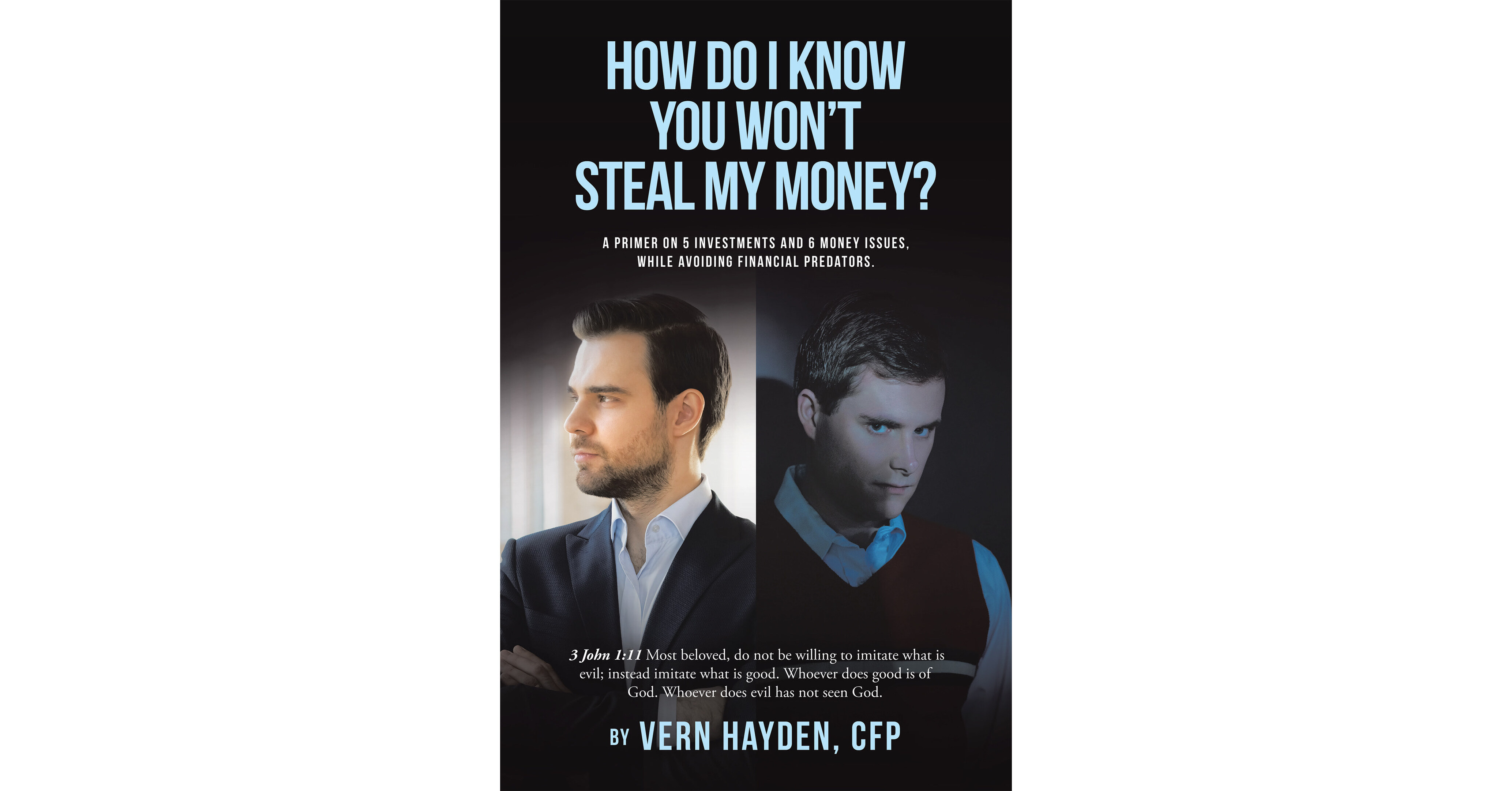
The article is a PR announcement for Vern C. Hayden’s new personal-finance book, “How Do I Know You Won't Steal My Money?” describing five common investment products (annuities, REITs, mutual funds, ETFs, and life insurance) and emphasizing investor safeguards using real-world stories. No financial results, market moves, or policy changes are cited, implying minimal direct impact beyond consumer informational value.
This is not a tradable event on the author/book itself; the only investable angle is the persistence of a broader “trust and fee scrutiny” narrative in wealth management. If that message gains traction beyond a niche readership, the second-order winners are low-cost, transparent distribution models — ETF sponsors, fiduciary RIAs, and robo-advisory platforms — because the critique directly attacks products with embedded fees and opaque economics. The losers are commission-heavy annuity, variable life, and high-expense active-fund channels, where growth depends on information asymmetry more than market beta.
The market implication is mostly long-dated. In the next few days there should be no price signal, and any reaction in AMZN is likely just incidental book sales with immaterial revenue impact. Over 1-3 months, the only catalyst would be the book getting amplified by a scandal, regulatory action, or a media cycle around retirement-product abuse; absent that, the theme fades. Over 6-18 months, the structural effect is fee compression, but that’s already a secular trend and this release is at best marginal reinforcement.
Contrarian view: consensus may overstate the relevance of “trust” content to actual flows. Most retirement assets are sticky, tax-frictioned, and advisor-mediated; consumers rarely switch based on a book. The real falsifier is not sales rank but whether inbound complaints, enforcement actions, or platform-level AUM mix shifts show up in quarterly data. Without that, this is a publicity item, not an allocation signal.
AI-powered research, real-time alerts, and portfolio analytics for institutional investors.
Request DemoOverall Sentiment
neutral
Sentiment Score
0.05
Ticker Sentiment
