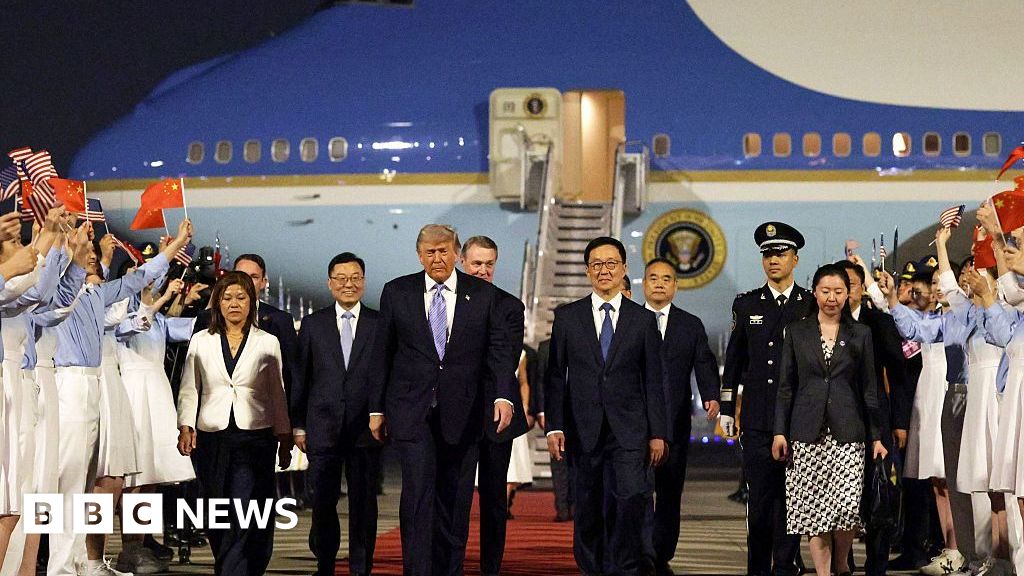
Trump's two-day Beijing visit puts tariffs, tech competition, the Iran war and Taiwan at the center of talks with Xi Jinping. The meeting comes as China faces pressure over Iran oil flows and as the U.S. seeks greater Chinese purchases of American agricultural products, while Beijing wants lower U.S. tariffs on Chinese goods. The presence of top tech leaders, including Elon Musk and Jensen Huang, underscores the market sensitivity around trade and technology policy.
The market is likely underpricing the optics of this meeting relative to the actual policy path. The most important second-order effect is not a broad “trade deal” but whether Beijing uses selective concessions to de-risk headline tech friction while preserving core leverage in strategic sectors; that favors a narrower, more volatile reaction in semis than in the broader market. For NVDA, any easing that looks like improved access to China is positive near term, but the bigger driver is whether export-control uncertainty compresses forward demand visibility or forces customers to front-load purchases before restrictions tighten again.
TSLA is the cleaner geopolitics hedge because the company benefits from any thaw in China-specific rhetoric without needing a formal treaty outcome. But the upside is capped: China remains structurally competitive in EVs, so better bilateral tone mainly lowers policy overhang and supports sentiment around local manufacturing and sales, rather than changing the competitive landscape. The more interesting read-through is to Chinese auto and battery supply chains: even a modest détente could re-rate suppliers tied to global EV capex, while a failed meeting likely hits the higher-beta parts of that complex faster than the megacaps.
The Iran angle is the real tail risk for the next 1-4 weeks. If talks produce even a hint of coordination on sanctions enforcement, the immediate market implication is softer energy prices and lower freight/inputs volatility, which would be mildly supportive for TSLA but more meaningful for cyclicals broadly; if the meeting hardens geopolitical bloc dynamics, the path is higher risk premia across defense, semis, and industrials with exposed Asia revenue. Consensus is probably too focused on the headline photo op and not enough on how quickly either side can walk away and leave tariffs/export controls unchanged, which would make this a fade-the-pop event rather than a durable regime shift.
AI-powered research, real-time alerts, and portfolio analytics for institutional investors.
Request DemoOverall Sentiment
neutral
Sentiment Score
-0.05
Ticker Sentiment
