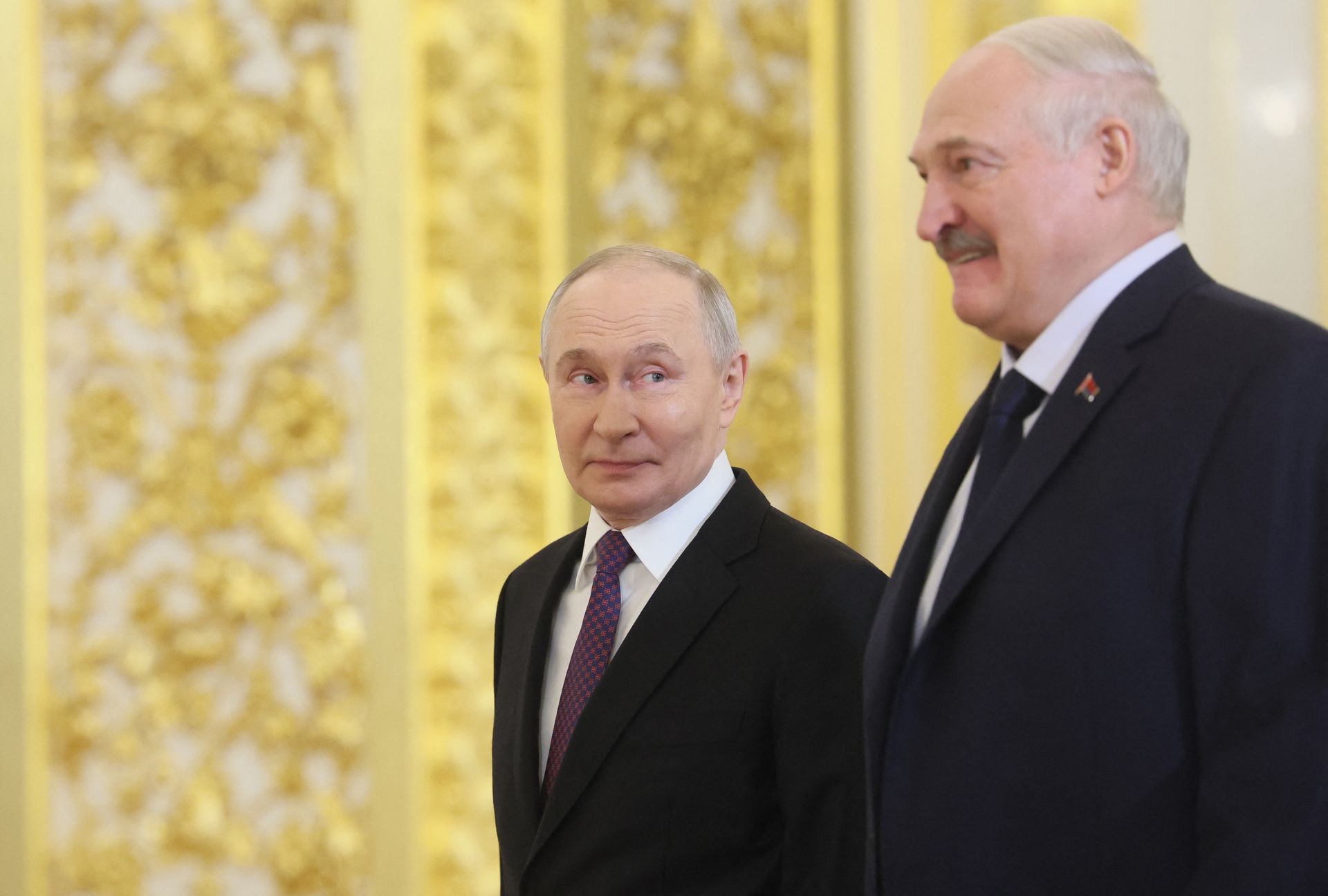
Belarus is participating in Russian-led nuclear warfare exercises, raising the risk that Minsk could enter the war directly from Ukraine's north. The article outlines two escalation scenarios: a renewed push toward Kyiv or an attack on western Ukraine to disrupt supply lines from Poland, either of which would force Ukraine to divert tens of thousands of troops. The piece urges NATO intelligence sharing and snap exercises in Poland, Lithuania, and Latvia to deter escalation and harden logistics routes.
The market takeaway is not a full Belarus invasion; it is a widening of Ukraine’s northern risk premium that forces a defensive reallocation of scarce manpower and air-defense assets. The first-order economic effect is less about territorial gain and more about operational friction: even a credible threat from the north would pressure Kyiv to pull units, trucks, fuel, and interceptor inventory away from the eastern front, which is exactly where Russia benefits most from any dilution of Ukrainian force density.
The higher-probability loser set is not just Ukrainian sovereign risk proxies, but any asset exposed to Black Sea / Eastern European logistics continuity. A Belarus-linked escalation would increase demand for short-cycle transport, rail-security, cyber, satellite imagery, and tactical ISR capacity across NATO’s eastern flank. It also argues for a modest bid in defense primes with European exposure, since snap-readiness, ammunition replenishment, and border surveillance would be the immediate procurement response rather than large platform orders.
The key catalyst window is days to weeks, not quarters: exercises, troop movements, and transport anomalies in Belarus are the real signals. The contrarian point is that Minsk’s actual military utility is limited; the regime’s most powerful weapon may remain the threat itself. That means the trade is asymmetric—markets can reprice on credible signaling even if no invasion follows, but the upside can fade quickly if Western intelligence and NATO posture make the deterrent cost explicit.
The overlooked second-order effect is supply-chain redundancy. If routes through Poland face even temporary disruption, premium capacity through Romania, Moldova-linked corridors, and inland warehousing should re-rate faster than headline Ukraine exposures. That creates a relative-value opportunity in logistics and defense infrastructure names versus broad EM risk assets, with the best entry on confirmation of either Belarusian mobilization or NATO snap exercises in the region.
AI-powered research, real-time alerts, and portfolio analytics for institutional investors.
Request DemoOverall Sentiment
strongly negative
Sentiment Score
-0.60
Ticker Sentiment
