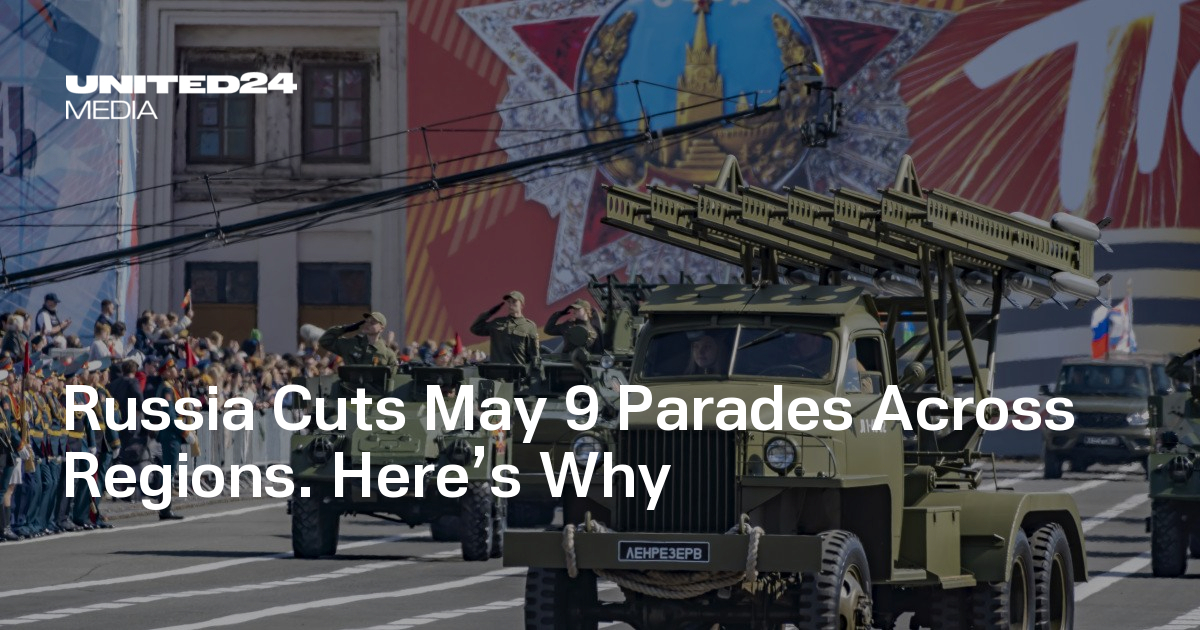
Russia is canceling or scaling back Victory Day parades in multiple regions on May 9 due to heightened drone-strike security risks, including full cancellations in Krasnodar and Chuvashia and reduced-format events in Saint Petersburg and Moscow. The changes underscore the broader war-related threat environment inside Russia, with authorities increasingly limiting mass gatherings, fireworks, and military hardware displays. Market impact is likely limited but the news reinforces geopolitical risk and domestic security concerns.
The immediate market read is not about symbolism; it is about a worsening cost curve for internal security. When a state is forced to substitute public mobilization rituals with smaller, remote, or hardware-light formats, it implies a higher probability that air-defense, dispersion, and event-security budgets will stay elevated for longer, even if headline combat intensity does not change. That benefits vendors tied to counter-UAS, electronic warfare, perimeter security, and hardened communications more than traditional platform primes, because the procurement mix shifts toward low-cost detection and interception layers.
Second-order, this is a morale and information-operation problem for the Kremlin. The regime has historically used Victory Day as a confidence anchor; scaling it back weakens the “normalization” narrative and can amplify perceptions that the rear is vulnerable. That matters over months because it pressures regional governors to prioritize visible protection over spectacle, which can pull resources from civil infrastructure and raise local political friction ahead of any domestic policy stress.
The main catalyst risk is escalation through copycat attacks around the holiday window. If drones hit ceremonial or urban targets, even without major casualties, the response likely includes tighter movement controls, more mobile internet throttling, and broader air-defense deployment around secondary cities for weeks. Conversely, if the period passes quietly, some of the implied security premium on Russian rear-area assets should decay quickly over 1-2 weeks, because these cancellations are reactive rather than a durable change in force posture.
Contrarian view: the market may be overestimating the signal for the front and underestimating the signal for homeland-defense capex. This is not necessarily a precursor to battlefield deterioration; it may simply reflect Russia reallocating limited assets to protect symbolic dates. The durable implication is a higher baseline demand for low-end asymmetric defense rather than a wholesale repricing of war duration.
AI-powered research, real-time alerts, and portfolio analytics for institutional investors.
Request DemoOverall Sentiment
mildly negative
Sentiment Score
-0.20
