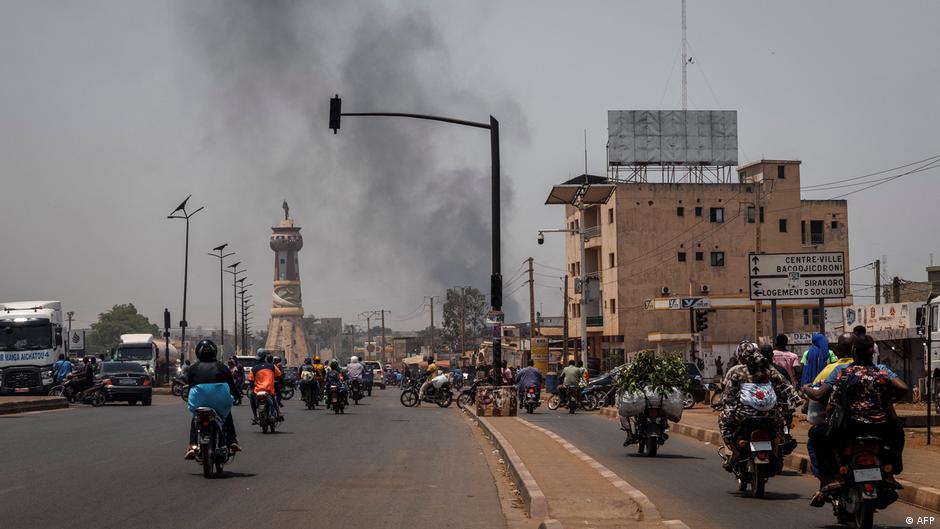
France has urged its nationals to leave Mali immediately as Tuareg-led rebels and JNIM allies expand attacks, capturing the strategic northern town of Kidal and forcing Russian Africa Corps fighters to withdraw. Mali's junta is under severe military pressure, with rebels saying they intend to take Gao and Timbuktu and warning the regime will fall "sooner or later." The escalation raises regional security risk across the Sahel and highlights growing instability in an emerging market economy.
This is less a one-off security headline than an inflection in the Sahel’s balance of power: once a capital’s external backstop is publicly shown to be withdrawable, local alliances tend to reprice fast. The immediate loser is any regime asset tied to the junta’s survivability premium—border logistics, mining concessions, and anything dependent on uninterrupted military escort—because counterparties will now demand a higher political-risk haircut or prepay terms. The second-order effect is a wider collapse in state credibility across neighboring Sahel markets, which can widen sovereign spreads and pressure frontier EM funds even without direct exposure.
The most important catalyst is not the battlefield map itself but whether this becomes a template for other insurgent groups: if northern corridors remain fluid for weeks, the junta’s ability to tax trade and move fuel, food, and military supplies deteriorates non-linearly. That raises the odds of capital controls, rationing, and ad hoc price spikes in Bamako, which would hit consumer and transport-linked businesses first. Over months, the bigger macro risk is a de facto partition scenario that forces all foreign actors to choose between recognition, evacuation, or escalation.
Contrarian angle: markets may be underestimating how quickly a visible Russian setback can reduce deterrence without immediately improving rebel governance. That means the near-term trade is not a clean pro-rebel or anti-Russia expression, but a broad risk-off on West African sovereign and quasi-sovereign risk until a new security equilibrium emerges. Any relief rally would likely require either a credible mediation channel or an external military reset, and neither is a quick fix.
AI-powered research, real-time alerts, and portfolio analytics for institutional investors.
Request DemoOverall Sentiment
strongly negative
Sentiment Score
-0.80
