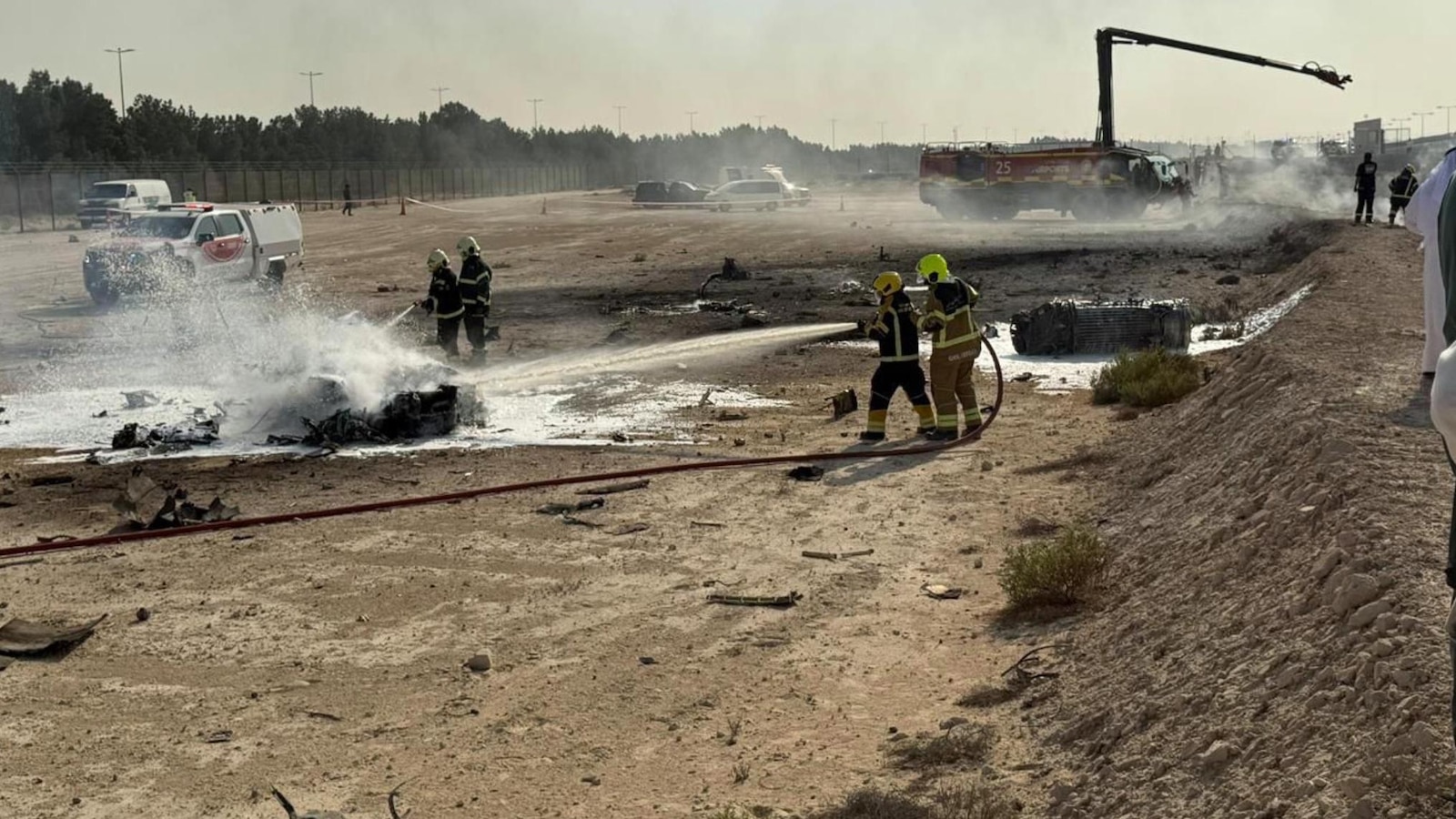
An Indian HAL Tejas combat aircraft crashed during a demonstration flight at the Dubai Air Show on Friday, diving into the ground around 2:10 p.m. local time and killing the pilot; the Indian Air Force confirmed the fatality and said a court of inquiry has been convened. Emergency crews responded at Al Maktoum International Airport, the show resumed about half an hour later, and authorities noted previous questions on the jet’s reliability amid social-media claims that the government had earlier called false. The Tejas—built by state-run Hindustan Aeronautics Limited and central to recent Indian contracts for 180+ aircraft with deliveries delayed largely by U.S. engine shortages—will now face heightened scrutiny that could affect program timelines, HAL’s reputation and investor perceptions of India’s defense procurement execution.
An Indian HAL Tejas combat aircraft crashed during a demonstration flight at the Dubai Air Show around 2:10 p.m. local time, killing the pilot; the Indian Air Force confirmed the fatality and said a court of inquiry has been constituted to determine the cause. Emergency services responded on site at Al Maktoum International Airport, black smoke was visible, and flight demonstrations resumed about half an hour later while crews remained at the scene.
Tejas is manufactured by state-run Hindustan Aeronautics Limited (HAL) and is central to India's force-modernization plans; the Defense Ministry signed a contract in September to procure 97 Tejas with deliveries expected to begin in 2027 and an earlier 2021 order covers 83 jets whose deliveries were delayed largely by U.S.-sourced engine shortages. The program has seen prior incidents, including a non-fatal crash in Rajasthan last year where the pilot ejected safely, and the government has previously pushed back on social-media claims about technical reliability.
The incident introduces near-term reputational and execution risk for HAL and the Tejas program and could amplify investor concern—per-ticker sentiment is negative (HAL: -0.5) and overall sentiment is moderately negative with a market-impact score of 0.32. Key near-term factors to monitor are the inquiry findings, any technical/engine-related root causes, official procurement or delivery-schedule revisions, and government statements that could materially affect HAL's order cadence and share-volatility.
AI-powered research, real-time alerts, and portfolio analytics for institutional investors.
Request DemoOverall Sentiment
moderately negative
Sentiment Score
-0.45
Ticker Sentiment
