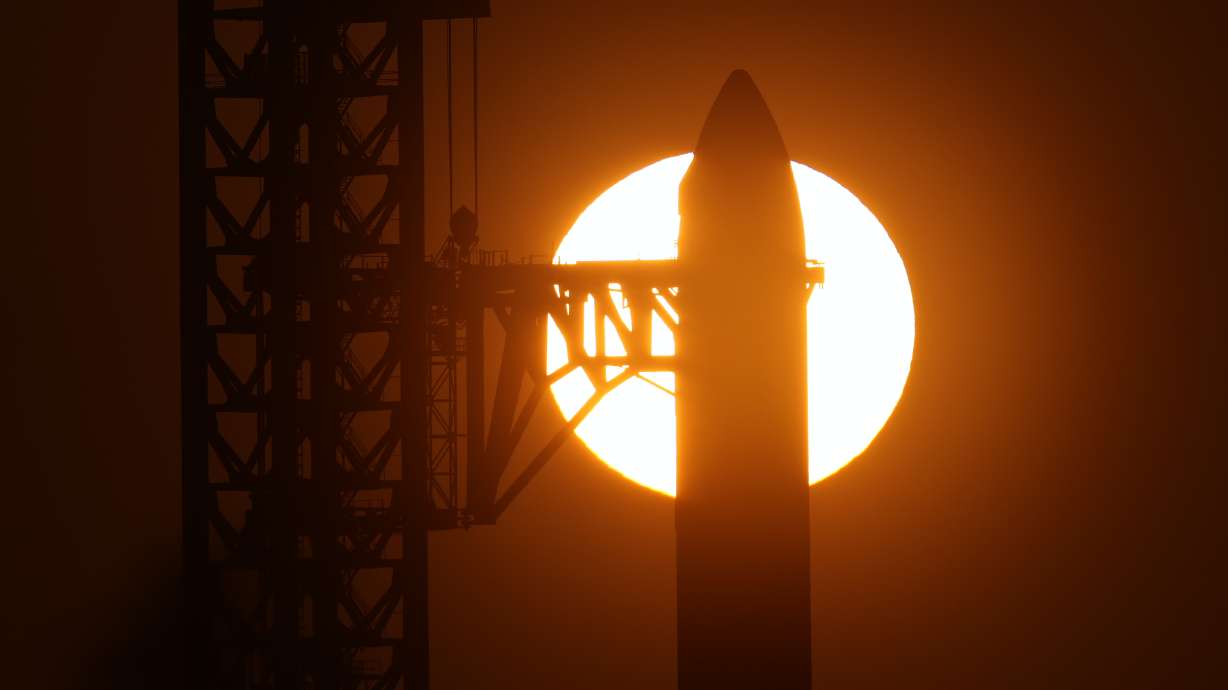
SpaceX completed its 12th Starship test flight, with the upgraded 407-foot rocket successfully reaching the Indian Ocean and deploying 20 mock Starlink satellites despite partial engine trouble. The flight advances NASA’s Artemis moon program and underscores progress toward fully reusable heavy-lift launch capability, even though the vehicle was lost on impact as expected. The update is constructive for SpaceX’s execution narrative, but it is not likely to move markets broadly.
The key read-through is not the flight itself but the de-risking of the industrialization path. Reusable heavy-lift capability, if it keeps converging, compresses launch cost and cadence enough to turn space from a bespoke government program into a logistics market, which is why the better second-order winners are not the obvious launch primes but the suppliers of avionics, composites, thermal systems, robotics, and ground infrastructure. The near-term market signal is also a relative one: any incremental confidence in Starship widens the competitive gap versus slower-moving lunar and deep-space programs, even if the vehicle is still not at a truly operational reliability threshold.
The main risk is execution drift, not technical impossibility. The program can look “good enough” for headlines while still being too unstable for schedule-critical NASA milestones, and that matters because the next 12-18 months are about proving repeatability, not one-off success. If cadence stalls or pad/engine failures recur, the commercial case for fully reusable heavy lift gets pushed out by years, and the beneficiaries shift toward legacy launch providers and defense contractors that sell reliability over ambition.
The contrarian view is that the market may be underpricing the option value embedded in a credible heavy-lift platform. Even modest progress can unlock future demand from satellite deployment, in-space servicing, sovereign payloads, and high-end defense architectures that need volume-to-orbit, not just one-off mission success. But the equity implication is asymmetric: the upside accrues slowly through an ecosystem, while the downside from a visible failure cycle can be sharp because investors will extrapolate schedule slippage into a multi-year revenue delay.
The most actionable setup is to own the picks-and-shovels rather than the story stock. The timing matters: this is a 6-24 month theme, not a day-trade, and the best risk/reward comes from buying companies with exposure to propulsion, flight software, space-grade components, and launch services infrastructure while avoiding names priced for flawless execution. There is also a plausible defense overlay if reusable heavy lift starts to look real for responsive launch and orbital logistics, which could pull budget share from legacy platforms into space-enabled systems.
AI-powered research, real-time alerts, and portfolio analytics for institutional investors.
Request DemoOverall Sentiment
mildly positive
Sentiment Score
0.35
