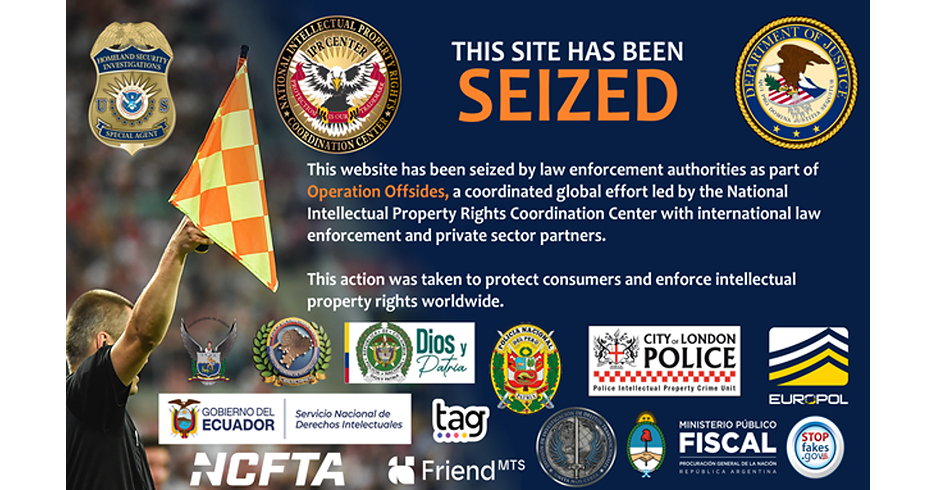
TAG announced it will demonetize 1,376 illegal World Cup streaming/piracy sites by blocking ad revenue, building on the US DOJ’s “Operation Offsides” domain seizures. It also flagged an additional 176 stolen-World-Cup domains already on its Pirate Domain Exclusion List (PDEL), reinforcing near-real-time ad-supply-chain enforcement to protect legitimate ad dollars.
The economic winner here is not the anti-piracy effort itself but the measurement layer around it. If advertisers can more reliably exclude stolen-content inventory, the incremental value accrues to verification/brand-safety vendors and premium publishers whose bid density improves as “trash” inventory is filtered out; the P&L uplift is probably modest, but it compounds through better auction quality and lower fraud leakage. For sports media owners, the more interesting second-order effect is that enforcement nudges marginal viewers toward legal streams, which is supportive for ad load monetization and subscriber conversion, but that effect is likely measured in basis points of event-level revenue rather than a near-term earnings step-up.
The loser set is mostly the gray-market long tail: low-quality ad exchanges, made-for-advertising sites, and any intermediary whose take rate depends on weak domain vetting. That said, the direct revenue pool at these sites is usually thin, so the immediate financial damage is limited; the bigger risk is that enforcement expands into broader supply-chain hygiene, raising compliance costs for smaller publishers and SSPs. Over 1-3 months, watch whether this becomes a broader advertiser-side policy shift versus a one-off World Cup campaign. Over 6-18 months, the structural trade is a gradual re-rating of clean-supply-chain names if more agencies hardwire exclusion lists into buying workflows.
The contrarian view is that the market may overestimate how much piracy economics change from domain takedowns alone. Pirate traffic is highly adaptive, and sites can reappear quickly through mirrors, social distribution, or private channels; without user-side friction or payment disruption, ad leakage may just migrate rather than disappear. The key falsifier is whether brand-safety/verification spend and legal-streaming engagement actually improve in the next reporting cycle; absent that, this is more narrative-positive than earnings-relevant.
AI-powered research, real-time alerts, and portfolio analytics for institutional investors.
Request DemoOverall Sentiment
mildly positive
Sentiment Score
0.15
Ticker Sentiment
