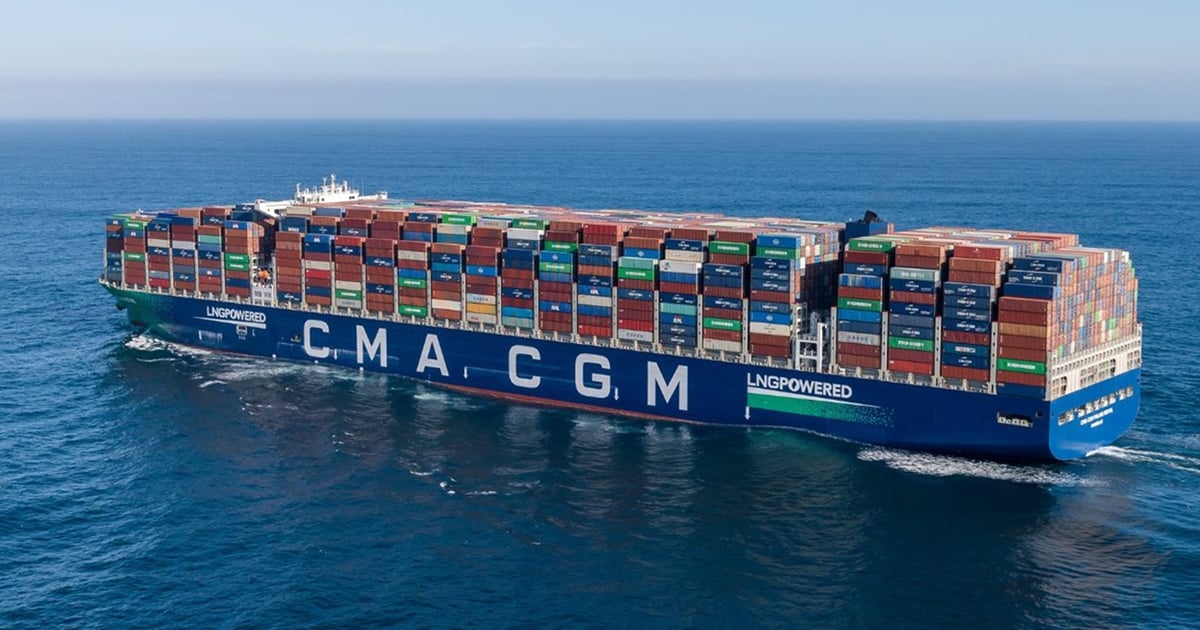
CMA CGM confirmed that its Maltese-flagged container ship CMA CGM San Antonio was attacked in the Strait of Hormuz on 5 May, leaving crew injured and the vessel damaged. The incident is part of a broader escalation in maritime attacks tied to the US-Iran conflict, which has already hit an ADNOC-affiliated tanker, a bulker, and the HMM Namu. The article highlights heightened risk to Gulf shipping lanes and likely disruption to container and tanker transits through the Strait.
This is not a one-off headline; it is a market signal that the Gulf is shifting from an insurance-pricing story to a network-design story. Once carriers and charterers internalize that transits can be selectively degraded rather than fully closed, the second-order effect is a persistent risk premium on any asset with exposure to Gulf-origin throughput, even if crude itself is not immediately disrupted. That tends to hit container and dry bulk operators first through rerouting, schedule unreliability, and higher bunkering costs, while also feeding modestly into broader inflation expectations via longer sailing distances and tighter vessel availability.
The biggest near-term winner is not an obvious defense name but the marine insurance and security stack: war-risk premiums, kidnap/ransom cover, and private escort demand can reprice within days, not months. In shipping equities, the immediate losers are operators with high Middle East Gulf utilization and low pricing power, because customers will resist surcharges until incidents become frequent enough to normalize them; that lag creates a margin squeeze window over the next 2-6 weeks. A more durable beneficiary is any company exposed to fleet displacement and ton-mile expansion, since diversions and aborted sailings reduce effective capacity and can tighten spot rates even when cargo demand is soft.
The contrarian risk is that the market overestimates how quickly this becomes a structural blockade. If attacks remain intermittent, the real economic damage may be less about lost barrels and more about higher operating friction, which can fade if escorts resume, diplomacy advances, or routes are reclassified as manageable by insurers. In that case, shipping equities may mean-revert before the physical market does, especially if freight rates fail to lift enough to offset the incremental costs.
AI-powered research, real-time alerts, and portfolio analytics for institutional investors.
Request DemoOverall Sentiment
strongly negative
Sentiment Score
-0.70
The cleanest tactical setup is a relative-value short in Gulf-exposed logistics versus long beneficiaries of rerouting and scarcity. This is a better trade than a broad market short because the shock is highly uneven: some operators can pass through higher costs, others cannot. The key catalyst window is the next 1-3 weeks, when insurers, charterers, and liner alliances reset routing assumptions and begin to reveal who has pricing power and who is stuck absorbing the risk premium.
