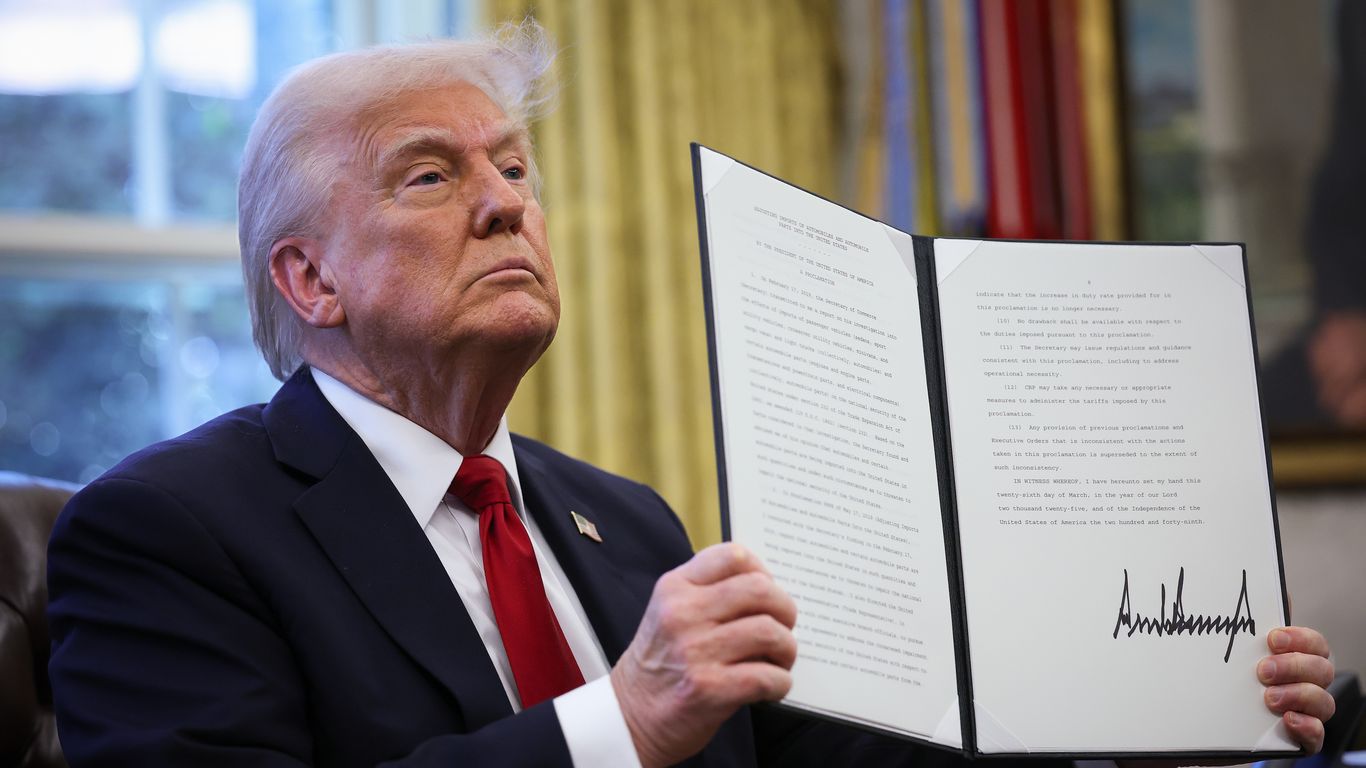
President Trump announced the U.S. will begin sending letters on Monday to various countries, setting new tariff rates that could reach 70% and take effect August 1. This unexpected re-escalation of the trade war introduces significant uncertainty for businesses and weighed on European stocks and U.S. stock futures. While specific targets are undisclosed, this tactic has historically been employed to pressure trading partners into last-minute concessions, with the administration's stated goal being the conclusion of trade agreements by Labor Day.
The Trump administration is abruptly re-escalating trade tensions, introducing significant uncertainty into financial markets after a period of relative calm. President Trump's announcement that letters will be sent to other countries setting new tariff rates, potentially as high as 70% effective August 1, prompted an immediate negative reaction in European stocks and U.S. stock futures. This move appears to be a familiar negotiating tactic, designed to pressure trading partners like South Korea and Thailand into offering last-minute concessions. However, the administration's track record on trade policy implementation is mixed; a previous sweeping tariff regime announced in April was largely paused, and only three of a promised ninety trade deals were completed in the first 85 days. While Treasury Secretary Scott Bessent has suggested deadlines are fungible with a goal to finalize deals by Labor Day, the explicit threat of high tariffs creates a tangible risk for businesses and investors. The recent Vietnam deal, which settled at a 20% rate, suggests final outcomes may be less severe than initial threats, yet still represent a material escalation in trade barriers.
AI-powered research, real-time alerts, and portfolio analytics for institutional investors.
Request DemoOverall Sentiment
strongly negative
Sentiment Score
-0.60
