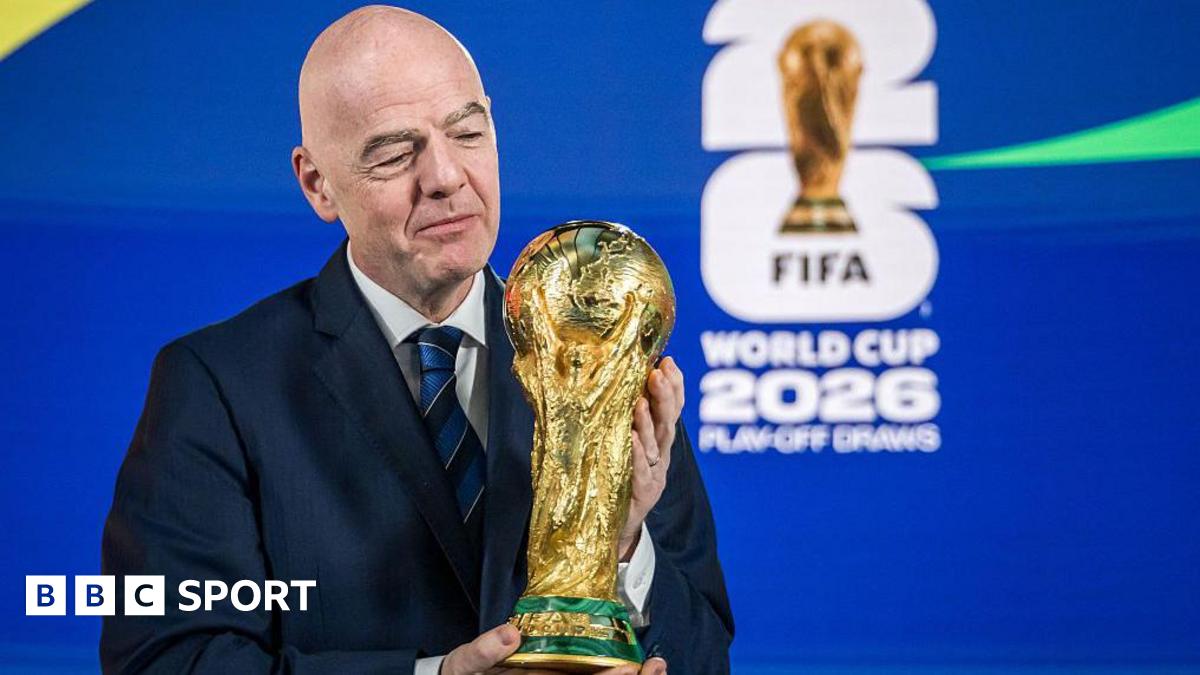
FIFA president Gianni Infantino defended World Cup ticket pricing for the USA/Canada/Mexico tournament amid criticism from fan groups, noting extreme demand — six to seven million tickets were offered and FIFA received 150 million requests in 15 days. Prices include group-stage tickets up to three times 2022 levels and a cheapest final ticket of £3,119, prompting FIFA to add a limited £45 category for all 104 matches; Infantino said proceeds will be reinvested into global football but provided no financial breakdown.
Market structure: The pricing controversy signals concentrated pricing power with FIFA (ability to set outsized premium prices) and acute demand: 150m requests for ~6–7m tickets implies >20x oversubscription and strong price inelasticity among core fans. Direct winners: large US travel & hospitality chains (Marriott MAR, Hilton HLT), US broadcasters (FoxA FOXA), apparel sponsors (Nike NKE) and secondary-ticket platforms; losers include low-tier local events, price-sensitive consumers and any operator dependent on mass affordable attendance. Expect higher ADRs in host cities and a 2–5% seasonal lift in jet/jet-fuel demand localized around host venues in Jun–Jul 2026. Risk assessment: Tail risks include regulatory intervention (state AGs or DOJ scrutiny of price gouging/secondary markets), operational failures (stadium/logistics causing refunds), and reputational backlash that could force FIFA to release more low-priced allocation lowering realized revenue by >10–20%. Immediate (days–weeks): secondary-market volatility and PR headlines; short-term (3–9 months): booking windows and airline/hotel revenue recognition; long-term (years): sponsor renegotiations and brand dilution. Hidden dependencies: visa/IMM policy changes, city lodging capacity limits and cross-border travel friction between US/CA/MX. Trade implications: Tactical trades: overweight global lodging (MAR, HLT) and US legacy carriers (AAL, UAL) into Q2–Q3 2026—target 1–2% portfolio positions each; buy Jul‑2026 call spreads (e.g., MAR 25% OTM/45% OTM) sized 0.5% portfolio to leverage upside while capping premium. Pair trade: long MAR (1.5%) vs short cruise line RCL (1.0%) to express land-travel substitution. Buy FOXA (0.75–1%) into ad-sell season 9–12 months prior; set profit targets +20–30% or exit post-tournament (Aug–Sep 2026). Contrarian angles: Consensus overweights ticketing/secondary platforms; missing risk is policy-driven revenue compression—if FIFA doubles low-price allocations or regulators cap resale, secondary marketplaces and premium lodging yields could fall 15–30%. Historical parallel: Olympic pricing backlashes reduced ancillary spend in host cities the following year. Hedge with 3–6 month put spreads on travel/consumer-discretionary ETFs sized 0.5% if regulatory language appears within 30–60 days.
AI-powered research, real-time alerts, and portfolio analytics for institutional investors.
Request DemoOverall Sentiment
mixed
Sentiment Score
0.00
