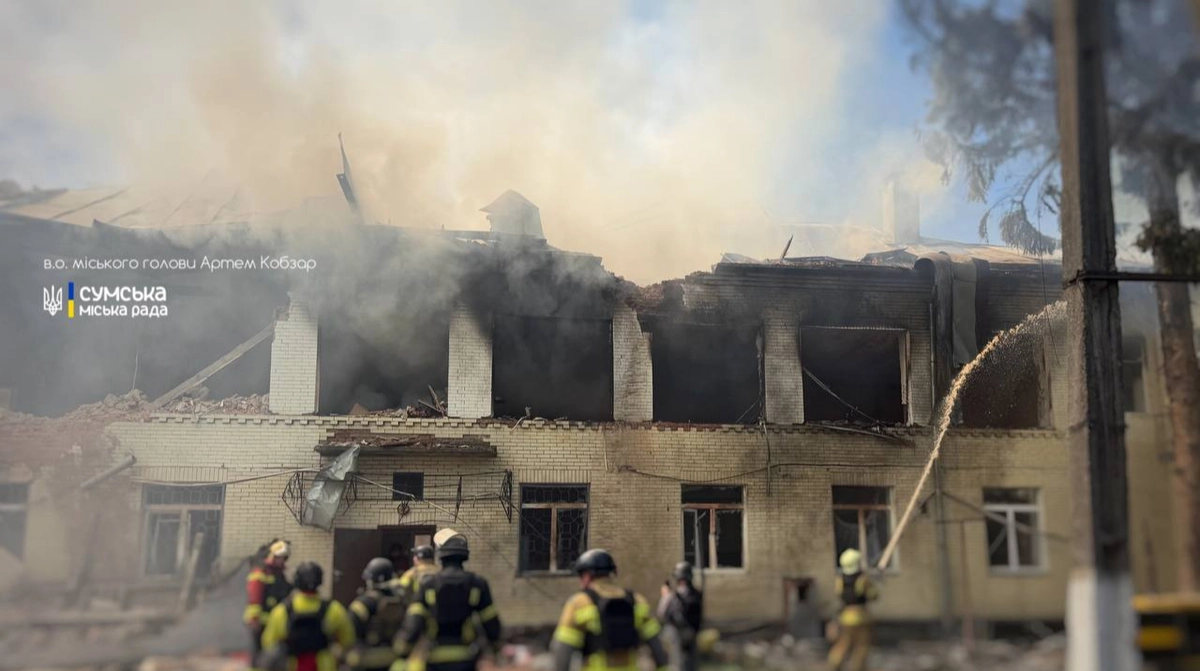
Russian strike drones hit a kindergarten in central Sumy on 6 May, killing a security guard and injuring two other people. Ukrainian officials said two UAVs struck the building, no children were present, and rescue operations were ongoing as damage and casualty assessments continued. The attack adds to escalating wartime disruption in Sumy after earlier strikes in the region on the same day.
The immediate market read is not about direct asset exposure but about regime confirmation: Ukraine’s rear areas are staying within the strike envelope, which extends the war premium into logistics, air defense, civil infrastructure repair, and local labor continuity. That tends to support defense procurement names and counter-drone / radar suppliers over pure munitions plays, because the marginal spend shifts toward detection, interception, and hardening rather than just shell throughput.
Second-order impact is more relevant for industrials and regional supply chains than for broad equities. Repeated attacks on municipal infrastructure raise the probability of intermittent disruptions to power, transport, insurance availability, and municipal budgets in eastern Ukraine; that can slow reconstruction timelines by weeks to months even when damage is localized. The bigger macro signal is that escalation is still tactical and persistent, which keeps headline risk elevated and limits any near-term de-risking in European cyclicals with Ukraine exposure.
The contrarian angle is that these incidents are often treated as noise by global markets after the initial headline spike, but cumulative frequency matters because it increases the odds of a policy response that is not headline-friendly: more air-defense requests, more allied stockpile drawdowns, and potentially tighter sanctions enforcement. Over a 1-3 month horizon, the trade is less about the incident itself and more about whether it nudges Western procurement budgets toward layered air defense and border security systems. If the frequency of strikes continues, the beneficiaries are the suppliers that can deliver fast, deployable interception and sensing capacity rather than long-cycle platforms.
AI-powered research, real-time alerts, and portfolio analytics for institutional investors.
Request DemoOverall Sentiment
strongly negative
Sentiment Score
-0.85
