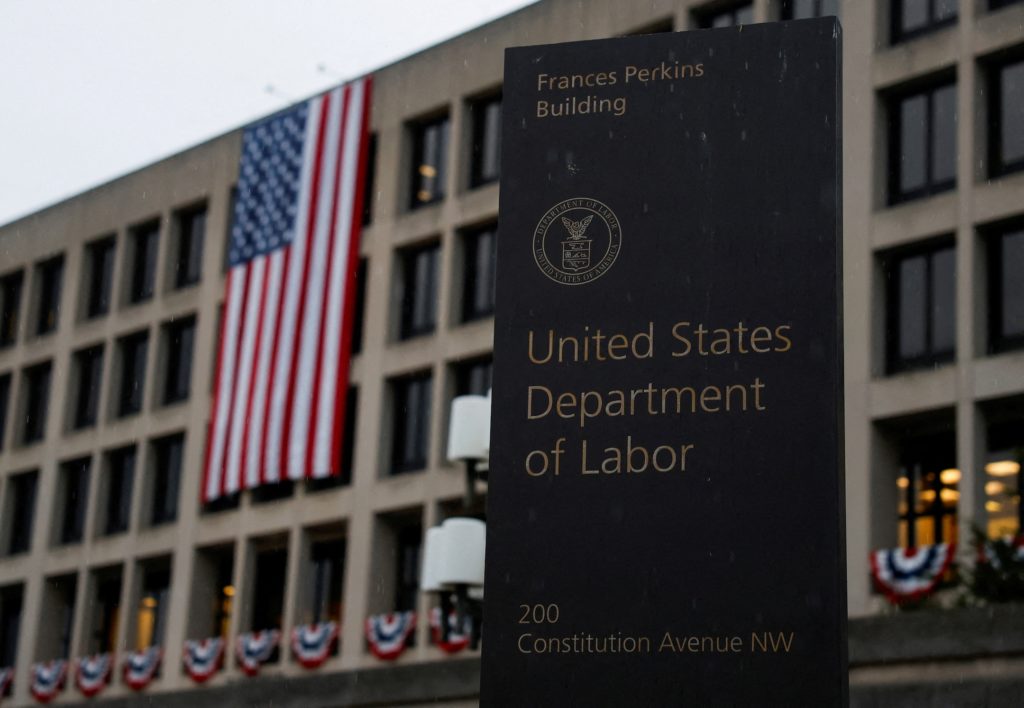
U.S. payrolls unexpectedly fell by 92,000 in February and the unemployment rate rose to 4.4%, versus consensus for a 60,000 gain; January payrolls were revised down and revisions cut 69,000 jobs from December/January. Average hourly earnings rose 0.4% month-over-month and 3.8% year-over-year; sector losses were broad (healthcare -28k driven partly by a Kaiser Permanente strike, restaurants/bars ~-30k, manufacturing -12k, construction -11k) while financials added 10k. The report complicates the Federal Reserve outlook amid still-elevated inflation, high rates, Trump's tariff policies and geopolitical risk from the war with Iran, increasing downside risk to growth and prompting a risk-off market response.
Market structure: The payroll shock favors traditional safe-havens (long-duration Treasuries, gold) and defensive sectors (staples, utilities, select healthcare) while hurting cyclical, labor-intensive segments—restaurants, leisure, industrials and small-cap cyclicals—that lost jobs and face weaker consumption. AI and capex winners (large-cap software, semiconductors, industrial automation) gain structural pricing power as firms substitute labor with productivity-enhancing capital; tariffs sustain pockets of pricing pass-through for domestic producers.
Risk assessment: Tail risks are asymmetric: a major Iran escalation could send Brent >$120/bbl, spark stagflation and equity drawdowns; a Fed policy mistake (staying tighter despite soft jobs) risks a deeper recession. Immediate window (days): risk-off rallies in Treasuries/Gold; short-term (weeks–months): earnings and CPI prints will drive sector rotations; long-term (quarters–years): secular decline in entry-level hiring as AI adoption compresses labor demand and reweights margins.
Trade implications: Expect bond yields to be volatile downward in risk-off—bullish for TLT and long-dated call spreads—while consumer-discretionary and small caps are shortable via ETFs or put spreads. Construct relative-value trades: long staples/utilities vs short discretionary/restaurant operators; selectively long AI infra (NVDA/MSFT) for 6–18 months to capture capex cycle, sized small due to concentration risk.
Contrarian angle: The market underestimates that lower labor-force participation/structural retirements have lowered the monthly job growth needed to stabilize unemployment (break-even ~0–50k). That implies weaker headline payrolls may not force deep Fed easing—making long-duration bond rallies short-lived unless inflation softens. Mispricing opportunity: underweight of high-quality recurring-rev software (SaaS) which benefits from cost-conscious customers seeking automation.
AI-powered research, real-time alerts, and portfolio analytics for institutional investors.
Request TrialOverall Sentiment
strongly negative
Sentiment Score
-0.60
