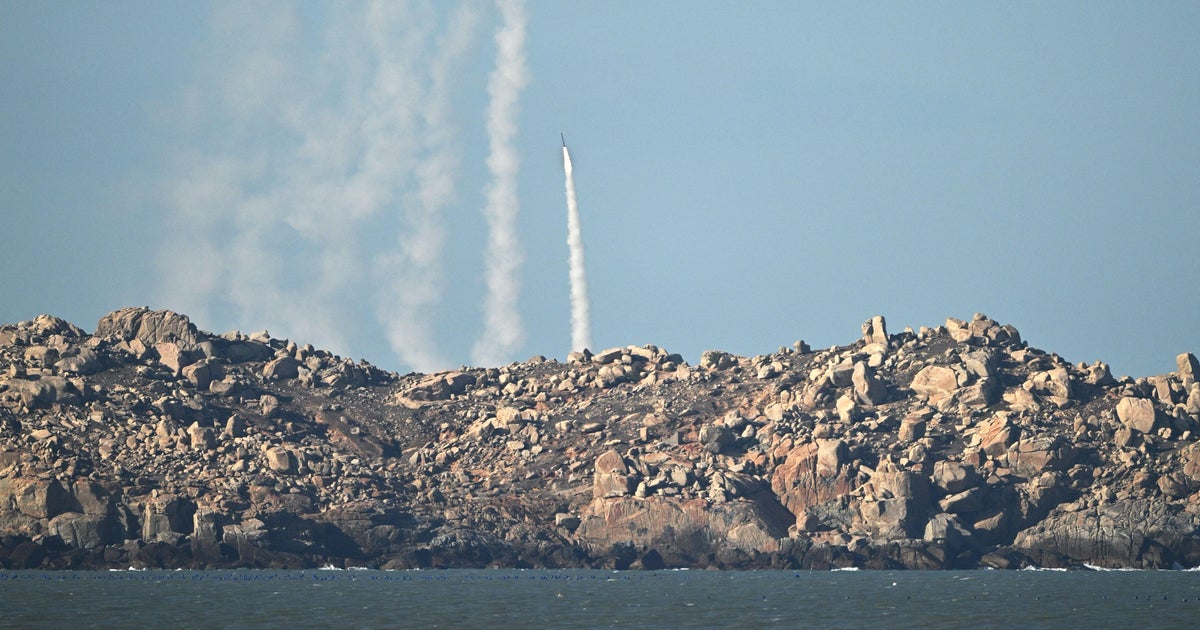
China conducted a second day of large-scale live-fire drills dubbed "Justice Mission 2025," launching missiles and deploying dozens of fighters and naval vessels to simulate a blockade of key Taiwanese ports; Taiwan reported detection of 130 Chinese military aircraft, 14 navy ships and cancellation of dozens of flights to Kinmen and Matsu affecting ~6,000 passengers and warning that more than 850 international flights could be affected. The exercises — some zones within 12 nautical miles of Taiwan — follow major U.S. arms sales to Taipei and risk elevating regional tensions, creating potential short-term disruption to shipping and air routes and raising downside risk for Taiwanese supply chains (notably semiconductors), upward pressure on defense suppliers and safe-haven assets, and increased volatility in Asian markets.
Market structure: Near-term winners are defense contractors and ETF wrappers (e.g., ITA, XAR, LMT, RTX, NOC) as governments accelerate procurement; losers are Taiwan-exposed equities and regional transport/logistics plays (EWT, TSM, regional airlines/shipping spot rates) due to blockade simulation and flight cancellations. Pricing power will shift toward defense OEMs and semiconductor equipment suppliers (ASML, LRCX, AMAT) for onshoring capex, while Taiwanese fabs face demand destruction risk if shipping or power is disrupted. Cross-asset: expect equity risk-off in Asia, USD and JPY bid as safe havens, rising gold (GLD) and lowered global real yields pushing long-duration Treasuries (TLT) higher; oil can gap up 3–7% on supply-disruption premium.
Risk assessment: Tail scenarios include a temporary blockade (weeks) causing a semiconductor supply shock and 5–15% realized revenue hit to consumer electronics, or a limited kinetic strike prompting sanctions and longer-term capex reallocations. Immediate (0–7 days): flight/ship disruptions and vol spikes in Asia; short-term (1–6 months): defense spending hikes and insurance rate repricing; long-term (1–3 years): sustained semiconductor reshoring benefiting equipment vendors. Hidden dependencies: insurance/PMI for shipping, Taiwanese power grid resilience, and knock-on FX and counterparty credit lines for Asian banks.
Trade implications: Direct plays—establish 1.5–2.5% long in ITA and 1% in NOC, size by portfolio risk, for a 3–6 month horizon; hedge with 1–1.5% short EWT (iShares MSCI Taiwan) to isolate geopolitical beta. Options—buy 3–6 month call spreads on LMT/RTX (limit cost to 0.8–1.2% combined notional) and buy 3-month EWT puts sized to the short equity leg to cap downside. Rotate 1–2% into GLD and 2% into TLT for defensive ballast; take profits if defense ETF up 10% or EWT down 15% or after 90 days.
Contrarian angles: The market may be overstating invasion probability—1996-style drills caused short-term fear but limited economic disruption; therefore avoid one-way large long-only bursts. Mispricing opportunity: long semiconductor equipment (ASML, LRCX) on 12–24 month view of sustained capex, while short-term Taiwan ETF weakness could overshoot; however be ready to unwind defense longs quickly on de-escalation to lock 7–15% gains. Unintended risk: rapid de-escalation would summon sharp mean reversion in defense names and shipping insurers; use stop-losses and time-limited options to manage this.
AI-powered research, real-time alerts, and portfolio analytics for institutional investors.
Request DemoOverall Sentiment
strongly negative
Sentiment Score
-0.60
