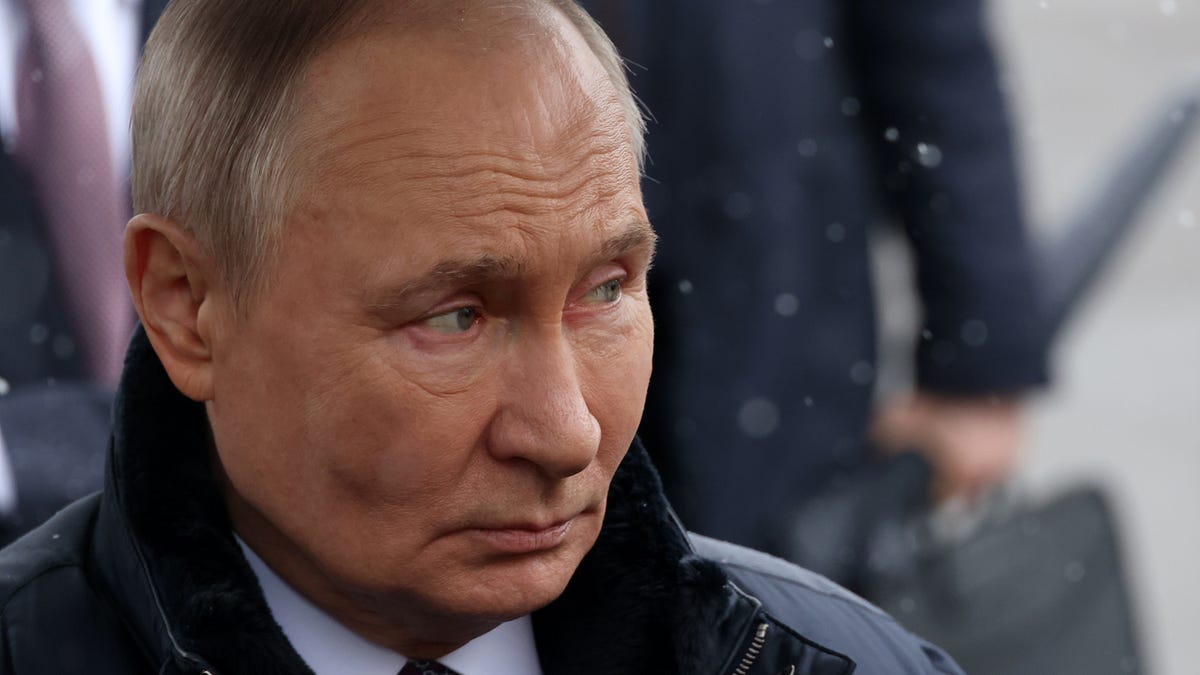
Russia is scaling back its May 9 Victory Day parade amid heightened fear of Ukrainian drone strikes, signaling worsening domestic security conditions and growing Kremlin paranoia. The article says Russia lost more territory in Ukraine in April for the first time since mid-2023, while Ukrainian drone attacks have damaged oil refining and export capacity, including major fires at Tuapse. It also highlights rising internal criticism of Putin and concern over a potential coup, underscoring a deteriorating wartime and political environment.
The market implication is not “Russia is weaker” in a broad sense; it is that the regime’s marginal cost of control is rising faster than its marginal capacity to absorb shocks. That matters because the most durable pressure points are now domestic logistics, refining, and political legitimacy rather than the front line itself. A state that must divert air-defense assets to protect parades and capitals is one that is increasingly forced into reactive posture, which typically accelerates internal resource misallocation and widens the gap between headline stability and operational fragility.
Energy is the cleanest second-order channel. Sustained attacks on refining and export infrastructure do not just reduce barrels; they distort product balances, raise inland transport costs, and increase the need for emergency imports of refined fuels even when crude exports continue. That combination tends to compress downstream margins inside Russia while supporting seaborne refined-product prices and improving the relative economics of non-Russian refiners, especially those with complex systems and Atlantic Basin access.
The domestic politics angle is more important than the propaganda angle. When criticism becomes somewhat safer to voice, it often signals either regime overconfidence or security overload; in either case, the next phase is usually not liberalization but selective repression and factional blame-shifting. For markets, that increases tail risk around abrupt policy mistakes, mobilization/escalation surprises, and opportunistic energy nationalism if the Kremlin decides to offset battlefield weakness with coercive price or supply moves.
Contrarian read: the immediate headline risk may be overestimated for global macro, because most of the damage is local and incremental rather than a sudden supply collapse. The underappreciated trade is that Russia’s adversaries do not need a dramatic break to win economically; a slow erosion of refining reliability, rail throughput, and security credibility is enough to lift defense spending abroad, support NATO procurement cycles, and keep a geopolitical premium embedded in energy and shipping assets for longer than consensus expects.
AI-powered research, real-time alerts, and portfolio analytics for institutional investors.
Request DemoOverall Sentiment
strongly negative
Sentiment Score
-0.65
